A non-running car can still attract buyers, but Missouri paperwork matters. If you’re searching for cash for junk cars in Springfield, MO, start by confirming the title status, model year, and buyer type. Those details decide which legal path applies.
What decides whether anyone wants it
A buyer first needs an accurate picture of the vehicle. Share its year, make, model, location, title status, and general condition. Say whether it starts, rolls, steers, and has all four wheels. Mention collision damage, missing parts, and major access problems.
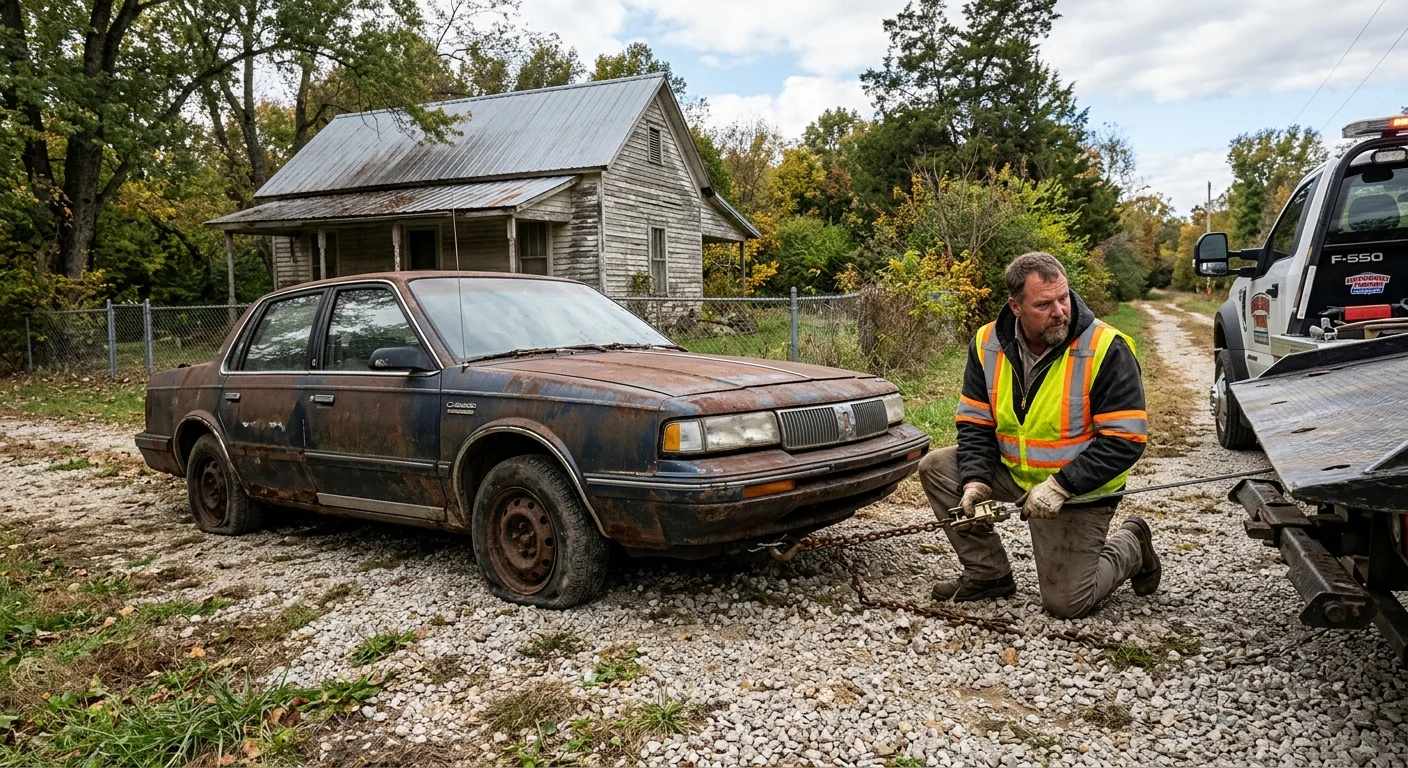
Access can matter as much as condition. A sedan parked beside a house near central Springfield is one situation. A vehicle behind a gate outside Republic is another. Gravel, mud, narrow drives, locked wheels, and missing keys can change what equipment an operator needs.
The same issue appears south of Springfield. A car in Nixa or Ozark may sit well beyond the city street grid. Farther down US-65, access near the Branson corridor can be different again. Send clear photos and describe the parking surface before pickup is arranged.
This page doesn’t publish a Springfield-wide junk-car value or scrap rate. No verified local figure applies to every car. The buyer determines what it will pay after reviewing the vehicle and paperwork. Ask what deductions, pickup costs, or conditions affect its number before accepting.
Also confirm who takes possession. Missouri places important filing duties on the purchaser. Get the purchaser’s business name and the agreed terms in writing. Don’t hand over keys until you understand the paperwork being signed.
When the vehicle can’t be moved normally, our junk car and abandoned vehicle removal service can connect you with an independent local operator. Quick Tow Springfield is a referral service. The operator handles the vehicle and sets the price.
Title, salvage certificate, or neither
The paperwork path begins with the vehicle’s current ownership document. That may be a regular title or an existing salvage certificate. The correct next step depends partly on the vehicle’s model year when purchased.
Under RSMo 301.227, the purchaser handles the state filing after a salvage, dismantling, or rebuilding sale. The purchaser must forward the title or existing salvage certificate within 10 days. That filing includes a completed application and an $8.50 fee.
A salvage title is mandatory when the vehicle’s model year is six years old or newer at purchase. For a vehicle more than six model years old, the purchaser may apply directly for a junking certificate instead.
That choice has lasting consequences. A junking certificate permanently retires the vehicle from road use. Once it issues, Missouri can’t issue another regular or salvage title for that vehicle.
There is one limited correction window. If the vehicle wasn’t previously classified as junk, the applicant may rescind the certificate within 90 days. The applicant must surrender it and apply for a salvage title. That option is available once and only during that window.
Don’t use Form 5825 for an ordinary owner-to-buyer junk-car sale. That form covers a narrow insurer-requested, unclaimed-vehicle process. The everyday purchaser applies through the Missouri Department of Revenue, but the approved source doesn’t confirm a specific application form number for this exact filing. Buyers should verify the current application with the Missouri Department of Revenue Motor Vehicle section.
Our Missouri junk-car paperwork guide explains the sequence in more detail. If your title is simply missing, review how to replace a lost Missouri title before arranging the sale.
The 10-year scrap-metal exception, and its limits
Missouri has a no-title exception, but it’s narrow. It doesn’t mean every old car can be sold without ownership paperwork. It also doesn’t mean every junk-car buyer can accept one.
A scrap-metal operator may buy an inoperable vehicle without a title when it’s at least 10 years old. The exception also covers parts from a qualifying vehicle. Both the age and inoperable condition matter, and the purchaser must be a scrap-metal operator.
Don’t stretch that rule to a newer vehicle. Don’t assume a running car qualifies because it looks rough. A vehicle with body damage, high mileage, or an expired registration isn’t automatically covered by this exception.
Before pickup, ask the purchaser to confirm that it qualifies for this Missouri process. Provide the exact model year and explain why the vehicle is inoperable. Keep a written record of the buyer’s response and the final transaction.
The no-title exception also doesn’t erase the other junk-sale paperwork. The buyer still completes the required junk, salvage, or rebuilding affidavit before a notary. The seller keeps that notarized document.
Ownership is another separate issue. A vehicle sitting on your land isn’t necessarily yours to sell. That’s especially important with former tenants, unknown vehicles, and cars left near rental property. Missouri’s abandoned-property process follows different rules.
If ownership is unclear, stop before accepting money or releasing the car. Our guide to what counts as an abandoned vehicle in Missouri explains that distinction. A no-title scrap exception isn’t a shortcut around another person’s ownership rights.
This difference matters across the metro. A long-idle farm car outside Springfield may qualify. An unfamiliar car left beside an apartment building may require a separate removal process. Confirm which situation you have before a buyer takes possession.
The affidavit and who keeps it
Every Missouri junk, salvage, or rebuilding sale requires an affidavit. The correct document is Missouri State Highway Patrol Form SHP-498B. Check that number carefully before signing anything.
The buyer completes SHP-498B before a notary. The notarized affidavit then stays with the seller. It isn’t a document the seller sends to the state with the purchaser’s title application.
The form confirms that the vehicle lacks a valid safety inspection. It also states that the vehicle can’t be registered or driven in Missouri until it passes one. The underlying rule is 11 CSR 50-2.140.
This division of responsibility is easy to miss. The purchaser handles the title or junking-certificate filing. The purchaser also completes the affidavit. The seller retains the notarized affidavit as part of the transaction record.
Check the form before the vehicle leaves. Confirm that the buyer’s information matches the person or business taking possession. Keep the affidavit somewhere you can retrieve later. A photo or scan can provide a useful backup, but retain the notarized original.
Don’t substitute a buyer-created receipt for SHP-498B. A bill of sale may help document the transaction, but it doesn’t replace the required affidavit. Likewise, the affidavit doesn’t replace the purchaser’s Department of Revenue filing.
Be cautious when a buyer says no paperwork is needed. Even the narrow no-title exception doesn’t remove the affidavit requirement described above. Pause the handoff until the buyer can complete the correct document before a notary.
This step protects the record of what happened. It shows who purchased the vehicle and confirms its condition under the Missouri process. It also gives the seller a document to retain after the car, keys, and other agreed items leave the property.
Plates, and the paperwork you skip
Remove the Missouri plates before the buyer takes the vehicle. Plates don’t transfer with ownership in Missouri. Don’t leave them attached because the car is headed for dismantling or scrap.
You can transfer eligible plates to another vehicle you own. You may also surrender them at a Missouri license office or mail them to the Department of Revenue. Missouri doesn’t provide a refund for unexpired registration when plates are surrendered.
Handle the plates before pickup begins. This avoids searching a loaded vehicle or asking a buyer to return them later. Check both ends of the car, since a forgotten plate can leave with the vehicle.
A junking or salvage sale also differs from a normal private sale. Missouri generally requires a normal private sale to be reported within 30 days. That reporting uses a Notice of Sale, Form 5049, or a Bill of Sale, Form 1957.
A vehicle sold under a salvage title or junking certificate is exempt from that Notice of Sale requirement. That exemption is specific. It doesn’t remove the affidavit, plate removal, or purchaser filing duties.
Keep your own transaction record even when the Notice of Sale isn’t required. Record the date, vehicle identification number, purchaser’s identity, and agreed terms. Retain the notarized SHP-498B with those records.
Before releasing the vehicle, use a short final check. Remove personal property and plates. Confirm the buyer’s identity. Review the title or salvage document. Make sure the buyer has completed SHP-498B before a notary, then keep the notarized affidavit.
The purchaser should also understand the 10-day state filing deadline. That duty belongs to the buyer, but the seller should know who accepted it. Clear paperwork now is much easier than sorting out an incomplete sale after the vehicle leaves Springfield.
When to call us
Call when the car can’t move safely, access is difficult, or you need an operator to collect it. We’ll line up an independent local operator, and the line takes calls 24 hours a day with recording after notice. Call us at (417) 221-8911.