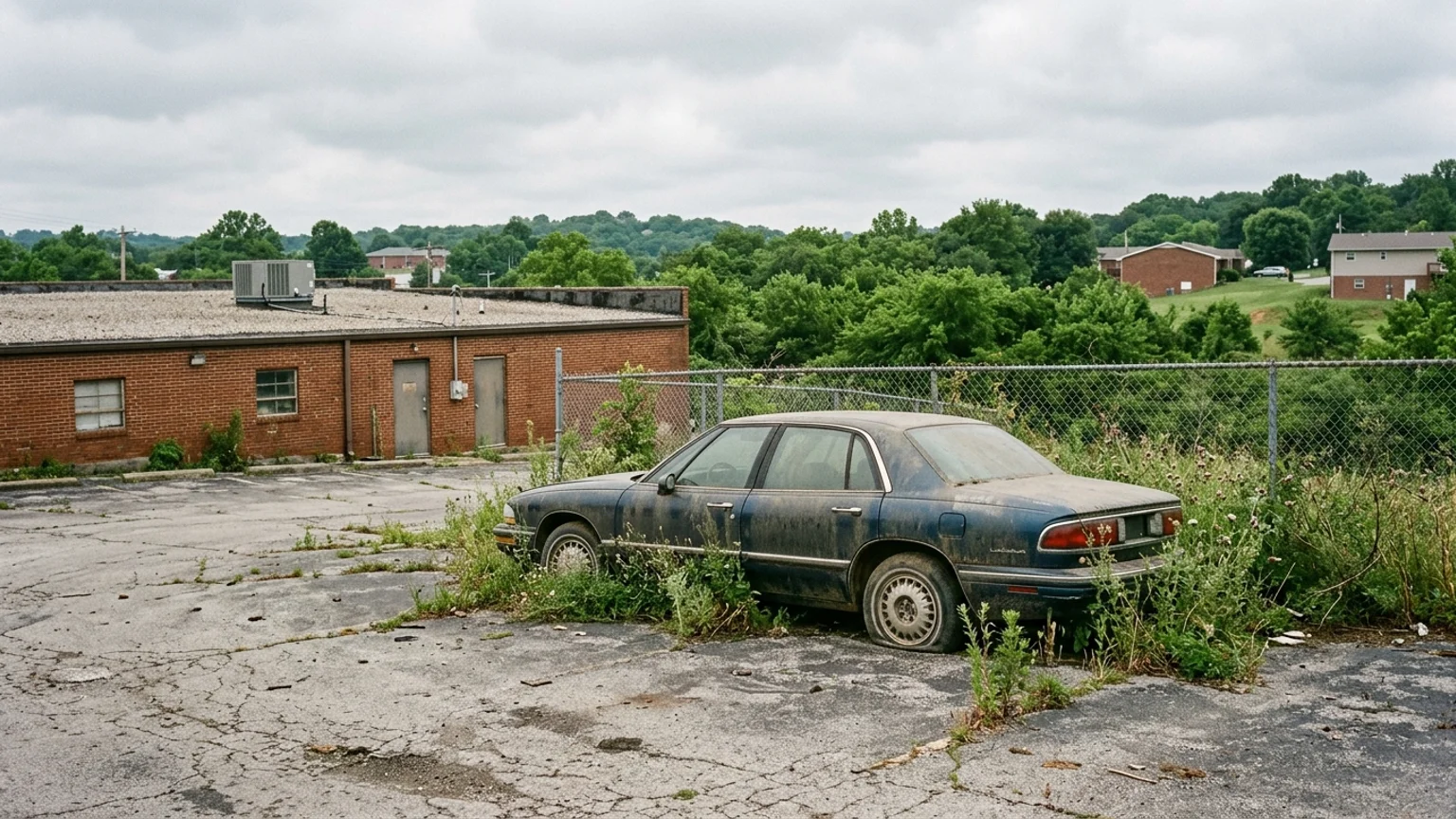
An abandoned vehicle in Missouri can be operational or broken down. What matters is where it sits, who controls that property, and which legal clock applies. In Springfield, removal from a city street follows a different process than removal from a business, apartment complex, or small rental property.
What makes an abandoned vehicle in Missouri, in the statute words
Missouri uses a broad definition. RSMo 304.001(1) defines abandoned property as:
“Any unattended motor vehicle, trailer, all-terrain vehicle, outboard motor or vessel removed or subject to removal from public or private property under 304.155 or 304.157, whether or not operational.”
That last phrase matters. A car doesn’t escape the abandoned-property process because it starts. A dead battery, flat tires, dust, or visible damage also doesn’t decide the issue alone. Location, authorization, and the applicable waiting period matter more.
The definition includes more than passenger cars. It can cover trailers, all-terrain vehicles, boats, and outboard motors. Missouri also defines a towing company as a person or entity that tows, removes, or stores abandoned property.
For a property owner, the first task is identifying the property type. Public streets and highways fall under RSMo 304.155. Private parking lots and residential property generally fall under RSMo 304.157. The Missouri towing and abandoned-property statute explains the public-property process.
Don’t start with the vehicle’s condition. Start with its exact location. A car beside I-44, one behind a Commercial Street business, and one outside a Springfield duplex can face three different procedures.
If the owner has surrendered the vehicle and wants it removed permanently, junk car and abandoned vehicle removal may fit better. An unwanted vehicle isn’t automatically a legal abandoned-property tow. Ownership papers and consent can change the service needed.
Springfield’s 48-hour rule is faster than the state’s
Springfield has its own abandoned-vehicle rule for the public right-of-way. The city may use a sticker and tire marking, then remove the vehicle after 48 hours. That city process applies to streets and other public right-of-way inside Springfield.
The 48-hour city rule and Missouri’s interstate rules shouldn’t be blended. State law permits removal from an urban interstate after 10 unattended hours. A hazardous vehicle may be removed immediately. On a rural interstate, the normal threshold is 24 hours, or four hours when the vehicle is hazardous.
Those interstate clocks can be shorter than Springfield’s street process. The city’s 48-hour rule is faster than the broader state abandoned-property framework for an ordinary vehicle left on a local public street. I-44 and city streets remain separate settings with separate triggers.
That distinction matters near Kansas Expressway, Glenstone Avenue, and the Route 66 corridor. A car on an interstate shoulder isn’t handled like one left along a neighborhood curb. Property owners also can’t apply Springfield’s street procedure to a private parking lot.
When the vehicle sits on public pavement, report its location to the agency responsible for that road. Give a precise cross street, travel direction, and description. Don’t move it onto private property to change the process.
Our local guide to abandoned vehicle removal in Springfield covers the city-facing situation in more detail. If Springfield orders the tow, the vehicle enters the city’s police-ordered system. That isn’t the same as hiring an operator for a private lot.
The one parked car that is never abandoned
Springfield’s rule contains a narrow but important exception. An operable, validly licensed vehicle parked within view of its owner’s residence isn’t abandoned. A long stay at the curb doesn’t erase that protection when every part of the exception applies.
Each word matters. The vehicle must be operable. Its licensing must be valid. It must also sit within view of the owner’s own residence. A car that belongs to someone across town doesn’t fit merely because it’s near a house.
That exception prevents the abandoned-vehicle process from becoming a neighborhood parking shortcut. A vehicle can look neglected without meeting the city’s abandoned standard. Leaves, dirt, or infrequent movement don’t replace the legal test.
If you manage a property near Missouri State University or a dense Springfield neighborhood, confirm whether the car sits on public or private ground. A curb may belong to the public right-of-way. A marked apartment space or rear parking court may be private. That boundary decides who can authorize removal.
Don’t describe the car as abandoned based only on appearance. Record the plate, vehicle description, location, and how long it has remained. Then contact the proper city department or property representative.
If the city has already removed the vehicle, its owner must follow Springfield’s release process. The city’s impounded-vehicle page lists the required documents and police lobby information. It also explains payment to the city contractor. Those city-contract procedures don’t govern a privately authorized tow.
Private lots run on a different clock
A business owner on Commercial Street can’t use the city’s 48-hour street rule inside a private lot. Missouri’s private-property rules control there. The result depends on the property type, posted signs, notice, and written authorization.
For owner-occupied residential property with four units or fewer, removal without a police order requires notice to law enforcement and a 10-hour wait. For other private property without compliant signs, the wait is 96 hours after notice.
Compliant signs can allow removal without that wait. Missouri requires signs at every entrance. Each sign must be at least 17 by 22 inches, with lettering at least one inch high. It must state that unauthorized vehicles will be removed at the owner’s expense. It must also disclose the maximum towing and storage charge and provide a number for locating the vehicle.
Those are legal requirements, not design suggestions. Our guide to Missouri tow-away sign requirements explains how the parts work together. The governing private-property towing statute is the authority to check before posting or authorizing removal.
The property owner must provide written authorization. The towing company must submit Missouri Department of Revenue Form 4669 to Springfield police. The deadline is within two hours for a signed lot or within 24 hours under the other private-property procedures.
Apartment and rental lots need special care. Springfield police won’t tow from those lots at a landlord’s request unless the vehicle creates a genuine hazard. Landlords are directed to the private-tow process instead.
Before requesting private property towing, confirm who has authority over the lot. Preserve photographs of each entrance sign, the vehicle, and its position. Record when notice was made and when the waiting period began. An operator can then review the location and authorization before accepting the job.
After a wreck, five days changes the label
A wrecked car can enter the abandoned-property system even when it wasn’t abandoned at the crash scene. When law enforcement requests the tow and the owner doesn’t retrieve the vehicle within five days, the towing company must report it as abandoned property.
That report begins a longer notice and title process. It isn’t a five-day ownership transfer. It also isn’t a punitive 30-day police hold.
Under RSMo 304.156, the Missouri Department of Revenue searches its records within five working days. It notifies the towing company within 15 days. The towing company then has 10 business days to notify the owner and lienholder by certified mail.
The owner has 10 days after receiving notice to contest the tow in court. After 30 days without redemption or a challenge, the towing company can seek title free of prior liens. The 30-day figure concerns title to an unclaimed vehicle, not a required impound sentence.
The towing company holds a lien for reasonable towing and storage charges. Missouri doesn’t set one statewide dollar cap for those charges. Local governments may set maximums in their own systems, while private operators publish their rate sheets.
For a property manager, this later paperwork is mostly the operator’s responsibility. Your work comes earlier. Confirm property authority, follow the correct notice process, and document the vehicle’s position. Don’t promise the owner that the car will be sold, scrapped, or titled on a particular day. Challenges, notices, and record searches affect that timeline.
When to call us
Once the correct clock has run and your authority is clear, removal stops being a do-it-yourself job. Our line takes calls 24 hours a day; after the greeting and recording notice, leave the vehicle and property details so we can line up an independent local operator. Call us at (417) 221-8911.