To junk a car in Missouri, remove its plates and get the buyer’s notarized affidavit before the car leaves. The purchaser, not the seller, sends the title paperwork to the Missouri Department of Revenue. That reversal matters when an old Ozarks car has sat untouched for years.
When you junk a car in Missouri, the buyer files
Missouri puts the main state filing duty on the purchaser. Under RSMo 301.227, a buyer purchasing a vehicle for salvage, dismantling, or rebuilding must forward the title or existing salvage certificate to the Missouri Director of Revenue.
The buyer has 10 days to send it. The submission includes a completed application and an $8.50 fee. Missouri’s primary-source wording doesn’t clearly identify a form number for this everyday application. The safest instruction is simple: the purchaser should confirm the current application with the Missouri Department of Revenue.
The seller still has several concrete tasks. Remove the plates before the handoff. Keep the buyer’s completed, notarized SHP-498B affidavit. If your title is missing, use Missouri’s confirmed duplicate-title process before assuming another document will work.
Ask the buyer how the car will be classified. Salvage titles and junking certificates don’t have the same effect. That choice can determine whether the vehicle might return to the road or remains permanently retired.
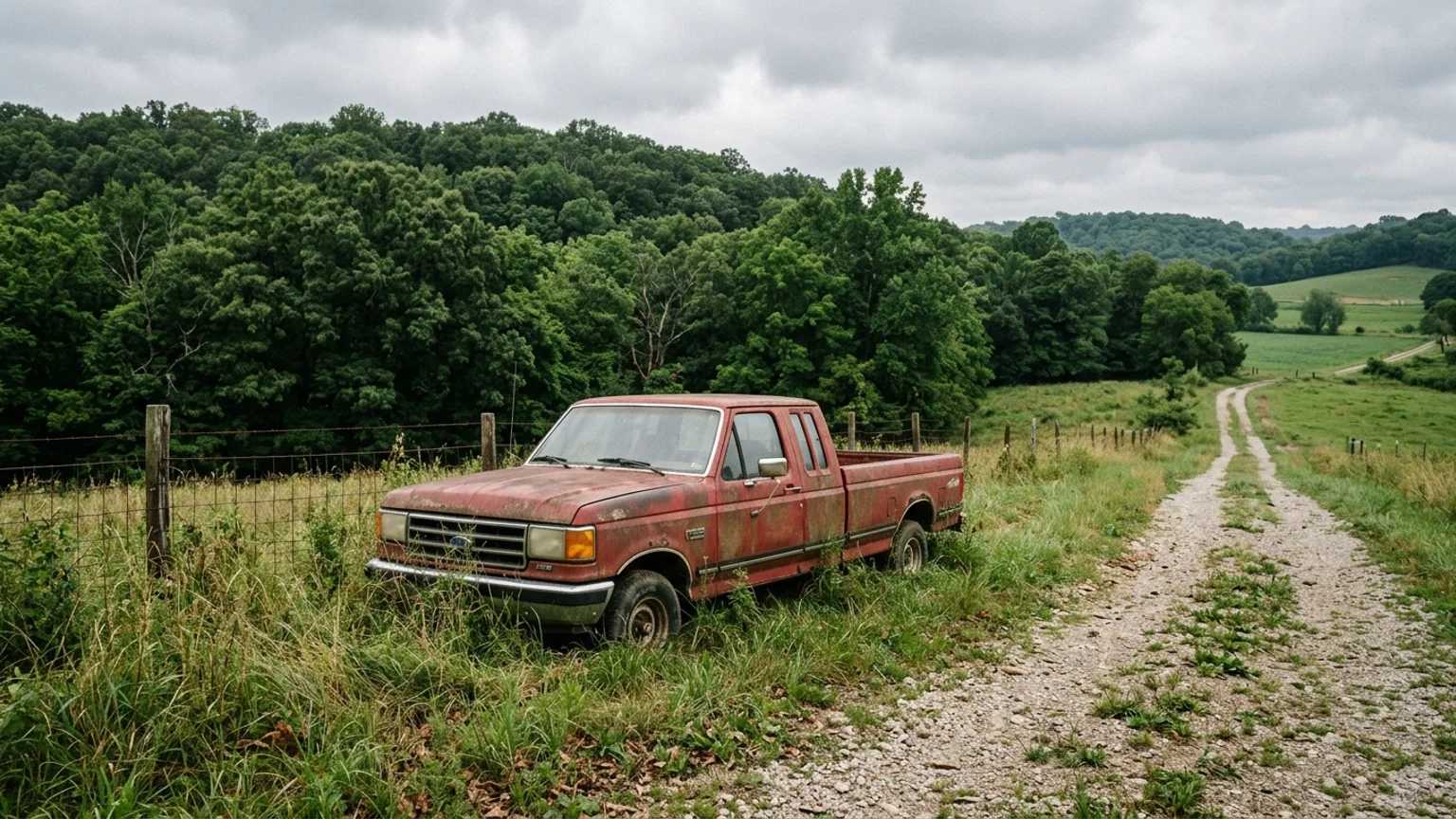
This comes up often around Springfield. A farm truck may sit beyond a Greene County gravel drive. A damaged car might remain near a Christian County low-water crossing. Age and condition don’t shift the filing duty back to the seller.
If the car can’t move under its own power, junk-car and abandoned-vehicle removal can help with the transportation side. The title and affidavit duties still belong to the parties identified by Missouri law.
Salvage title or junking certificate: the six-year line
Missouri uses the vehicle’s model year to separate two paths. If the vehicle is six model years old or newer when purchased, a salvage title is mandatory. If it’s more than six model years old, the purchaser may choose a junking certificate instead.
A junking certificate is permanent. Once Missouri issues one, the vehicle can never receive another certificate of title or salvage title. That car is retired from road use.
There’s one limited chance to reverse that result. If the vehicle had never previously been classified as junk, the applicant may rescind the junking certificate within 90 days. The applicant must surrender it and apply for a salvage title instead. That option is available once and only during that window.
Missouri also has a narrow no-title exception. A scrap metal operator may purchase an inoperable vehicle at least 10 years old, or parts from one, without a title. Don’t treat that as a general rule for missing-title cars. It applies to a specific buyer, vehicle condition, and age threshold.
A car sitting since deer season may look like obvious scrap. Its appearance doesn’t decide which paperwork path applies. Check its model year and ask the purchaser which certificate they’ll request.
The paperwork also doesn’t determine the hauling charge. The operator moving the car sets that price. Our Springfield junk-car removal cost guide explains what to discuss before transport is arranged.
The affidavit that has to be notarized
Every Missouri sale for junk, salvage, or rebuilding requires Missouri State Highway Patrol Form SHP-498B. Its title is “Junk, Salvage, or Rebuilding Affidavit,” and the current verified revision is dated April 2023.
The buyer completes this affidavit before a notary. The seller keeps the notarized document. It isn’t filed with the state as part of the buyer’s title submission.
That division is easy to miss. The purchaser fills it out, but the seller retains it. Don’t let the car leave without the completed, notarized affidavit in your records.
Form SHP-498B certifies that the vehicle lacks a valid safety inspection. It also states that the vehicle can’t be registered or driven in Missouri again until it passes one. The underlying regulation is 11 CSR 50-2.140.
Check the form number carefully. It’s SHP-498B, not SHP-498A. Several unofficial explanations use the wrong identifier. Use the form published by the Missouri State Highway Patrol.
Don’t use DOR Form 5825 for an ordinary private junk-car sale. That form belongs to a narrower process involving a salvage pool or dismantler taking possession at an insurer’s request. It also concerns a vehicle left unclaimed for more than 45 days. It isn’t the standard form for an owner clearing an old car from a driveway.
For the purchaser’s routine DOR application, don’t guess a form number. Have the buyer confirm the current application directly with the department.
Plates come off before the car leaves your driveway
Missouri plates stay with the seller. They don’t transfer to the purchaser with the vehicle. Remove them before the buyer takes possession, even when the car is headed straight toward dismantling or scrap processing.
You can transfer those plates to another vehicle you own. You can also surrender them at a Missouri license office or mail them to the Department of Revenue. Missouri doesn’t provide a refund for the unused portion of the registration.
Make plate removal part of the handoff, not an errand for later. On a farm truck, check both mounting points before transport. On a faded sedan sitting behind a fence, take the plates off before the operator begins loading.
Keep the plate step separate from the title step. Removing plates doesn’t complete the buyer’s filing duty. The purchaser must still send the title or existing salvage certificate, an application, and the $8.50 fee within 10 days.
Transportation is another separate decision. A car with seized wheels, collision damage, or no safe way onto the road may need towing equipment. Our page about towing service in Springfield explains how the referral process works across Greene, Christian, and Webster counties.
Tell the operator how the car sits before dispatch. A narrow gravel drive or soft ground changes the loading problem. It doesn’t change Missouri’s paperwork requirements.
If the title is long gone
Missing titles are common with cars that haven’t moved for years. Missouri has a confirmed duplicate-title route for the titled owner. Use Form 108 and mark it “DUPLICATE.”
The duplicate application must be notarized. The confirmed charges are an $8.50 title fee and a $9 processing fee, totaling $17.50. These are Missouri’s duplicate-title charges, not towing or removal prices.
You can submit the duplicate-title request at any Missouri license office. You may also mail it to the Motor Vehicle Bureau, 301 West High Street, Room 370, PO Box 100, Jefferson City, MO 65105-0100.
Use Form 108 only for this confirmed duplicate-title process. Don’t name it as the routine application that a junk-car purchaser files. Missouri’s primary materials confirm the purchaser must apply, but they don’t clearly establish that everyday application form number for publication here.
The narrow exception remains available for certain vehicles. A scrap metal operator may buy an inoperable vehicle at least 10 years old without a title. A newer car, an operable car, or a different kind of buyer may not fit that exception. Confirm the situation with the Department of Revenue before releasing the vehicle.
A missing title and a nonrunning car are separate problems. DOR handles the title question. An independent operator handles movement. Our guide to Springfield towing costs explains the transport factors to discuss before anyone is dispatched.
The one filing a junking sale is exempt from
A normal Missouri private vehicle sale must be reported within 30 days. Sellers generally use a Notice of Sale, Form 5049, or a Bill of Sale, Form 1957, for that report.
A vehicle sold under a salvage title or junking certificate is specifically exempt from that Notice of Sale requirement. This is one point where a proper junking sale has less seller paperwork than an ordinary private sale.
The exemption is narrow. It doesn’t remove the buyer’s duty under RSMo 301.227. The purchaser still forwards the title or existing salvage certificate within 10 days, along with the application and $8.50 fee.
It also doesn’t replace the notarized SHP-498B affidavit. The buyer completes that form before a notary, while the seller keeps it. The seller must still remove the plates before the car leaves.
Treat each item as its own checkpoint:
- Confirm whether the buyer will pursue a salvage title or junking certificate.
- Remove every plate before possession changes.
- Keep the buyer’s notarized SHP-498B.
- Use the duplicate-title process if the title is missing.
- Let the purchaser handle the required DOR submission.
- Don’t file a Notice of Sale when the vehicle is sold under a salvage title or junking certificate.
That sequence fits an old truck outside Republic just as it does a sedan in Springfield. Local terrain may complicate removal. Missouri’s paperwork roles stay the same.
When to call us
This stops being a practical do-it-yourself job when the car won’t roll, sits beyond a rough gravel drive, or needs loading equipment. Call us at (417) 221-8911. Our 24/7 line records your request, and our referral service can dispatch an independent local operator.