A damaged wheel turns an ordinary AWD tow into a careful loading decision. The right method depends on the owner’s manual, damaged parts, ground clearance, and pickup access. An independent operator should inspect those details before moving the car.
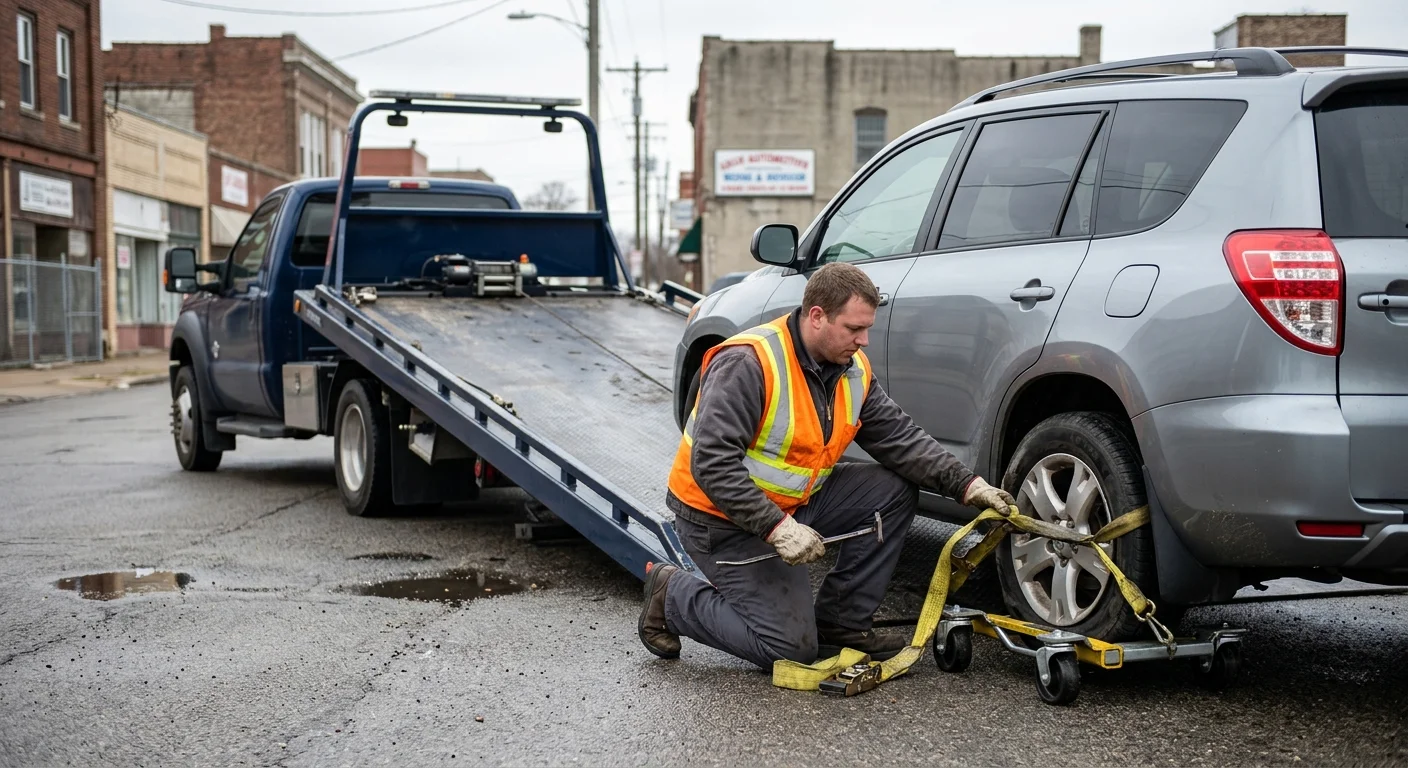
AWD alone doesn’t decide every towing method
All-wheel drive matters, but it isn’t the only deciding factor. Two AWD vehicles may have different towing instructions. Their drivetrains, transmissions, ride heights, and approved attachment points can differ.
Start with the current owner’s manual for your exact model and year. Look under headings such as towing, emergency towing, transport, or roadside assistance. Follow the method named there. Don’t rely on advice written for another vehicle carrying the same badge.
A flatbed carries the vehicle with its wheels off the road. That often makes it a strong option when wheel damage limits rolling. Our flatbed towing service connects Springfield drivers with independent operators who can evaluate the vehicle and pickup location.
A wheel-lift tow raises one end while another set of wheels remains down. Whether that method fits an AWD vehicle depends on its manual and condition. Additional towing equipment may also affect the operator’s decision.
The useful question isn’t simply, “Is it AWD?” The operator also needs to know which wheel is damaged, whether it turns, and whether the car can steer. Our flatbed versus wheel-lift guide explains the basic differences between these methods.
Tell dispatch that the vehicle is AWD before an operator is selected. That information helps match the request with an operator prepared to assess the correct towing method.
Wheel and suspension damage can stop the car from rolling
“Wheel damage” covers several different problems. A tire may be flat while the wheel still sits normally. A wheel may be bent, folded inward, or pressed against the body. Suspension damage may leave the tire pointing in an unusual direction.
Those conditions don’t call for the same loading plan. Describe what you can see without crawling beneath the vehicle. Useful details include the damaged corner, the wheel’s angle, and whether anything touches the pavement. Mention leaking fluid, loose bodywork, or debris around the car.
Don’t test a badly damaged wheel by driving across a parking lot. Don’t force the steering wheel or push the vehicle to see whether it rolls. The independent operator should decide how the car can be positioned and loaded.
Photos can help before dispatch. Take wide views showing the full vehicle and its surroundings. Then photograph the damaged wheel from a safe standing position. Include any curb, wall, ditch, parking stop, or nearby traffic lane that limits access.
The operator may choose a flatbed, a wheel lift with other equipment, or a different recovery plan. That decision belongs to the operator on scene. It depends on which components appear damaged and what the owner’s manual permits.
If the problem is only a flat tire, compare the situation with our guide to mobile tire help or towing in Springfield. A wheel sitting at an abnormal angle is a different problem. Make that distinction clear when you call.
Ground clearance and access shape the load
Ground clearance matters before the vehicle reaches a flatbed. A damaged corner may sit lower than normal. Loose trim, an underbody panel, or a bumper may also hang near the pavement.
Tell dispatch when any part appears unusually close to the ground. Include modifications such as lowered suspension or an added body kit. The operator needs the vehicle’s actual condition, not only its factory specifications.
Pickup access matters just as much. A flatbed needs a workable approach to the vehicle. A car parked nose-first inside a narrow garage presents different constraints than one sitting in an open lot. Low ceilings, tight turns, gate widths, steep driveways, and parked vehicles can change the plan.
Share these access details before dispatch:
- Whether the car is inside, under a structure, or outdoors
- Which damaged wheel is closest to a wall or curb
- Whether the steering responds normally
- Whether the parking brake releases
- Whether you have the key
- Whether another vehicle blocks the approach
Don’t try to build ramps or pull the car with another vehicle. That becomes especially risky when the damaged wheel can’t track straight. Let the operator inspect the approach and choose the loading method.
Springfield also includes gravel drives, sloped lots, and rural roads beyond the city grid. Access near Nixa, Ozark, Republic, or the surrounding countryside may differ sharply from a downtown parking lot. Give the exact setting, surface, and obstacles when describing the call.
A garage and an I-44 shoulder need different plans
A damaged AWD car inside a garage usually creates a space problem. The operator needs to know the door height, driveway slope, and vehicle orientation. Mention whether the car faces inward and whether another vehicle can be moved.
An I-44 shoulder creates a traffic problem instead. Give your direction of travel, nearest exit, mile marker, and visible landmark. Don’t stand beside the damaged wheel if that places you near moving traffic. If anyone is injured or the vehicle creates an immediate danger, call 911.
Before walking around the vehicle, judge whether you can do so away from traffic. A photo isn’t worth stepping into a live lane. Share only the details you can gather from a protected position.
Drivers can check current incidents and road conditions through the MoDOT Traveler Information Map. That may help a caller describe nearby closures or identify the correct stretch of highway. It doesn’t replace emergency help when a crash scene is dangerous.
Location descriptions should be specific. “Near Springfield” leaves too much unanswered. A breakdown near the Kansas Expressway interchange differs from one east of the city or along the US-65 route toward Branson.
The vehicle’s destination also matters. Tell dispatch whether it needs to reach a repair shop, dealership, home, or another approved location. The operator sets the price and selects the towing method. You should receive the price before anyone is dispatched.
What to confirm in the owner’s manual
Use the manual issued for the vehicle’s exact model year. A general online discussion can’t replace manufacturer instructions. If the printed manual isn’t available, check the manufacturer’s official owner portal or app.
Find the towing section and confirm:
- Whether the manufacturer specifies a flatbed
- Whether any wheels may remain on the road
- Whether a transport or tow mode is required
- Where approved towing or recovery points are located
- What the manual says when the vehicle won’t shift or steer
- Whether the instructions change after collision damage
Don’t activate a mode or attach equipment unless the manual clearly assigns that step to the vehicle owner. Some instructions are meant for trained towing personnel. Share the relevant manual page with the operator instead.
Electric vehicles may have their own transport procedures. Our guide to Tesla flatbed towing in Springfield shows why model-specific instructions matter. The same principle applies to other AWD cars, crossovers, and electric vehicles.
If the manual is unclear, say that when you call. Don’t fill the gap with advice from another trim level or model year. The independent operator can assess the damaged components, clearance, and access before choosing a method.
The practical answer is conditional. An AWD car with wheel damage may need a flatbed, but the AWD label alone doesn’t settle it. The current manual and the vehicle’s actual condition should guide the operator’s decision.
When to call us
Once a damaged wheel won’t roll normally, the car sits low, or traffic limits inspection, stop treating it as a do-it-yourself move. We line up an independent local operator, and the line takes calls 24 hours a day. Call us at (417) 221-8911.