A flat near Springfield has three practical endings. A usable spare gets installed, the tire receives mobile attention, or an operator tows the car to a shop. Sidewall damage, shredded tread, two flats, missing equipment, or stuck hardware usually move the decision toward towing.
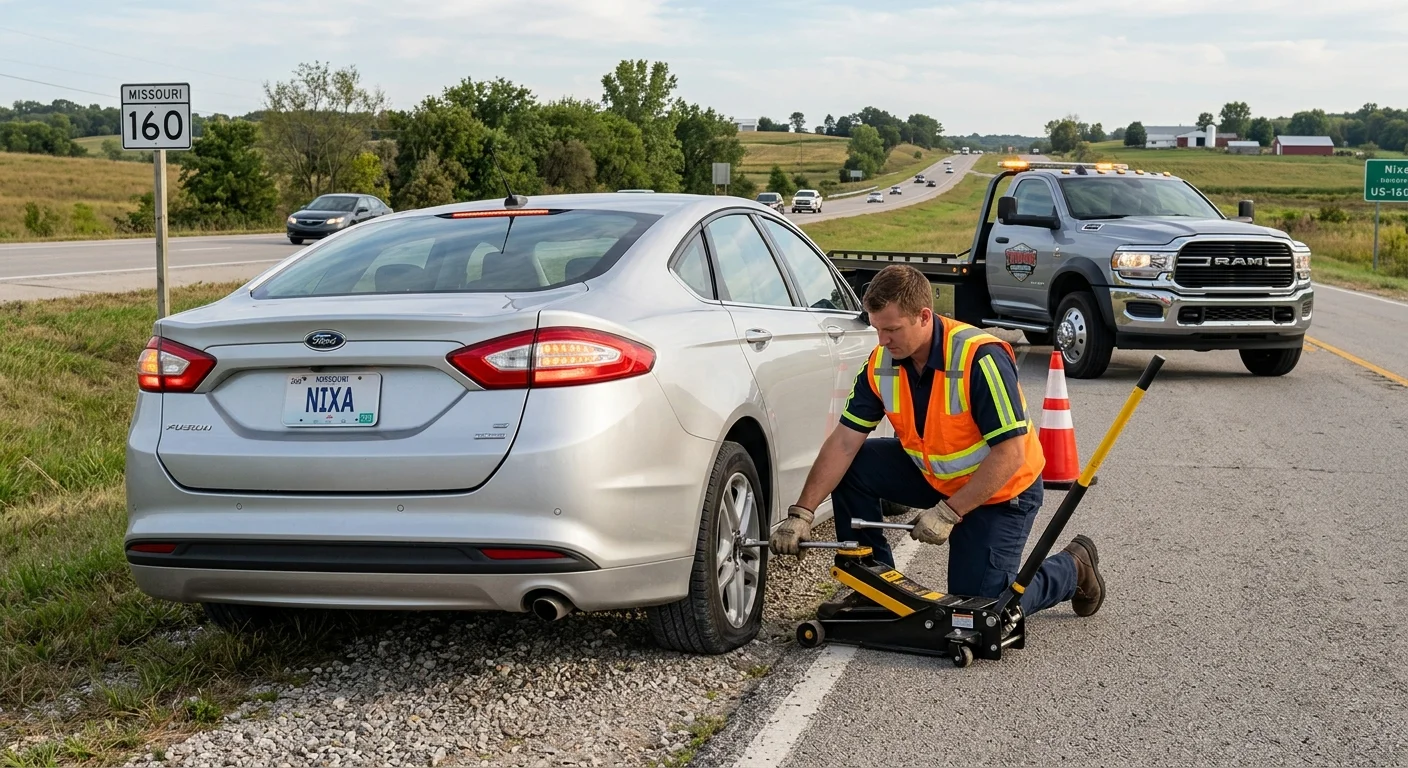
The three ways this ends, and what decides it
The first decision is whether a spare can replace the damaged tire. That depends on the tire, wheel, hardware, equipment, and location.
A roadside change removes the flat and installs the vehicle’s usable spare. Mobile repair asks a provider to inspect or repair the tire where the car sits. A tow moves the vehicle to a tire shop or another chosen destination.
Those services aren’t interchangeable. Before dispatch, explain what happened and ask what work the operator proposes.
Start with five details:
- Is the damage limited to one tire?
- Is the sidewall split, or is the tread shredded?
- Is there a usable spare, jack, and lug wrench?
- Does the wheel have a locking lug nut?
- Is there enough firm, level space beside the car?
Location matters across the Springfield metro. Downtown drivers can usually provide a street and cross street. Along I-44 or US-65, direction and the nearest exit are more useful. Near Republic on US-60, or south toward Nixa and Ozark, a shared map pin can prevent confusion.
The road itself also changes the decision. A wide parking area presents a different work setting than a narrow highway shoulder. Gravel, mud, a slope, or traffic close to the vehicle may rule out a normal change.
Our flat tire service connects drivers with independent local operators. Quick Tow Springfield doesn’t own service trucks or employ the operator. We line up the appropriate help after learning what the car needs.
When a roadside change is the whole job
A roadside change fits when one tire is down and a usable spare is available. The wheel hardware also needs to release normally. The vehicle’s manual should permit the spare’s use.
Check the car before calling. Find the spare, jack, wrench, and locking lug key. Some vehicles store tools beneath the cargo floor. Others place them behind a side panel. The owner’s manual shows the correct storage location and jack points.
Tell the operator whether the spare is full-size or compact. Don’t borrow speed or distance limits from another vehicle. Follow the instructions printed on the spare and in that car’s manual.
A roadside change doesn’t repair the damaged tire. It replaces that tire with the spare carried in the vehicle. The damaged tire can then go to a shop for inspection.
The job becomes less straightforward when the spare looks low, the wheel is bent, or the lug nuts won’t move. Don’t describe these as a routine tire change. Sharing the full condition helps the operator decide whether different equipment or towing is needed.
The same applies when the car sits near traffic. A flat beside a Springfield shopping center differs from one on I-44. On a highway, describe the shoulder, direction of travel, and nearby exit. For current traffic and incident information, check the MoDOT Traveler Information Map.
For help beyond a tire change, our roadside assistance service can connect you with an independent operator. State the vehicle, spare status, and location before anyone is dispatched.
When the tire has to come off to a shop
Visible damage doesn’t always reveal what happened inside the tire. A shop may need to remove it from the wheel before deciding whether repair is possible.
A small object in the tread doesn’t confirm that the tire can be repaired. Its location, internal condition, and any driving after pressure loss still matter. The tire professional examining it should make that decision.
Sidewall damage pushes the job toward replacement rather than a roadside change. The same is true for shredded tread, an exposed inner structure, or damage around the wheel. If the wheel is bent or the tire won’t remain seated, the car may need transport.
Two flat tires also change the answer. One spare can’t replace two damaged tires. A tow is usually the practical next step unless a mobile provider confirms another plan before dispatch.
When searching for mobile flat tire repair in Springfield, MO, ask one direct question: will the provider repair the tire where the car sits, or only install a spare? Some calls described as mobile tire service may still end with transport to a shop. Confirm the scope before the operator starts toward you.
Quick Tow Springfield doesn’t set the operator’s price. Ask for the number before dispatch and explain whether you need a spare installed, an on-site repair assessment, or a tow. Also ask what circumstances could change that number.
If the car must move, emergency towing can connect you with an independent local operator. For help comparing roadside options, read our guide to lower-cost roadside assistance in Springfield.
No spare, run-flats, and locking lug nuts
A flat tire with no spare isn’t a normal roadside change. The next step is either confirmed mobile tire work or a tow to a shop.
Check the cargo area and owner’s manual before assuming the spare is missing. Some vehicles use a different factory setup instead of a conventional spare. The manual explains what the vehicle includes and how that equipment is intended to work.
Don’t treat a run-flat label as universal permission to keep driving. Limits depend on the tire and vehicle. Check the tire information and owner’s manual instead of using a distance or speed remembered from another car. If those instructions aren’t available or the damage looks severe, tell the operator exactly what you can see.
Locking lug nuts create another common barrier. The matching key may be in the glove box, center console, tool tray, or spare-tire compartment. Look for it before dispatch when the setting permits.
Tell the operator if the key is missing. Don’t assume every roadside vehicle carries a matching removal tool. A damaged lock, seized lug nut, stripped fastener, or cross-threaded stud may require shop equipment. That can turn a simple change into a tow.
A compact spare already installed on the car matters too. If another tire goes flat, the original spare position is already occupied. Make that clear during the call.
Providers may also need the tire size before discussing mobile replacement. Read it from the tire sidewall if it’s visible. Quick Tow Springfield doesn’t maintain tire inventory or promise that an operator carries a matching tire. Confirm the proposed service before dispatch.
What to tell whoever you call
Good information keeps a tire call from starting as the wrong kind of job. “My tire is flat” leaves several important questions unanswered.
Share these details:
- Your exact location and direction of travel
- The nearest cross street, exit, business, or visible landmark
- The vehicle’s year, make, model, and body type
- Which tire is affected
- Whether the tread, sidewall, or wheel looks damaged
- Whether one tire or several tires are down
- Whether the car has a spare, jack, and lug wrench
- Whether a locking lug key is present
- Whether a compact spare is already installed
- Whether the vehicle sits on pavement, gravel, mud, or a slope
- The amount of working space beside the affected wheel
- Your preferred destination if towing becomes necessary
Use location details that fit the area. In Springfield, give the street and nearest intersection. On I-44 or US-65, provide the travel direction and nearest exit. Around the Kansas Expressway interchange, identify the ramp or side of the highway. Near Nixa, Ozark, or Republic, a shared map pin can help distinguish a roadside location from a nearby business address.
Describe what happened before the tire lost pressure. A visible object, curb impact, pothole, vibration, or sudden tread separation gives the operator more context. Stick to what you observed. Don’t diagnose internal damage from outside the tire.
Then confirm what the operator plans to do. Ask whether the call is for a spare installation, an on-site assessment, or transport. Get the operator’s stated price before dispatch, and ask what could change it. The independent operator performing the work sets that price.
When to call us
A missing spare, second flat, shredded tread, damaged sidewall, or stuck lug can move the problem beyond a basic roadside change. Our line takes calls 24 hours a day, and calls are recorded after a notice so we can line up an independent local operator. Call us at (417) 221-8911.