A classic car with seized brakes can be towed, but it may not roll onto the carrier normally. The operator must plan for the locked wheels, limited clearance, and storage access before dispatch.
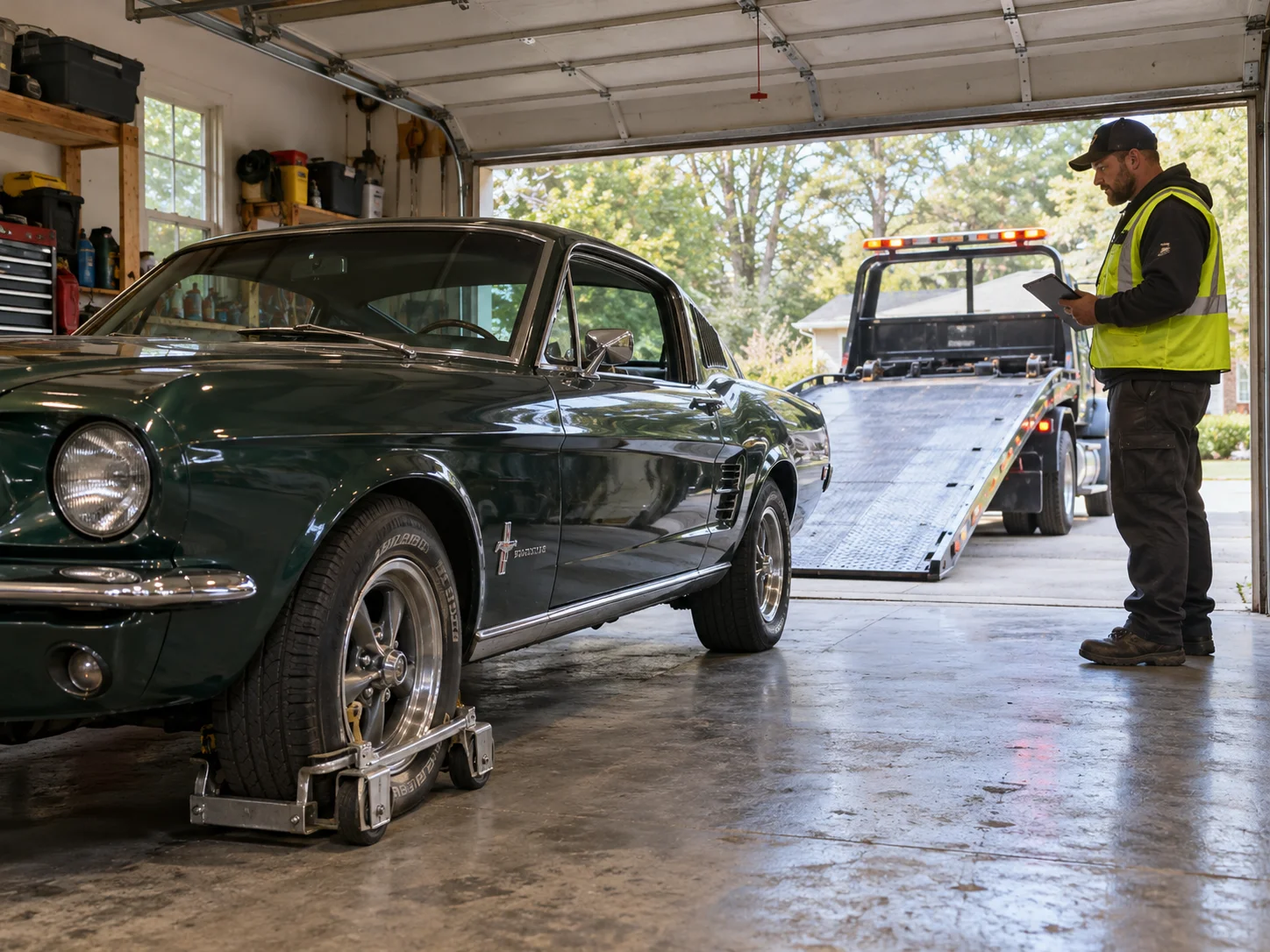
Seized brakes make loading a separate problem
A stored classic may start, steer, and still refuse to move. One wheel might resist, or several wheels may remain locked. Don’t assume more throttle will solve it. The exact cause hasn’t been confirmed until a mechanic inspects the vehicle.
For transport, the immediate question is simpler: can the car roll freely enough to load? Tell the towing service that the brakes appear seized. Don’t describe the car only as “not running.” Those are different transport problems.
The operator may need a loading plan for a non-rolling vehicle. Available methods depend on the car, its position, and the carrier. Ask whether the dispatched operator can assess locked wheels at the pickup point. Also disclose whether the steering turns and whether the parking brake releases.
A flatbed towing operator may be considered because the full car can travel on the carrier. That doesn’t mean every flatbed can load every stored classic. The operator still needs enough working room and a suitable approach.
Avoid trying to drag the car from its storage spot before that assessment. A home remedy could change its position or condition. It could also leave the car harder to reach. If you’ve already attempted to move it, explain what happened.
Quick Tow Springfield is a referral service. We match owners with independent local operators. The operator decides what loading method fits the vehicle and sets the price. You’ll get the number before anyone is dispatched.
Wheel condition and ground clearance shape the method
“Seized brakes” doesn’t tell the operator everything. The wheels, tires, steering, body height, and underside all affect the loading decision.
Start with the locked wheels. Note which ones resist if you already know. Don’t force the car forward just to test them. If you don’t know, say that clearly. The operator can arrive prepared to assess an unknown wheel condition.
Next, describe the tires. Mention visible cracking, a flat tire, or a tire that has separated from its rim. Include any wheel that looks tilted or damaged. Don’t inflate an old tire unless you’re confident it’s suitable for inflation.
Ground clearance also matters. A stock sedan and a modified coupe may need different approaches. Exhaust parts, spoilers, suspension pieces, or long body overhangs may sit close to the floor. Photograph the lowest visible points without crawling beneath an unsupported car.
Our guide to lowered-car towing methods explains why the approach angle deserves attention. A classic car may have stock suspension and still sit low at the nose or tail.
Tell the operator about wheel covers, side pipes, loose trim, and nonstandard bodywork. These details help identify areas that shouldn’t become contact points. Don’t remove rare parts unless you know how they’re attached. Instead, point them out and ask how the operator wants them handled.
For broader transport considerations, read our Springfield classic-car towing guide. A seized-brake move requires an extra conversation about loading, even when the road trip itself is short.
Storage access can matter more than road distance
A car sitting inside a garage presents a different job from one parked outside. Measure the route from the car to the driveway, not only the distance to the destination.
Start with the garage door. Record its clear opening height and width. Then look at the space beside the car. An operator may need room to inspect the wheels and plan the first movement. Boxes, lawn equipment, and another vehicle can reduce that working area.
Photograph the full path outside. Include the garage threshold, driveway slope, curb, overhead branches, and any sharp turn. Show whether the carrier could approach straight or must work from an angle. Don’t assume the street provides enough room because a delivery truck has used it.
Local setting changes the access problem. A Springfield garage near the city grid may have a short driveway but tight street parking. A property near Nixa or Ozark may offer more space with a steeper approach. Outside Republic, Rogersville, or Marshfield, gravel and narrow rural drives can shape where the operator positions equipment.
Share gate details before dispatch. Mention soft ground, drainage dips, loose gravel, or a low carport roof. If another vehicle blocks the path, arrange to move it first.
Road distance still matters, especially when the destination sits across the metro or down the US-65 corridor. Check the MoDOT Traveler Information Map for current traffic and incident information. Still, the first few feet out of storage may require more planning than the highway portion.
The vehicle’s current condition must guide restraint choices
A classic car’s age doesn’t identify suitable attachment points. Restoration work, corrosion, modifications, and earlier repairs may have changed what’s underneath. The operator needs the car’s present condition, not only its year and model.
Tell the operator about visible frame concerns or weakened areas. Mention recent restoration work, air suspension, altered axles, or custom exhaust routing. If the car has manufacturer transport instructions, keep them available. Don’t guess where a restraint should attach.
Point out anything loose before loading. That includes trim, wheel covers, antenna parts, convertible-top pieces, and items stored inside. Ask the operator what should be removed and what can remain secured.
The steering position also matters during planning. Say whether the front wheels appear straight and whether the steering wheel turns. Disclose missing keys or a locked steering column. A seized-brake vehicle with steering trouble presents a different movement problem than a car with freely moving steering.
Don’t choose the restraint method based on an online photo of another classic. Two cars of the same model may have different condition, modifications, or restoration history. The independent operator must inspect the actual vehicle.
Our exotic and classic vehicle towing service page explains how to request a referral for specialty transport. When you call, describe the car as non-rolling and state that seized brakes are suspected. That language helps separate this request from a routine breakdown.
No transport method makes a universal damage-free promise possible. Existing condition, access, and the operator’s inspection must guide the plan.
What to photograph before requesting transport
Good photos let the operator see the problem before the trip. Take them in daylight when possible, but don’t move the car only to improve the pictures.
Begin with four wide views, one from each corner. Keep the entire car visible. These images show its stance, wheel direction, and space around the body.
Then take closer photos of each wheel and tire. Label them by position when sending them. “Driver front” is more useful than “the bad one.” Photograph visible rust, damage, or fluid on the floor without diagnosing its source.
Capture these access details:
- The open garage door from inside and outside
- The clearance above the car
- Both sides of the vehicle
- The floor between the tires and garage exit
- The threshold where the garage meets the driveway
- The full driveway from the street
- Curbs, slopes, gates, gravel, and tight turns
- Low bodywork, side pipes, and visible underside concerns
- Loose trim or parts that need attention
Include a short video only if the problem can be shown without forcing movement. For example, you can record the available working space while walking around the parked car. Don’t attempt another pull for the camera.
Send the year, make, model, pickup location, and destination with the images. Add whether the keys are present, the steering moves, and the parking brake releases. State which wheels seem locked, if known.
Also say how long the car has been stored if you know. That detail doesn’t diagnose the brake problem, but it gives the operator useful context. A mechanic should determine why the wheels won’t release.
When to call us
Call when the classic won’t roll freely, has locked wheels, or can’t leave storage without planned loading. Quick Tow Springfield takes calls 24 hours a day and can line up an independent local operator after reviewing the request. Call us at (417) 221-8911.