Moving a vintage car across Springfield isn’t an ordinary roadside tow. Classic car towing in Springfield should begin with tire-based securement, measured clearance, and a flatbed suited to the car and route.
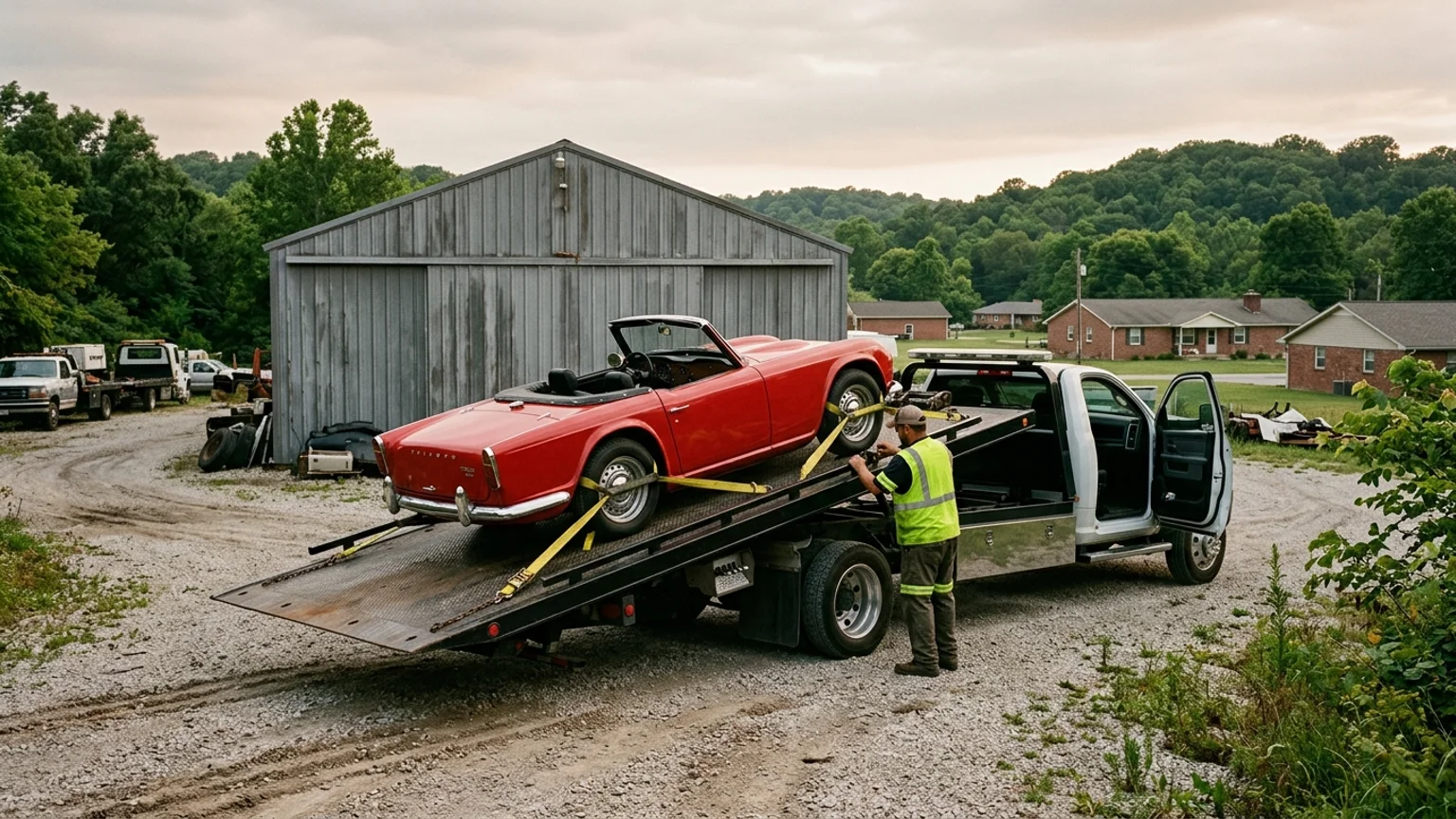
Classic car towing in Springfield starts with soft straps
The first conversation should be about securement, not horsepower. A classic may have original chrome, delicate bodywork, and unfamiliar attachment points. Its frame may also carry decades of repairs or surface corrosion that aren’t obvious from outside.
Soft straps or wheel nets go over the tires. That approach keeps the main securement load away from the frame, subframe, and suspension. It also avoids treating an old structural part like a modern tow point.
Chains attached directly to the frame can create concentrated loads. They can also scrape finishes and catch vulnerable parts underneath. On a restored car, that mistake can become a repair bill before the trip even begins.
Tell the operator if the car has non-standard suspension, wire wheels, narrow tires, fender skirts, or unusually close bodywork. A wheel net still needs enough space around the tire. The operator may need a different strap arrangement based on what you’ve disclosed.
A wheel lift is usually the wrong match for a classic with delicate bumpers, no clear modern tow points, or altered suspension. It raises one axle while the other remains on the road. A flatbed keeps the whole car off the pavement after loading.
Our exotic and classic vehicle towing service connects owners with independent local operators. Explain that the vehicle is a classic when you first call. Don’t wait until equipment has already been dispatched.
Ground clearance is the number that picks the truck
Low clearance changes the entire loading plan. The important measurement is the lowest point beneath the car, not the height of the rocker panel. Exhaust components, spoilers, air dams, transmission pans, and differential housings may sit lower.
Measure that lowest point on level ground when possible. Then photograph the front, rear, and side profile. A clear side photo helps the operator judge wheelbase and overhang. Close photos show which parts are most exposed.
Clearance alone doesn’t settle the question. Approach angle matters too. A car can have reasonable space underneath and still scrape where a long overhang meets the ramp. Lowered cars and vehicles with front splitters need particular attention here.
Ramp extensions can reduce the change in angle during loading. The operator still needs room to position the flatbed and extend the ramps. A cramped garage, steep driveway, soft shoulder, or narrow parking area can change the setup.
That distinction matters across Springfield. A paved lot near Glenstone Avenue presents a different loading surface than a gravel lane outside the city. Mud, loose stone, and uneven ground can limit where the truck can sit.
Our flatbed towing overview explains how the basic equipment works. Before dispatch, share the clearance measurement, parking surface, and access direction. Those details help match the call with an operator prepared for the car.
Open flatbed or enclosed: what actually changes
An open flatbed carries the whole vehicle above the road. It also leaves the car exposed to rain, road grit, and passing traffic. For a short local move in clear conditions, many owners find that tradeoff acceptable.
Enclosed transport adds a barrier around the car. That can matter for fresh paint, exposed interiors, convertible tops, or vehicles that rarely see wet roads. Availability depends on the independent operators serving the route, so ask before dispatch.
The choice isn’t about which option moves faster. It’s about exposure, loading geometry, and the car’s condition. An enclosed carrier still needs suitable clearance and enough space to load. Its ramps don’t erase a low approach-angle problem.
Visibility also changes. An open flatbed lets you and the operator inspect the car’s position during loading. With enclosed transport, the operator works within a more confined area. Precise measurements and accurate photos become even more useful.
Weather should influence the timing. A dry afternoon and a freezing rain event aren’t the same job. During the January 2007 ice storm, the National Weather Service recorded 1.5 inches of ice at Springfield. An unheated-garage classic shouldn’t be treated like a daily driver when similar conditions threaten.
Price comes from the operator doing the work. The vehicle, route, equipment, and loading conditions can affect that number. Our Springfield exotic-car tow cost guide explains what information to gather. You’ll get the operator’s price before anyone is dispatched.
Route 66 cars still live here
Springfield’s classic-car connection isn’t generic nostalgia. The country’s first Route 66 historic marker stands at Kearney Street and Glenstone Avenue. Cars from that era still appear in garages, restoration shops, family collections, and roadside situations across the metro.
A move near Kearney and Glenstone may stay on wide city streets. A trip toward Nixa or Ozark can feed into the US-65 corridor. Westbound travel toward Republic may involve a different mix of city streets and county approaches. The Branson corridor adds distance and heavier visitor traffic.
The last mile often matters more than the highway. Greene and Christian County include gravel roads, sloped drives, and low-water crossings. A driveway that suits a pickup may not provide stable flatbed positioning. Tell us about gates, sharp turns, overhead branches, and soft ground.
Check the MoDOT Traveler Information Map before a planned move. It shows current traffic, cameras, and incident information. That helps you spot trouble along I-44, US-65, or another Missouri route without guessing.
Don’t ask an operator to cross moving water at a low-water crossing. Arrange a meeting point on firm, accessible ground when the property approach is questionable. If road conditions change, update the dispatch details before the operator reaches the turnoff.
Local knowledge helps, but it doesn’t replace accurate information about your driveway. Photos of the entrance and loading area can reveal problems a street address won’t show.
What to have ready before the truck arrives
Start with the car’s year, make, model, and current condition. Say whether it rolls, steers, and brakes. Mention seized wheels, flat tires, steering locks, or a transmission that won’t shift. A non-running car needs a different loading conversation than one that can be guided onto the bed.
Share every meaningful modification. Lowered suspension, side pipes, aftermarket spoilers, wide wheels, and custom bodywork can change clearance. Don’t assume a familiar model still has factory dimensions.
Have the keys available, including any separate ignition or trunk key. Locate the wheel-lock key if the car uses one. Remove loose objects from the cabin, trunk, bed, or convertible-top area. Secure removable panels and tell the operator about parts that can’t be secured.
Photograph the car before loading. Capture each side, the wheels, and vulnerable areas underneath. These images also help communicate existing damage or a part that needs extra clearance.
Don’t crawl beneath an unsupported vehicle to take measurements. Use a safe viewing angle from outside, or provide the best photos you can. Let the operator decide how to inspect areas that can’t be reached from stable ground.
Clear enough space around the vehicle for loading equipment. Move everyday cars, bins, and yard tools out of the path when you can do so safely. If the classic is trapped in a garage, measure the door opening and describe the driveway slope.
Our tow preparation guide covers the details worth gathering. Good preparation doesn’t mean directing the loading process yourself. It means giving the operator accurate facts before equipment is chosen.
When to call us
This stops being a do-it-yourself move when the car needs powered loading, specialized securement, or more clearance than your trailer provides. We match you with an independent local operator, who sets the price before dispatch, and the line takes calls 24 hours a day. Call us at (417) 221-8911.