Someone has parked across your driveway, and your car can’t get out. Your next step depends on one boundary: whether the vehicle sits on Springfield’s public right-of-way or your private property.
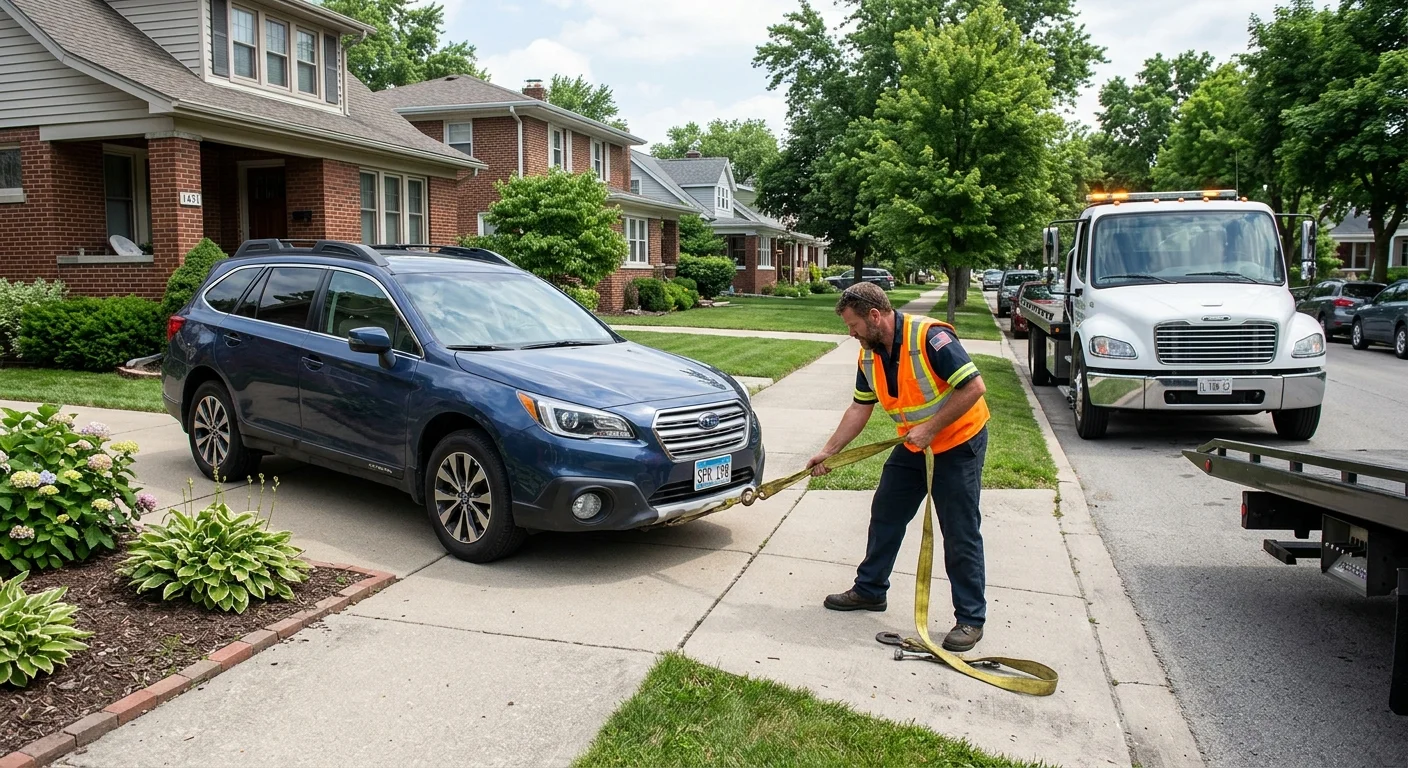
First: is it on the street or on your property?
Start by looking at where the other vehicle’s tires are sitting. A car along the curb, even when it crosses your driveway entrance, is usually on the public right-of-way. A car pulled into the driveway, yard, or private parking area is on private property.
That distinction controls who can start the removal process.
For a vehicle on a Springfield street, contact the Springfield Police Department. Don’t hire a private operator to take a stranger’s car from public property. Police must decide how the vehicle is classified and what authority applies.
For a vehicle sitting on your land, Missouri’s private-property towing rules may let the property owner authorize removal. Those rules include notice, waiting, reporting, and written-authorization requirements. Calling an operator doesn’t erase those steps.
Take clear photos before making the first call. Show the license plate, the vehicle’s position, the curb, and your driveway entrance. Photograph any posted tow-away sign. Note when you first observed the vehicle, but don’t guess how long it was there before that.
Don’t touch, enter, move, or block in the vehicle. A polite attempt to find the driver may solve the problem, but avoid a confrontation. Near Missouri State University, a nearby business or property manager may recognize the car. In residential areas near Kearney and Glenstone, the owner may simply have misjudged the driveway opening.
If the property boundary isn’t clear, ask Springfield police to classify the location. That answer determines whether the police path or the private-property towing process applies.
Calling Springfield police for a car on the public right-of-way
Call Springfield police through the department’s non-emergency channel when the vehicle is on the street. Explain that a parked car crosses the driveway entrance and prevents access. Give the exact address, plate number, vehicle description, and direction it faces.
Say whether anyone is trapped, whether the driveway serves several homes, and whether there’s an immediate safety problem. Don’t describe the car as abandoned unless you know that. A blocked driveway and an abandoned vehicle aren’t automatically the same issue.
Springfield has a confirmed 48-hour process for abandoned vehicles on the public right-of-way. That process involves a sticker and tire marking. We couldn’t confirm a separate Springfield rule requiring an immediate tow solely because a parked car crosses a driveway. Ask the police how they’re classifying the specific vehicle and what happens next.
Police control any tow ordered from the public street. Our emergency towing referral service can’t replace police authority over a stranger’s vehicle on the right-of-way.
If police have the vehicle removed, the registered owner follows Springfield’s release process. The city’s impounded vehicle instructions explain how to contact SPD Headquarters, check for an investigative hold, obtain a release form, and prove ownership. The vehicle owner then pays the city contractor directly.
That city process applies inside Springfield. Nixa, Ozark, Republic, and other nearby communities have their own police departments. A Springfield address can also sit close to a city boundary. Confirm the jurisdiction before relying on Springfield’s procedure.
When you can authorize a private tow yourself
The private-tow path begins only when the vehicle is on private property. Missouri draws another line based on the property’s use and signage.
At an owner-occupied residential property with four units or fewer, law enforcement must be notified and ten hours must pass before a tow without a police order. That waiting period doesn’t apply when the property has signage meeting Missouri’s statutory requirements.
The rule is different for other private property. Without compliant signs, law enforcement must be notified and 96 hours must pass. With compliant signs at every entrance, removal may occur without that wait.
These rules matter across Springfield. A single-family driveway near Battlefield Road isn’t treated like an apartment lot, shopping center, or business parking area along Glenstone Avenue. The property type and posted signs change the available path.
Missouri also requires written authorization from the property owner. If you rent an apartment, don’t present yourself as the owner or authorize a tow from a shared lot. Contact the landlord or property manager. Springfield police won’t tow from an apartment or rental lot merely because a landlord requests it, unless there’s a genuine hazard. The city directs those owners to the private-tow process.
Before arranging removal, tell the operator exactly where the vehicle sits. Share the property type, sign locations, notification time, and photographs. Ask what documentation the operator needs from the owner.
Our guide to Missouri tow-away sign requirements explains the signed-property route in more detail. If the vehicle only overlaps the driveway from the street, return to the police path. Private ownership of the driveway doesn’t give you authority over the adjoining public roadway.
What Missouri requires before that tow happens
Missouri’s private-property towing requirements appear in RSMo 304.157. For an owner-occupied residence with four units or fewer, the confirmed no-sign process has two parts: notify law enforcement, then wait ten hours.
Write down when notification occurred and which department received it. Keep your photos and any written authorization. Don’t count from when a neighbor says the vehicle appeared. Count from the point required by the process, and confirm that point with the operator before authorizing removal.
A sign-based tow has detailed requirements. Signs must appear at every entrance. Each sign must measure at least 17 by 22 inches and use lettering at least one inch high. It must say that unauthorized vehicles can be removed at the owner’s expense. It must also disclose the maximum towing and storage fee and provide a number for locating the vehicle.
A small homemade notice may not meet those requirements. Neither may a sign hidden behind vegetation or missing from one entrance. If you’re unsure, use the notice-and-wait path or get legal advice. Don’t assume a sign is compliant because it mentions towing.
The operator also has reporting duties. For a tow from a properly signed Springfield lot, the Abandoned Property Report, Missouri DOR Form 4669, must reach Springfield police within two hours. The confirmed deadline for the other private-property route is 24 hours. Ask the operator to confirm how it will file the report.
Missouri also requires written authorization from the property owner, and towing companies are liable for damage they cause. These details protect both sides. They also create a record showing why the vehicle was removed.
Vehicle owners facing a disputed tow can review our guide to towing rights in Springfield. Property owners should follow the same rules carefully. An improper removal can create liability rather than solve the driveway problem.
What it costs you, and what it does not
No verified fixed price exists for a private-property tow in Springfield. Missouri sets no statewide dollar cap on towing fees. Local governments may set maximum charges, but we couldn’t confirm a separate Springfield private-property maximum for this driveway situation.
The operator performing the removal sets its price. Quick Tow Springfield is a referral service and doesn’t set that amount. Get the operator’s terms before anyone is dispatched. Ask who will be charged, when charges begin, and whether the property owner owes anything under that operator’s arrangement.
Don’t use Springfield’s police-ordered contract rates as a private-tow estimate. Those published figures belong to the city’s custody-tow contract and aren’t our prices. That contract term ended January 31, 2026, unless renewed, so its current status also requires confirmation.
Missouri law addresses what happens if the vehicle owner returns during removal. State law allows half the regular charge when the owner reclaims the vehicle before actual removal. Springfield police policy is more favorable before hookup, allowing release without charge at that stage. Once hookup or removal has started, ask the operator and police which rule applies to the exact facts.
For a signed lot, the required sign must disclose the maximum towing and storage fee. Photograph that sign before the tow. If there’s no compliant sign, don’t invent a fee or assume the vehicle owner automatically pays every cost. Confirm the arrangement directly with the operator.
Keep the police incident information, authorization, photographs, and operator paperwork together. Those records matter if the vehicle owner disputes the tow later.
When to call us
Call when the vehicle is confirmed to be on private property, the required notice or signage path is satisfied, and you need an independent local operator. Our line takes calls 24 hours a day, and calls are recorded after a notice. Call us at (417) 221-8911.