The operator needs a street address before the truck rolls. Home, a trusted shop, or a longer drop toward Branson or Monett each changes the job. Name the destination first, and confirm that place can take the car tonight.
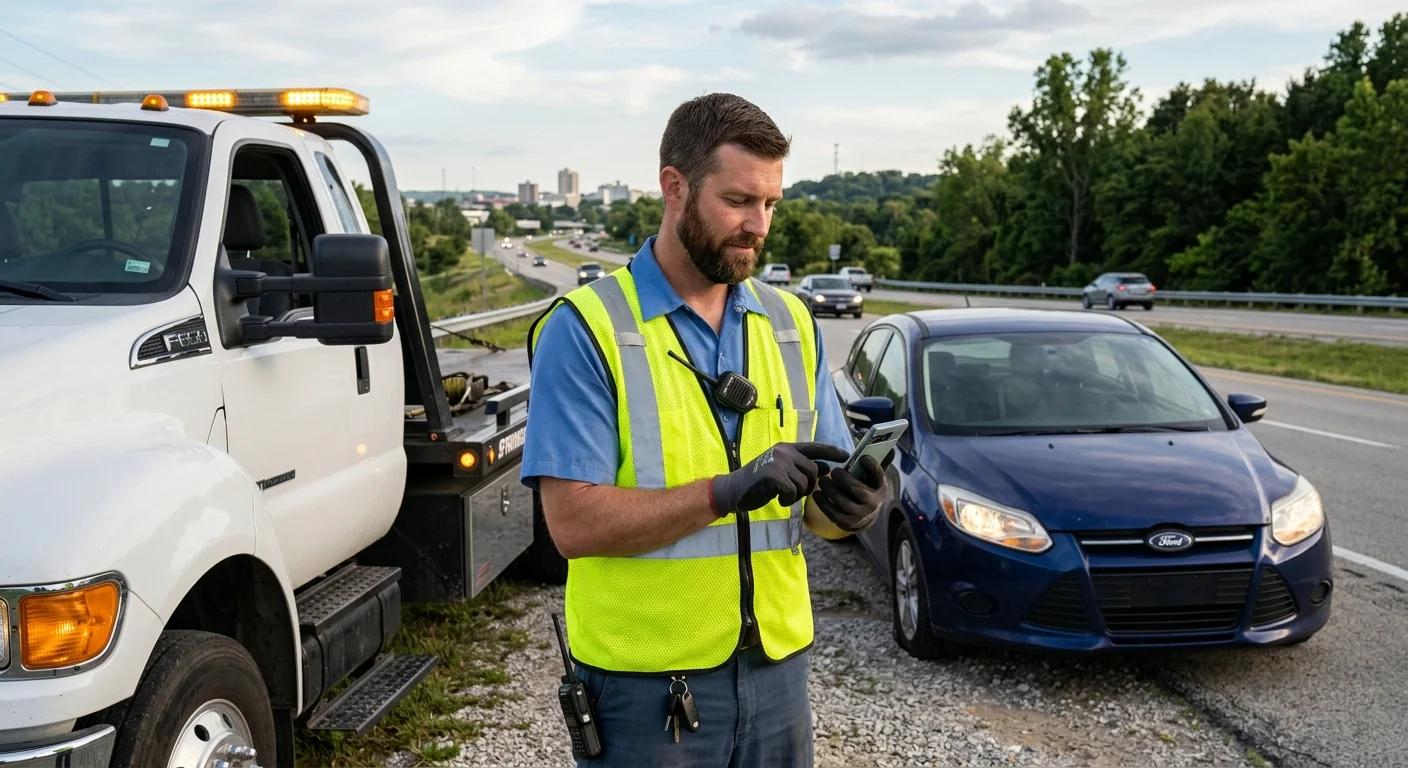
Choose the destination before dispatch
If you called for the tow, you pick the drop-off. That is the answer to where you should have your car towed after a breakdown. The operators we dispatch do not choose a shop for you on an owner-requested job. They do not store the car at a yard we own. Quick Tow Springfield is a referral service. You name the address. They take the car there.
A police-ordered tow is a different path. Springfield runs a single-contractor city contract, not a rotation. Custody tows go to Henry’s Towing Service, LLC, at 2806 S Farm Road 115 in Brookline. You do not pick a repair shop from the shoulder in that case. If the car vanished from a Springfield street and you never called a wrecker, start with the city’s Obtain My Impounded Vehicle page. Then use our walkthrough on how to find a towed car in Springfield. That path is SPD paperwork and a Brookline pickup. It is not the breakdown choice this page covers.
On an owner-requested job, name the destination before anyone is dispatched. The operator quotes the work to that address. Change it after the car is loaded and you have changed the job. Sometimes that means a second trip. If you are still in a live lane of I-44 through Springfield, get out of traffic first. MoDOT’s Motorist Assist / Emergency Response patrol can cover a freeway incident. It does not tow a car to a shop.
Missouri law at accident scenes, RSMo 304.153, honors the owner’s choice of company unless an exception applies. Read the current text through the Missouri revisor for Chapter 304. That statute is about who hooks the car. It is not a list of approved drop-off bays. You still name the bay.
A car that will not roll is an emergency towing job. A shop you trust in another town is a long-distance towing job. Both still start with a street address at the far end.
When home is a practical drop-off
Home is the right drop when the car can sit safely until you choose a shop in daylight. A quiet driveway in Republic is a different call than a Glenstone parking aisle that needs the stall back by morning. Home also works when you have not picked a shop yet. It works when the shop you want is closed, and you do not want the car sitting on a lot you never chose.
Home is a poor drop when nobody can receive the truck. A locked gate, a rule you have not checked with a property manager, a shared alley downtown, or a steep Ozarks driveway can stop the unload. The operator cannot leave a disabled car in the street just because the original plan was home. If the truck cannot get in, you will be choosing a second address from the curb.
Home also fails when the car is unsafe to leave in the open. A smashed ignition, a missing window, or a vehicle that still belongs under a shop’s intake process is a shop problem. We could not confirm any Springfield HOA parking rule that covers wrecker drop-offs. Ask the property manager before you send the truck.
If the plan is home now and a shop tomorrow, say that out loud. You are choosing two moves. The second one is another dispatch. There is no confirmed shortcut in Missouri law that makes an overnight hold at home cheaper than one clean run to the shop. The low-cost path is usually the path you do not have to repeat.
Insurance does not settle the home-versus-shop choice for you. Missouri does not mandate towing or roadside coverage. Whether a home drop is reimbursed depends on your own rider. Read the policy, then our note on whether car insurance covers towing in Missouri.
What to confirm before choosing a repair shop
A shop is the right drop when a mechanic will actually take the car tonight. Call the shop before you call for the truck. Ask three things. They need to accept this make and this problem. A wrecker needs a place to unload in their lot after hours. Someone has to be able to sign the car in, or they need a key-drop process they will stand behind.
If the shop is closed, some will still take a drop. Some will not. That policy is the shop’s, and we could not confirm a citywide rule. Do not guess. If they will not take it, send the car home or pick another shop that will. A closed lot with a locked chain is not a destination. It is a second tow in the morning.
Tell the operator the shop’s full street address, not just the name. Springfield has more than one shop people describe the same way from a shoulder. Republic and the south US-65 side of town are easy to mix up on the phone. Give the bay entrance if the front door is not the wrecker entrance.
Ask whether the car needs a flatbed. AWD, a low spoiler, a locked transmission, or wheels that will not roll can change the truck that shows up. The operator sets that equipment. You get the number for the job before anyone is dispatched. Missouri sets no statewide dollar cap on tow fees. Local governments may set maximums under RSMo 304.158. Springfield’s published contract schedule is for police-ordered tows under the current city term through January 31, 2026. It is not the price of an owner-requested shop run. For how operators in this metro quote a private job, see what a long-distance tow from Springfield can cost and how much a tow costs in Springfield.
People look up an “80% rule” after a breakdown. That phrase is not a Missouri towing statute we could confirm in RSMo Chapter 304. If you mean trailer or hitch capacity, check the vehicle maker’s rating. Do not treat an internet rule of thumb as a drop-off law.
Springfield and outlying-town trips aren’t the same
A short hop from Battlefield to a shop on Kansas Expressway is one job. A run from a dead car on US-60 near Monett, or south on US-65 toward Branson, is another. The road is different. The day is different. The unload at the far end has to be real.
I-44 through Springfield is the state’s longest interstate and a Tier 1 freight corridor. The Glenstone-to-Kansas Expressway stretch carries 65,000-plus vehicles a day, about 23 percent of them semi-trucks. Kansas Expressway at I-44 was North America’s first diverging diamond interchange, in 2009. If you are broken down in that weave, the destination conversation happens after you are off the travel lane. Prime Inc. has been headquartered here since 1980. Freight traffic does not pause because a sedan is dead.
US-65 was the first six-lane freeway in southwest Missouri. South of town it becomes the funnel toward Branson, which sees roughly 9-10 million visitors a year. A visitor breakdown on that corridor often wants a Springfield shop the driver already knows, or a Branson-area bay that will take a drop late. Confirm the bay. Do not assume a visitor-heavy town has an open after-hours lot waiting.
Republic sits on the Greene County west side of the metro. A home drop there can be the cleanest call when the shop you trust is in Springfield and already closed. Monett sits farther out on the US-60 corridor. That is a long-distance conversation, not a neighborhood hop. Say the town. Say the street. Do not say “just take it into Springfield” if you have not named the door.
MSU’s Springfield campus held 25,238 students in Fall 2025. A student car that dies near campus still needs a legal place to sit. Campus lots are not a default wrecker destination unless the school has told you that stall is allowed. We could not confirm a public MSU wrecker-drop policy from the sources in front of us. Ask the university, or send the car home.
What the operator needs about access at both ends
The truck has two problems, not one. It has to reach the dead car. It has to leave the car where you asked.
At pickup, say whether the car is in a travel lane, a shoulder, a ditch, a parking garage, or a gravel drive. I-44 shoulders, US-60 lots, and downtown Springfield garages are not the same setup. A garage with low clearance may need a different truck, or may not take a wrecker at all. If the car is against a curb on a one-way downtown block, say so. If it is in mud off an Ozarks drive, say so. Recovery work is not the same as a simple hook.
At drop-off, say the same class of detail. Driveway slope. Overhead wires. A fence with a code. A shop lot that stacks cars after dark, or a bay door that only opens when a tech is on site. We do not have a verified list of shop hours in this metro, so we will not invent one. The shop tells you. You tell the operator.
Leave a contact who can meet the truck at both ends if you cannot. Keys matter. If the car will not go into neutral, say that before dispatch. If you need the car inside a locked backyard in Republic, someone has to open the gate.
Do not ask the operator to find a shop for you. That is how cars land at a lot you never chose. Quick Tow Springfield matches you with an independent local operator. That operator sets the price, brings the truck, and drives the address you gave. There is no arrival-window claim on this site, because this brand owns no trucks to measure one with.
When to call us
Once the car cannot roll, and you have a real address that will take it, this stops being a push into the next parking stall. Call us at (417) 221-8911. The line takes calls 24 hours a day, every day, and calls are recorded after a notice. Leave the pickup, the destination, and the access notes, and we dispatch an independent local operator to you.