The cost of long distance towing from Springfield depends on more than the miles between two addresses. Operators also consider empty travel, vehicle condition, equipment needs, and access at both ends. Getting those details right produces a useful price before dispatch.
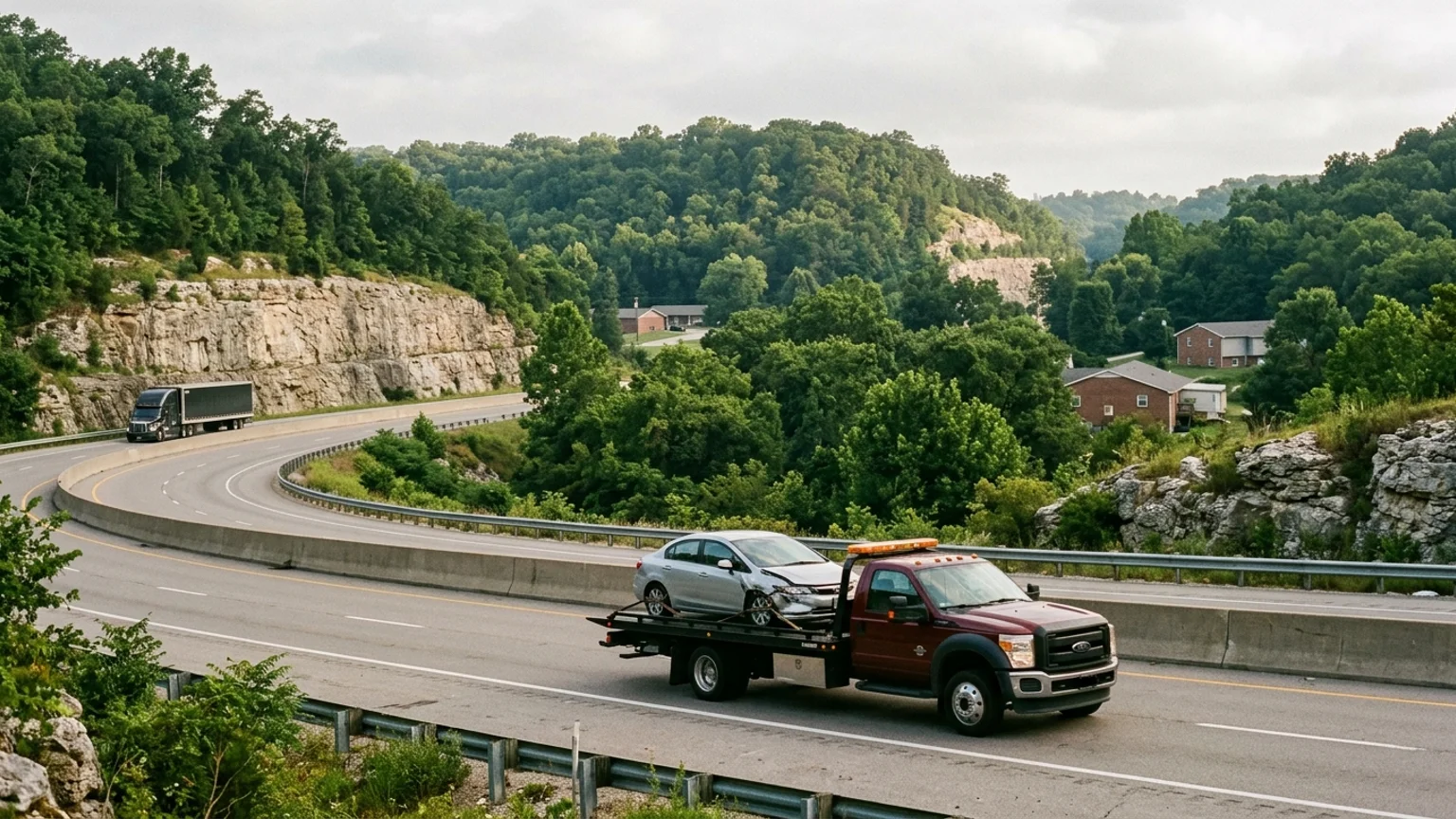
Long distance towing from Springfield: the four inputs
A long-distance towing price starts with four main inputs. Those are loaded miles, deadhead, the vehicle itself, and site access. Each one changes what the operator must send and how the trip works.
Loaded miles begin when your vehicle is secured for transport. They end at the repair shop, home, dealership, or other approved destination. Give the exact pickup and drop-off addresses when possible. A town name alone won’t show the operator which highway approach or driveway is involved.
Deadhead covers miles traveled without your vehicle aboard. The operator may need to reach Springfield from another town. The truck may also return empty after delivery. Those miles still involve the truck, fuel, and driver.
Vehicle details matter too. A small car differs from a large pickup, van, or loaded vehicle. Tell the operator whether the vehicle rolls, steers, and brakes. Mention locked wheels, collision damage, missing keys, low clearance, or loose parts. Those facts determine which equipment can handle the move.
Access is the fourth input. A wide repair-shop lot differs from a parking garage or narrow gravel lane. The destination must have enough room for unloading and turning.
Our site publishes “hookup from $75 plus disclosed mileage.” That figure is only a starting floor for the hook fee. It isn’t a long-distance total. The independent operator sets the full price.
Our long-distance towing service page explains the referral process. You can also review the existing Springfield long-distance cost page before calling.
Deadhead is the charge people never see coming
Deadhead means the truck travels without carrying your vehicle. It’s easy to overlook because those miles happen before pickup or after delivery. They’re still part of the operator’s trip.
Consider a car in Springfield headed toward St. Louis. The loaded portion runs from Springfield to the destination. The operator may then need to return west without another vehicle aboard. Alternatively, the truck may begin outside Springfield and drive empty to reach you.
That’s why two hauls with the same loaded mileage can produce different prices. One operator may already be near the pickup. Another may need a longer empty approach. A return load can also change the route plan, but it shouldn’t be assumed.
Ask how the operator counts mileage. Confirm where paid mileage begins and ends. Find out whether the proposed trip is priced as one-way service or includes return travel. These questions expose the trip structure without relying on a guessed per-mile rate.
A quoted number should also identify added recovery work. A car sitting normally in a driveway is different from one stuck off pavement. Winching and recovery aren’t the same task as loading a rolling vehicle.
Our guide to tow costs in Springfield covers local pricing factors. Long-distance work adds another layer because empty travel can become a larger part of the job.
Quick Tow Springfield doesn’t set the operator’s price. We collect the trip details and match you with an independent operator. You get the number before anyone is dispatched.
Springfield sits in the middle of I-44, and that cuts both ways
Springfield’s location can simplify some long hauls. It can also create long empty returns. The direction of travel matters as much as the destination’s mileage.
I-44 runs 293 miles across Missouri, making it the state’s longest interstate. Springfield sits roughly midway along the St. Louis-to-Joplin run. That places the city near a major east-west freight route, but it doesn’t mean a suitable carrier is always sitting nearby.
A haul east may follow I-44 toward Lebanon, Rolla, or St. Louis. A westbound trip may continue through Joplin. US-65 runs south toward Branson and north toward Bolivar. US-60 connects Springfield with Aurora and Monett to the west.
Each corridor creates a different return problem. A delivery near another active route may give the operator more options. A drop-off on a rural road can leave the truck far from its next suitable job. That difference appears as deadhead, routing, or both.
Road conditions also shape the trip. Missouri deer collisions peak during October and November, especially around dawn and evening. That’s a statewide pattern, not a Greene County count. Winter weather can disrupt much larger areas. During the January 2007 ice storm, the National Weather Service recorded 1.5 inches of ice at Springfield, and about 200,000 customers lost power across the affected region.
Check the MoDOT Traveler Information Map before pickup. It shows current traffic, cameras, and incident information. Conditions may affect routing, but they don’t support guessing a price or arrival window.
Scheduled beats emergency, almost always
A scheduled move gives the operator more facts and more routing choices. An emergency tow begins with a disabled vehicle that needs attention now. That difference can change which truck is practical for the job.
Planned transport works well for a vehicle that’s already parked securely. Examples include moving a project car, delivering a purchase, or taking a disabled vehicle to a specialist. You can confirm the destination, opening arrangements, keys, and access before the operator leaves.
Scheduling also lets you settle an important question: must the vehicle arrive on a specific day, or is there flexibility? A firm delivery requirement limits the operator’s options. A wider window may allow different routing. It doesn’t promise a lower price, but it gives the operator more ways to structure the run.
An emergency has fewer choices. A disabled car on I-44 needs a safe pickup plan. A vehicle in a shop lot may be able to wait. Those situations can share the same destination while requiring different dispatch decisions.
Don’t describe an emergency as a scheduled move to chase a cheaper number. The operator needs the real location and condition. Hidden damage, blocked wheels, or poor access can change the required equipment after arrival.
“Scheduled beats emergency” isn’t a price guarantee. It means better information reduces uncertainty. The operator still sets the price based on the actual trip.
If the vehicle is exposed to interstate traffic, personal safety comes first. Move away from traffic when you can do so safely. For current interstate conditions, use Missouri’s traveler map before choosing a route or meeting point.
What to have ready so the quote is real
Start with exact addresses. Include the pickup location, destination, and any required entrance. A pin helps when the vehicle sits on a rural road, gravel lane, or large commercial property.
Next, identify the vehicle precisely. Give the year, make, model, and general vehicle class. Mention modifications that affect height or ground clearance. Tell the operator about cargo or attached equipment that changes the loading setup.
Describe what the vehicle can still do. Does it roll freely? Does it steer? Do the brakes work? Are the keys available? Note any flat tires, damaged suspension, locked wheels, collision damage, or leaking fluids. Don’t guess when you’re unsure. Say what you can see and let the operator ask follow-up questions.
Explain the space at both ends. A flatbed towing operator needs room to position the carrier, load the vehicle, and unload it. Parking garages, tight apartment lots, low branches, gates, steep drives, and Ozarks gravel roads can limit that space.
Confirm who will release and receive the vehicle. A repair shop may have its own intake process. A private seller may need to provide keys or documents. A gated property may require access arrangements. These details can prevent an operator from reaching the vehicle or completing delivery.
Before dispatch, review the proposed price and its scope. Confirm whether it covers loaded travel, deadhead, loading, and the expected drop-off. Ask what could change the number, especially if the vehicle’s condition isn’t fully known.
Photos can clarify access and visible damage. Send wide views of the vehicle, its wheels, the surrounding space, and the route out. Accurate information helps the operator choose suitable equipment before the trip begins.
When to call us
When the car can’t be driven safely, or the destination goes beyond a local tow, it’s time to line up an operator. Our line takes calls 24 hours a day, and calls are recorded after a notice; we’ll match you with an independent local operator and get the operator’s price before dispatch. Call us at (417) 221-8911.