Missouri doesn’t require car insurance policies to cover towing or roadside assistance. So the answer to does car insurance cover towing in Missouri sits in your policy, not in state law. Check those terms before an operator is dispatched whenever the situation allows.
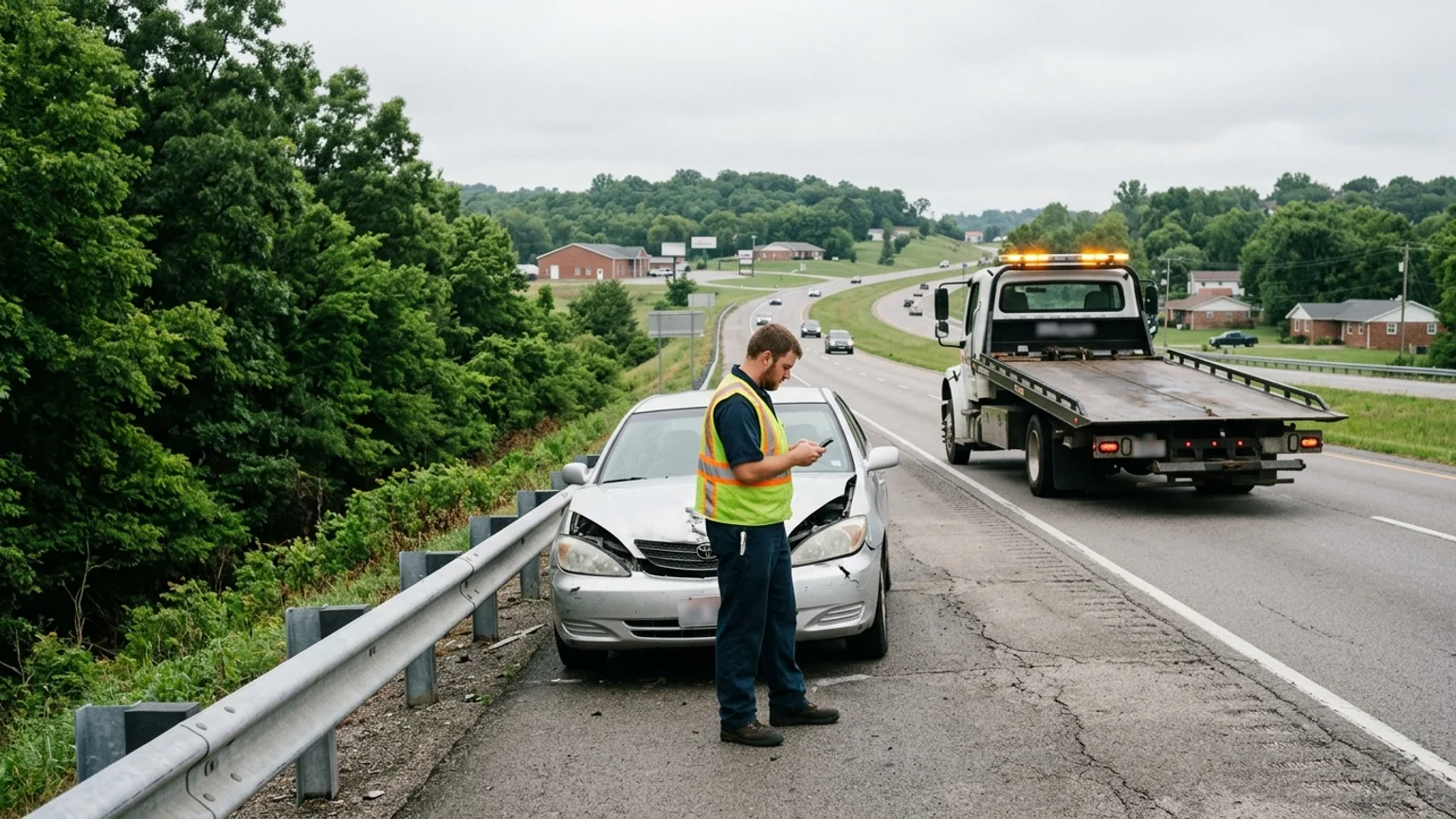
Does car insurance cover towing in Missouri? Not by law
Missouri requires liability coverage, but state law doesn’t require towing coverage. Roadside assistance is optional. Each insurer sets its own policy terms, exclusions, limits, and claims process.
That distinction matters when you’re stopped beside I-44 or US-65. Having a valid Missouri insurance card doesn’t prove that your tow is covered. The card confirms insurance information, but the policy documents control the towing claim.
Start with your declarations page. Look for roadside assistance, towing and labor, or another optional service entry. Then read the matching endorsement or policy section. A short label on the declarations page may not explain where towing applies.
Don’t rely only on what an app button displays. Confirm whether your policy applies to the event that stopped the car. A mechanical breakdown, collision, stuck vehicle, dead battery, and police-ordered tow may be treated differently under the same policy.
Missouri’s liability minimums aren’t listed here because the approved source record doesn’t confirm the figures section by section. Those dollar amounts also wouldn’t answer the towing question. The Missouri Department of Revenue motor vehicle section is the right state resource for current vehicle requirements. Your declarations page and insurer remain the authorities for your coverage.
If towing isn’t listed, don’t assume it’s included. You can still arrange help through a roadside assistance referral, but the operator’s charge and your insurer’s response remain separate matters.
The three places towing coverage hides
Towing-related coverage commonly appears in one of three policy areas. The exact wording matters more than the heading.
First, look for a roadside-assistance rider. This is an optional addition to the main policy. Read the covered-service list instead of assuming every roadside event qualifies. A tow, jump start, tire change, fuel delivery, lockout, and stuck-car recovery aren’t necessarily treated as one service.
Second, check for a towing-and-labor endorsement. The name may sound broad, but its terms control the claim. Find out what event triggers coverage, what documentation is required, and whether labor performed beside the road is treated differently from transportation.
Third, review the physical-damage portions that apply after a covered loss. A tow following a covered collision may be handled under different terms than a tow caused by a mechanical failure. Don’t assume collision-related towing automatically covers a later breakdown.
The declarations page should show whether an optional feature was added. The detailed policy language explains how it works. If those documents aren’t clear, ask the insurer to identify the exact provision that applies.
Ask about the current event, not towing in general. Say where the car is, why it can’t continue, and whether police or another agency ordered its removal. Ask whether you must use a selected provider or may choose an independent operator.
Write down the claim instructions. Save the policy message, claim reference, tow receipt, and destination details. Coverage can’t be confirmed from a Missouri license plate, insurance card, or the fact that another driver’s policy paid for a different tow.
Reimbursement or direct billing, and why it matters at the yard
Before dispatch, ask how payment is supposed to work. Some claims may involve reimbursement after the driver pays. Another arrangement may involve billing between the operator and insurer. Neither method should be assumed without confirmation from the parties involved.
This becomes especially important when the vehicle reaches a tow yard. Insurance approval and vehicle release aren’t the same process. Ask the operator what payment is required, which documents will be provided, and who can authorize release or transport.
If the tow was ordered by Springfield police, follow the city’s process. The Springfield impounded-vehicle page explains how to check for an investigative hold, obtain a release form, and prove ownership. It also identifies the party paid for the city-ordered tow. Don’t print or rely on an old agency number from another page.
A police-ordered tow can involve local contract terms. A voluntary roadside tow involves the independent operator’s terms. An insurance policy adds a third set of rules. Keep those three relationships separate when asking questions.
Missouri doesn’t set one statewide dollar cap for tow fees. Local governments may set maximum charges in certain situations. Our guide to whether towing fees are regulated in Missouri explains that distinction.
Ask the insurer what proof it needs before leaving the yard. That may include an itemized receipt or claim documentation, but the required paperwork couldn’t be confirmed for every policy. Ask the operator what can be supplied, then ask the insurer whether it satisfies your policy.
Distance is where Ozarks claims get complicated
A short tow within Springfield isn’t the same trip as a recovery outside town. Distance, destination, road access, and the type of work can all affect the operator’s charge. Whether insurance responds still depends on the policy.
Consider a breakdown on US-65 near Branson. The driver may want the car returned to Springfield, while the policy may use different destination language. Ask whether it pays toward the nearest suitable repair facility, a chosen shop, or another destination. Don’t guess based on the map.
The same issue appears along US-60 past Monett. A preferred repair shop may be much farther than the nearest available option. Before dispatch, give both locations to the insurer and operator. Ask what portion, if any, the policy treats as covered.
Gravel county roads add another problem. A car sunk into mud or resting beyond the traveled surface may need recovery work before it can be towed. Winching and towing aren’t always treated as the same service. If the vehicle needs pulling, lifting, or repositioning, describe that clearly. Our winch-out service page explains how we match drivers with operators equipped for recovery work.
Location details matter around Springfield too. “Near Kansas Expressway” isn’t enough if the car sits beside an I-44 ramp, under an interchange, or inside a private parking lot. Share the direction of travel, nearest exit, visible landmark, and whether the vehicle is on pavement.
Policy coverage for distance, recovery, and destination couldn’t be confirmed as one Missouri-wide rule because none exists. The insurer’s current policy language controls. Confirm it before authorizing a long tow when conditions permit.
What to ask before the truck rolls
Start with the insurer. Ask whether your policy includes towing for this exact event. Then ask which section provides it. A clear answer should point back to your policy, rider, or endorsement.
Confirm these details:
- Does the policy cover this breakdown, collision, or roadside event?
- Is approval needed before an operator is dispatched?
- May you choose the operator and repair destination?
- Does the policy limit covered distance or destination?
- Is stuck-vehicle recovery treated separately from towing?
- Must you pay first and request reimbursement?
- What receipt or claim documents must you keep?
- Does a police-ordered tow follow a different claims process?
Next, tell the operator the vehicle type and condition. Explain whether the wheels roll, the steering works, and the vehicle is on pavement. Mention a ditch, mud, gravel shoulder, damaged wheel, trailer, or low clearance. Those facts help the operator identify the needed equipment.
Ask for the price before anyone is dispatched. Quick Tow Springfield doesn’t set that price. We match drivers with independent local operators, and the operator providing the service sets the charge.
If you don’t have roadside coverage, you can still request an operator. Our guide to towing without AAA in Springfield explains what information to gather before arranging service. Don’t delay a necessary safety response while debating insurance beside moving traffic.
Finally, keep your paperwork. Save the itemized receipt, destination, operator information, insurer messages, and claim reference. If the insurer denies payment, ask for the policy language behind that decision. Missouri law doesn’t create towing coverage that your policy excludes.
When to call us
When the car can’t continue safely or needs recovery equipment, it has stopped being a do-it-yourself job. Call us at (417) 221-8911. The line takes calls 24 hours a day, and your details help us line up an independent local operator.