Yes, a wheel lift can sometimes move a parallel-parked car downtown. The operator must confirm the approach space, lifting end, and vehicle condition first. Tight spacing, locked steering, drivetrain, or damaged wheels can change the plan.
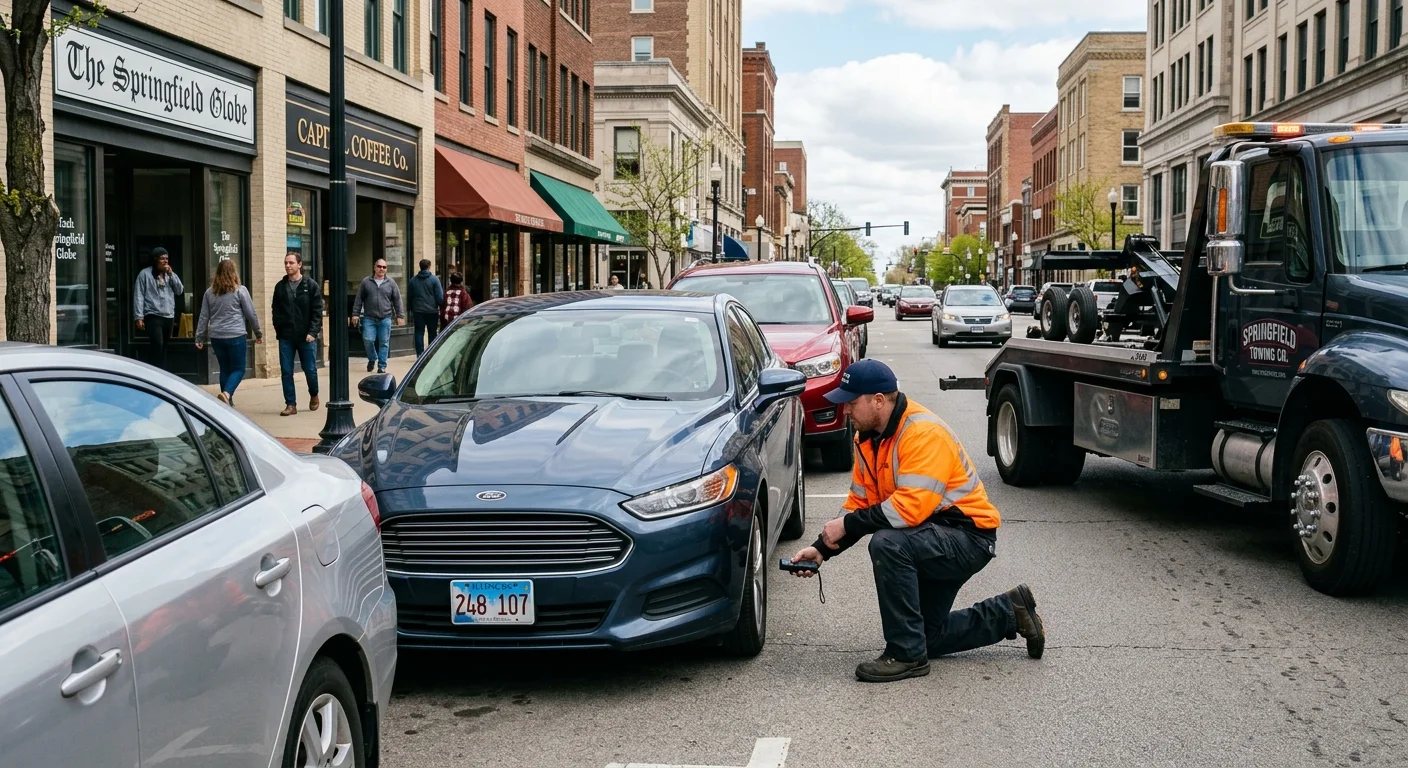
Parallel parking limits the operator’s approach
Wheel-lift towing downtown starts with the space around the car. A vehicle at the curb is usually accessible from the street side. The curb restricts the other side. Parked vehicles may also block a direct approach from the front or rear.
That doesn’t automatically rule out a wheel lift. It means the operator must inspect the entire space. The available lifting end, wheel angle, curb position, and nearby vehicles all matter. There isn’t one clearance measurement that settles every pickup.
Downtown Springfield also needs a precise location. A call near Park Central Square isn’t specific enough by itself. The operator needs the street, nearest cross street, curb side, and the direction the car faces. Walnut Street, South Avenue, and Jefferson Avenue should be named when relevant. A curbside pickup here needs different access details than an open parking lot in Nixa or Ozark.
Moving your own vehicle with permission is also different from removing someone else’s car. Mechanical access doesn’t create legal authority to tow. Missouri’s private-property towing rules address signage and waiting conditions for certain removals without a police order.
If the car isn’t yours, don’t treat this article as authorization. Start with our guide to towing rights in Springfield. Confirm who controls the property and who can request removal before arranging anything.
Drivetrain and wheel position shape the method
A wheel lift supports the tires at one axle. The other axle generally remains on the road during a conventional wheel-lift tow. That makes the vehicle’s drivetrain an important part of the operator’s decision.
Front-wheel drive, rear-wheel drive, all-wheel drive, and four-wheel drive aren’t interchangeable. The correct lifting end can differ. Some vehicles also have manufacturer instructions that limit how their wheels may roll during transport. The operator may check those instructions before choosing a setup.
Don’t guess the drivetrain from the body shape or badge. Share the year, make, model, and trim when you know them. Mention any selectable drive mode shown inside the vehicle. If you’re uncertain, say so. The operator can confirm the configuration instead of building a plan around a guess.
Wheel position matters too. Tires turned toward the curb create a different extraction path than straight wheels. A flat tire, bent wheel, or visible suspension damage adds another constraint. The operator needs to know whether the wheels appear able to roll without making assumptions about unseen damage.
The practical question isn’t only whether equipment can tow a parallel-parked car. It’s whether that method fits this vehicle in this exact curb space. Our wheel-lift towing guide explains the service, but the independent operator selects the final method after reviewing the car and access.
Keys, steering lock, and parking brake matter
Keys can make a tight pickup simpler, but their absence doesn’t settle the method. The operator needs to know whether the steering is locked, the transmission can follow its normal towing procedure, and the parking brake can be released normally.
Modern vehicles don’t all respond the same way. Some use a physical key. Others use a push-button start, electronic parking brake, or manufacturer-specific transport setting. A dead battery may also change which controls are available. Describe what the car does, but don’t force a control to make it cooperate.
Avoid trying to defeat the steering lock, shifter lock, immobilizer, or parking brake. Those are vehicle security and control systems. The operator should work from the manufacturer’s procedure and the condition found on scene. This page won’t provide instructions for bypassing them.
Before dispatch, explain the key situation plainly. Say whether you have every key, a remote that isn’t responding, or no key at all. Note whether the steering wheel appears locked. Share whether the dashboard powers on and whether the parking brake indicator changes when operated normally.
Our article about moving a car without keys covers that issue in more detail. For a parallel-parked car, the key question combines with curb access. A workable missing-key pickup in an open lot may require another approach on a tight Downtown Springfield block.
When a flatbed transfer may still be needed
A wheel lift isn’t always the final transport method. The drivetrain, manufacturer instructions, vehicle damage, or destination may lead the operator toward a flatbed. That decision happens after the operator understands the full situation.
A flatbed keeps the vehicle supported on the carrier during transport. However, the carrier still needs a workable loading position. A flatbed can’t erase the limits created by a curb, traffic position, or vehicles parked closely at both ends.
In some situations, the operator may consider repositioning the car before loading it onto a flatbed. Whether that works depends on the car and the available space. The caller shouldn’t assume that a two-step method is required. The operator selects the equipment and sequence.
Visible wheel or suspension damage should be reported immediately. So should recent collision damage, fluids beneath the car, or bodywork close to the pavement. Don’t move loose parts or test a damaged wheel just to provide more information. Describe what you can see.
Our flatbed towing service page explains when that type of transport may fit. If you’re comparing providers, review how to pick a towing company in Springfield before authorizing the job. Ask how the operator plans to handle the drivetrain, wheel condition, and limited curb access. No responsible method choice can be made from the word “parallel-parked” alone.
What to share before the operator arrives
Good dispatch information helps the access problem before equipment reaches the block. Start with the exact street and nearest cross street. Include the side of the street and the direction the car faces.
Then share these details:
- The vehicle’s year, make, model, and trim
- Its known drivetrain, if confirmed
- Whether you have a working key or remote
- Whether the steering appears locked
- Whether the parking brake releases normally
- The direction of the front wheels
- Any flat tire, damaged wheel, or visible collision damage
- How closely other vehicles sit at the front and rear
- The requested destination and any access limits there
Photos can help explain the layout. Send one showing the front gap and another showing the rear gap. A wider image can show the curb and street position. Only take photos from a place where you already have room.
Downtown location details matter more than a general neighborhood label. State whether you’re near Park Central Square, Walnut Street, South Avenue, or another clear cross street. Mention a garage entrance or restricted access point if it affects the pickup or destination.
Quick Tow Springfield is a referral service. We match callers with independent local tow operators. We don’t own trucks or select the final towing method. The operator reviews the vehicle details, chooses the equipment, and sets the price. You get that number before anyone is dispatched.
When to call us
Once a disabled or boxed-in car can’t be moved normally, it’s time to involve an operator. Quick Tow Springfield can connect you with an independent local operator who selects the towing method, and the line takes calls 24 hours a day. Call us at (417) 221-8911.