Yes, an operator can often move a car when the keys are missing. The right method depends on which wheels can roll, where they’re pointed, and whether the parking brake or steering lock is engaged. Those details determine whether a wheel lift, dollies, or a flatbed fits the job.
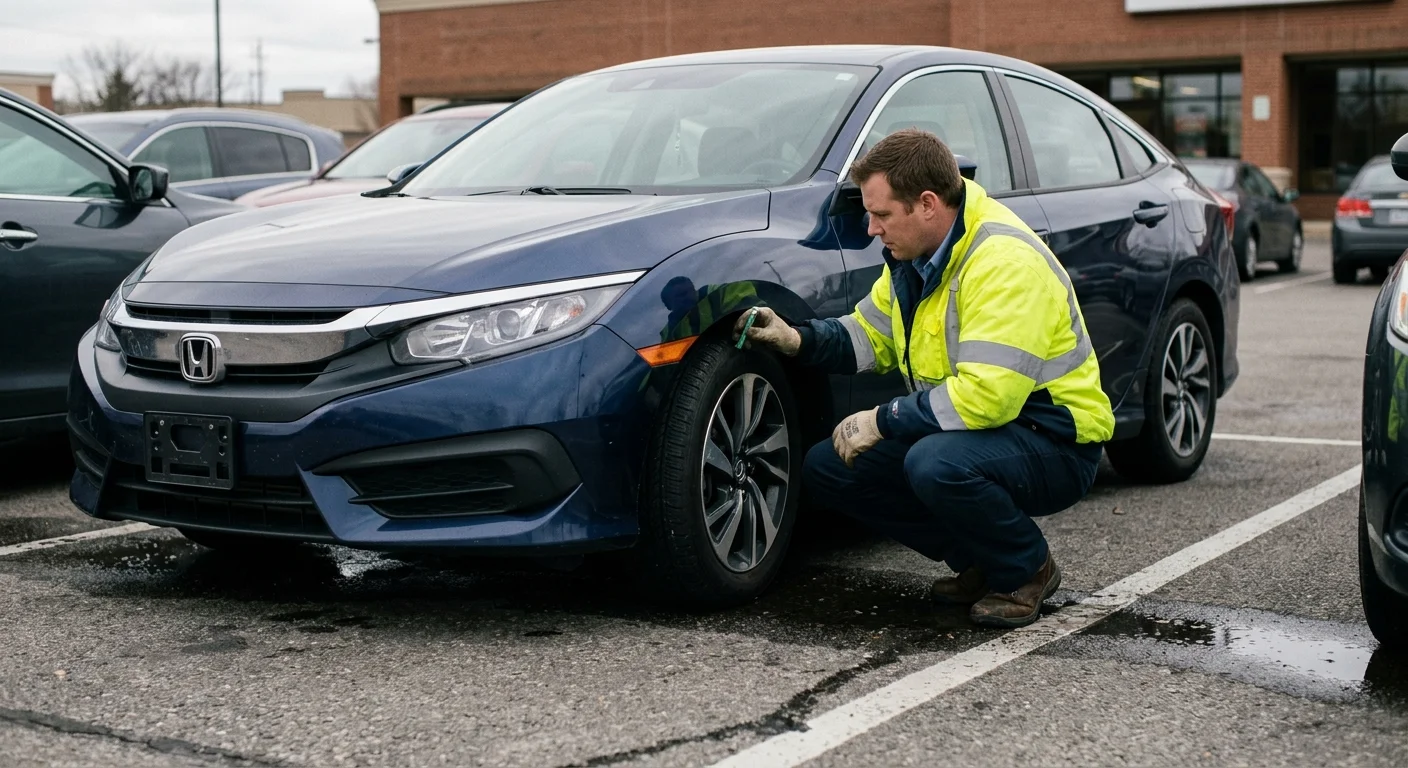
A missing key does not always stop a tow
Door locks and ignition locks don’t automatically prevent an exterior tow. An operator may be able to secure and lift the car without entering it. That decision depends more on the car’s wheel position, drivetrain, clearance, and condition.
A locked door is usually only one part of the problem. The transmission may remain in Park. The steering may be locked with the front wheels turned. An electronic parking brake may still be engaged. A damaged tire or suspension part can also change which towing method works.
The operator needs the vehicle’s year, make, and model before dispatch. Drivetrain information also helps. Front-wheel drive, rear-wheel drive, all-wheel drive, and four-wheel drive vehicles don’t all tolerate the same wheel movement. Manufacturer transport instructions may also limit which wheels can remain on the road.
Location matters around Springfield. A car in a tight garage near downtown presents different access than one beside US-65. A driveway in Nixa differs from a gravel pull-off outside Republic. Overhead clearance, traffic, slope, and space around the car can affect equipment choice.
Don’t try to defeat the ignition, steering lock, or electronic controls. Those systems aren’t the customer’s problem to bypass. Describe what is locked, then let the independent operator choose an exterior loading method.
Parking brake, steering lock, and wheel position
Three things usually shape a keyless tow: the parking brake, steering lock, and transmission position. Each can keep one or more wheels from rolling normally.
A parking brake commonly holds the rear wheels. If it can’t be released without the key, those wheels may need to stay off the pavement or rest on dollies. The exact approach depends on the vehicle and which axle the tow truck lifts.
The transmission creates another constraint. A vehicle left in Park may resist movement through its drivetrain. Dragging locked wheels across pavement can damage tires or place stress on vehicle parts. The operator should account for that resistance before moving the car.
Steering position matters during both loading and transport. Straight front wheels are easier to manage than wheels locked sharply left or right. Turned wheels can also reduce clearance beside a curb, garage wall, or neighboring car.
Tell dispatch what you can see without forcing anything. Note whether the front wheels are straight or turned. Mention whether the parking brake indicator was on when the car stopped. Report flat tires, collision damage, missing wheels, and unusually low ground clearance.
Photos can help show the wheel angles and surrounding space. Include the front, rear, both sides, and the path out. These details help the operator assess whether wheel-lift towing can handle the car without the keys.
When dollies or a flatbed are needed
A wheel lift raises one axle while the other stays near the road. That arrangement can work without keys when the remaining wheels can rotate as required. If those wheels are locked, damaged, or restricted by the drivetrain, the operator may need another setup.
Tow dollies support wheels that shouldn’t roll on the pavement. They can be useful when the parking brake remains engaged, the steering is locked at an angle, or the drivetrain limits wheel movement. Space still matters because the operator needs room to position and secure them.
A flatbed towing service places the vehicle on a carrier instead of leaving one axle on the road. It may fit vehicles with multiple locked wheels, drivetrain restrictions, low clearance, or existing damage. However, a flatbed isn’t automatically the answer to every keyless tow.
The operator still needs a suitable loading angle and secure attachment points. A low parking garage may not have enough overhead room for a carrier. A steep driveway can create a difficult loading angle. Closely parked vehicles may leave too little space for direct alignment.
This is why the phrase “wheel-lift tow without car keys” doesn’t describe one standard setup. The same locked sedan might need different equipment in an MSU parking area, beside I-44, or on a narrow road near Ozark.
Give dispatch the complete situation before an operator is sent. The dispatched independent operator makes the final equipment decision based on the vehicle and its surroundings.
Owner-authorized and private-property jobs differ
Keys and authority are separate issues. A missing key affects how a car can be moved. It doesn’t establish who may request the removal.
For an owner-authorized job, explain your connection to the vehicle and where it should go. Have ownership and destination information ready if the operator requests it. Don’t leave out a lender, repair shop, apartment manager, or other party involved in the move.
Private-property removals follow a different process. Missouri law allows towing without a police order only under specific conditions. Those conditions depend on the property type, notice to law enforcement, waiting periods, or compliant signs at every entrance. The full requirements appear in RSMo 304.157.
The statute includes separate rules for qualifying owner-occupied residential property and other private property. Missouri law also requires written authorization from the property owner for the removal. A vehicle owner’s missing keys don’t replace those authorization requirements.
Our guide to towing rights in Springfield and Missouri explains the distinction between consensual, private-property, and police-directed tows. It also covers the records and notices connected with those jobs.
If your vehicle is missing and you didn’t request service, the key situation won’t identify who moved it. Springfield’s impounded vehicle instructions explain how to check for an investigative hold and obtain a release form. Use that process before arranging another tow from a storage lot.
Details that prevent the wrong truck from arriving
A good dispatch description starts with the car, then covers the location. “Locked car” isn’t enough because it doesn’t explain which wheels can move or whether the truck can reach them.
Share these details before dispatch:
- The vehicle’s year, make, model, and body style
- The drivetrain, if you know it
- Whether the doors, ignition, and steering are locked
- Whether the front wheels are straight or turned
- Whether the parking brake appears to be engaged
- Any flat tires, broken wheels, or collision damage
- The vehicle’s ground clearance or modifications
- The surface beneath it, including pavement, gravel, mud, or grass
- Nearby curbs, walls, parked cars, gates, and overhead limits
- The intended destination and any access limits there
Pinpoint the location instead of naming only a broad road. A car near the Kansas Expressway interchange needs a direction of travel and nearby landmark. A vehicle on US-65 between Springfield and Branson needs the nearest exit or crossroad. For current highway conditions and incidents, check the MoDOT Traveler Information Map.
Mention if the car sits in an active traffic lane or exposed shoulder. Don’t attempt to push a locked vehicle through moving traffic. If there’s an immediate danger or collision scene, follow law enforcement instructions.
Photos often answer questions that a short call can’t. Show every wheel, the available approach, and any visible damage. Our guide to choosing a Springfield towing company also explains what to confirm before accepting an operator’s price and service plan.
When to call us
When locked wheels, tight clearance, traffic, soft ground, or visible damage make the move uncertain, stop trying to push or drag the car yourself. Our line takes calls 24 hours a day, and calls are recorded after a notice so we can line up an independent local operator for the situation. Call us at (417) 221-8911.