An RV breakdown near Branson can involve far more than distance. The operator needs the rig type, condition, location, and destination before pricing the job. There isn’t a verified flat local price we can publish, and Quick Tow Springfield doesn’t set rates. The operator does.
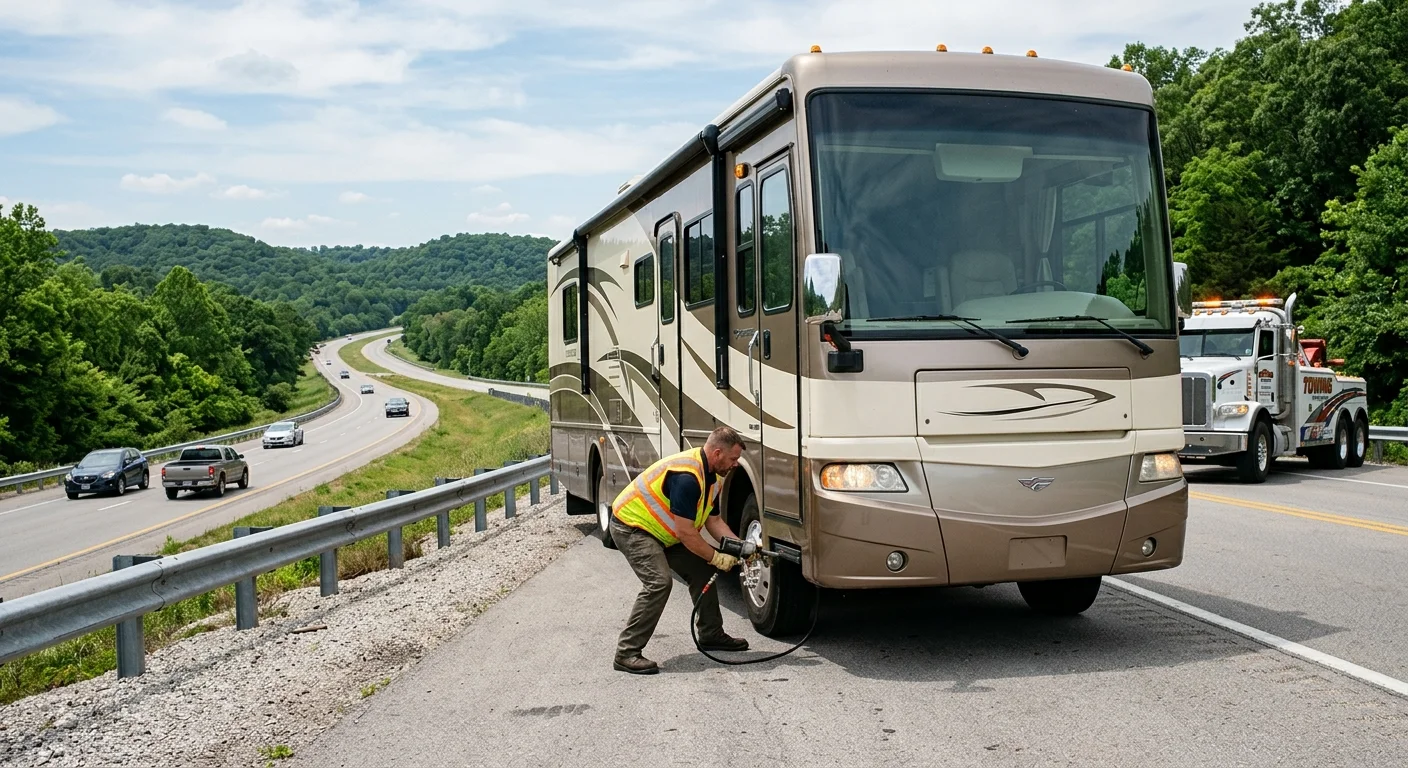
Why no one can quote an RV tow sight unseen
There’s no single answer to “how much does it cost to tow an RV?” A motorhome isn’t simply a larger car. Its length, weight class, axle setup, drivetrain, attachments, and current condition all affect the job.
Missouri doesn’t set a statewide dollar cap on towing fees. Local governments may set maximum charges in certain situations, but that doesn’t create a standard price for a consensual RV tow near Branson. The operator’s current rates and the actual work determine the number.
Quick Tow Springfield is a referral service. Our line is answered 24/7 and we match drivers with independent local operators. We don’t own towing equipment, employ drivers, or set the operator’s price. You get the number from the operator before anyone is dispatched.
Our published light-duty hookup floor doesn’t apply to RVs. It shouldn’t be used to estimate a motorhome towing cost, a fifth-wheel recovery, or a disabled travel trailer.
A useful price conversation starts with the rig’s condition. Does it start? Can it steer, brake, and roll? Are any wheels locked? Is the drivetrain damaged? Is another vehicle or trailer attached?
Access matters too. A rig sitting on firm pavement presents a different job than one buried beside a campsite. A narrow entrance, steep grade, tight turn, or soft shoulder can change the equipment and recovery work involved.
Photos help the operator understand those details. Send views from the front, rear, sides, wheels, and surrounding ground when possible. If something can’t be confirmed, say so. A clear unknown is more useful than a guessed weight, length, or mechanical diagnosis.
Class A, Class C, fifth wheel and travel trailer
“RV” covers several very different vehicles. The operator needs the actual configuration, not just the general label.
A Class A motorhome is built as one large self-propelled unit. A Class C combines a truck-style cab with a larger living body. Either may need equipment selected for its size, weight rating, axle arrangement, and mechanical condition. Some jobs may fall within RV and trailer towing, while larger or more complicated units may require heavy-duty towing.
A fifth wheel and a travel trailer aren’t self-propelled. That creates two possible problems: the trailer itself and the vehicle pulling it. Tell the operator which one failed. A disabled pickup with an intact trailer is different from a trailer with a damaged axle, wheel, suspension part, hitch, or landing gear.
Also mention any vehicle being pulled behind a motorhome. A tow bar, dolly, or enclosed trailer adds another connection and another set of wheels. The operator needs to know whether it remains attached and what condition it’s in.
Transport method is another cost driver. The operator may consider a tow-bar configuration, a flatbed, or a heavy wrecker. The right choice depends on the specific rig and what can still move. Don’t assume a method based on appearance alone.
Start with the manufacturer, model, model year, and overall length. Share the gross vehicle weight rating from the vehicle label if you can read it. Don’t estimate that figure from memory. A clear photo of the label lets the operator work from the rig’s stated information.
For trailers, include the hitch type and tow vehicle. For motorhomes, identify the fuel type and drivetrain if known. Mention extended slides, lowered jacks, loose panels, or anything hanging beneath the rig. Those details can change how the operator approaches the move.
Distance, terrain and the Branson corridor
Mileage matters, but map distance is only part of the story. The operator needs the exact pickup point and destination. Access at both ends can affect the job.
US-65 is the main funnel between Springfield and Branson. The Branson area receives roughly 9-10 million visitors a year, so traffic conditions can vary along the corridor. A pickup beside US-65 near Ozark is also different from one west of Nixa or inside a crowded Branson campground.
Springfield, Ozark, and Branson don’t present the same road environment. Springfield offers more wide urban streets and direct connections. Outside that core, operators may encounter hills, two-lane approaches, gravel roads, low-water crossings, narrow campground lanes, and tight property entrances.
Straight-line distance won’t show those constraints. Neither will a broad location such as “near Branson.” Send a pin, mile marker, campground name, business entrance, or nearby cross street. Explain whether the rig is on a shoulder, parking lot, campsite, driveway, or unpaved road.
The destination needs equal attention. Give the operator its full address before dispatch. Mention whether the drop point is a repair facility, storage property, campground, or private address. Confirm that the destination expects the rig and can receive its size.
Traffic and incident conditions may also affect the available route. The MoDOT Traveler Information Map shows current Missouri incidents, cameras, and road conditions. It can help you describe what’s happening nearby, but it doesn’t replace the operator’s route and equipment decisions.
Our guide to an RV breakdown on US-65 near Branson covers the location details worth collecting. Those details help separate a straightforward transport from a job involving difficult access or recovery.
Recovery work that is not towing
A rig may need recovery before it can be towed. That distinction matters because pulling an RV back onto firm ground isn’t the same task as transporting it to another location.
Soft ground is a common dividing line. A motorhome can settle into wet soil at a campsite. A travel trailer may slide from a gravel pad. A tow vehicle can lose traction beside an Ozarks low-water crossing or on a sloped approach.
Don’t keep spinning the drive wheels. That may bury them farther and change what the operator needs. Instead, describe which wheels are off the firm surface, how deep they appear, and what lies between the rig and the road.
Send photos showing the entire scene. Close-up wheel photos are useful, but they don’t show the recovery path. Include the nearest firm surface, surrounding grade, trees, ditches, fences, parked vehicles, and available approach space.
Other recovery details include a separated hitch, bent axle, locked brake, damaged wheel, dropped landing gear, shifted trailer, or motorhome that won’t release from park. An extended slide or stabilizer also needs to be reported. Don’t force a part that won’t retract.
The operator may treat extraction and transport as separate parts of the job. Ask whether the price explanation covers both. If the rig first needs an accident recovery or winch-out, say that during the first contact rather than after equipment arrives.
Water, mud, steep ground, and limited access should never be minimized as “just a tow.” Describe what you can see and what you can’t confirm. The operator can then decide what equipment fits the conditions.
The questions that get you an accurate number
A useful RV towing service cost discussion begins with specific answers. Have these details ready before the operator prices the job:
-
What type of RV is it? Identify a Class A, Class C, fifth wheel, travel trailer, or another configuration.
-
What are the manufacturer, model, model year, and overall length?
-
What weight information appears on the vehicle or trailer label? Send a photo if you’re unsure.
-
Does the rig start, steer, brake, and roll? Report locked wheels or drivetrain trouble.
-
Is a trailer, tow dolly, or second vehicle attached?
-
What failed? Describe the engine, transmission, tire, wheel, axle, suspension, hitch, or electrical symptoms without guessing at a diagnosis.
-
Where is the rig now? Share an exact pin or address, plus the nearest road or entrance.
-
What surrounds it? Mention hills, mud, gravel, ditches, narrow lanes, low branches, tight turns, or limited approach space.
-
Does the RV need extraction before transport? Show which wheels are off pavement or firm ground.
-
Where is it going? Provide the full destination and confirm it can receive the rig.
-
Are slides, jacks, awnings, panels, or steps extended or damaged?
-
Can you send current photos from several angles?
Once those facts are clear, ask the operator to explain the proposed equipment and charge structure. Confirm whether the discussion covers recovery, towing, route mileage, and the destination. Ask whether any other charge could apply if the on-site conditions differ from the description.
Missouri towing companies must publish rate sheets. Ask the operator for the current rate information that applies to your job. There’s no verified Springfield or Branson RV price that should replace that conversation.
Quick Tow Springfield can collect the situation details and line up an independent local operator. The operator sets the price. Better information at the start helps the operator understand the actual rig, route, and work before dispatch.
When to call us
When the rig can’t roll, sits off firm ground, or needs heavy recovery equipment, it’s no longer a do-it-yourself move. Our line takes calls 24 hours a day, and calls are recorded and transcribed after a notice. We’ll take the details and line up an independent local operator: Call us at (417) 221-8911.