Motorcycle tow rates around Springfield don’t follow one verified citywide schedule for customer-requested jobs. The operator’s number depends on the bike’s condition, pickup access, loading needs, and destination. Quick Tow Springfield is a referral service, so we collect those details and line up an independent local operator who sets the price.
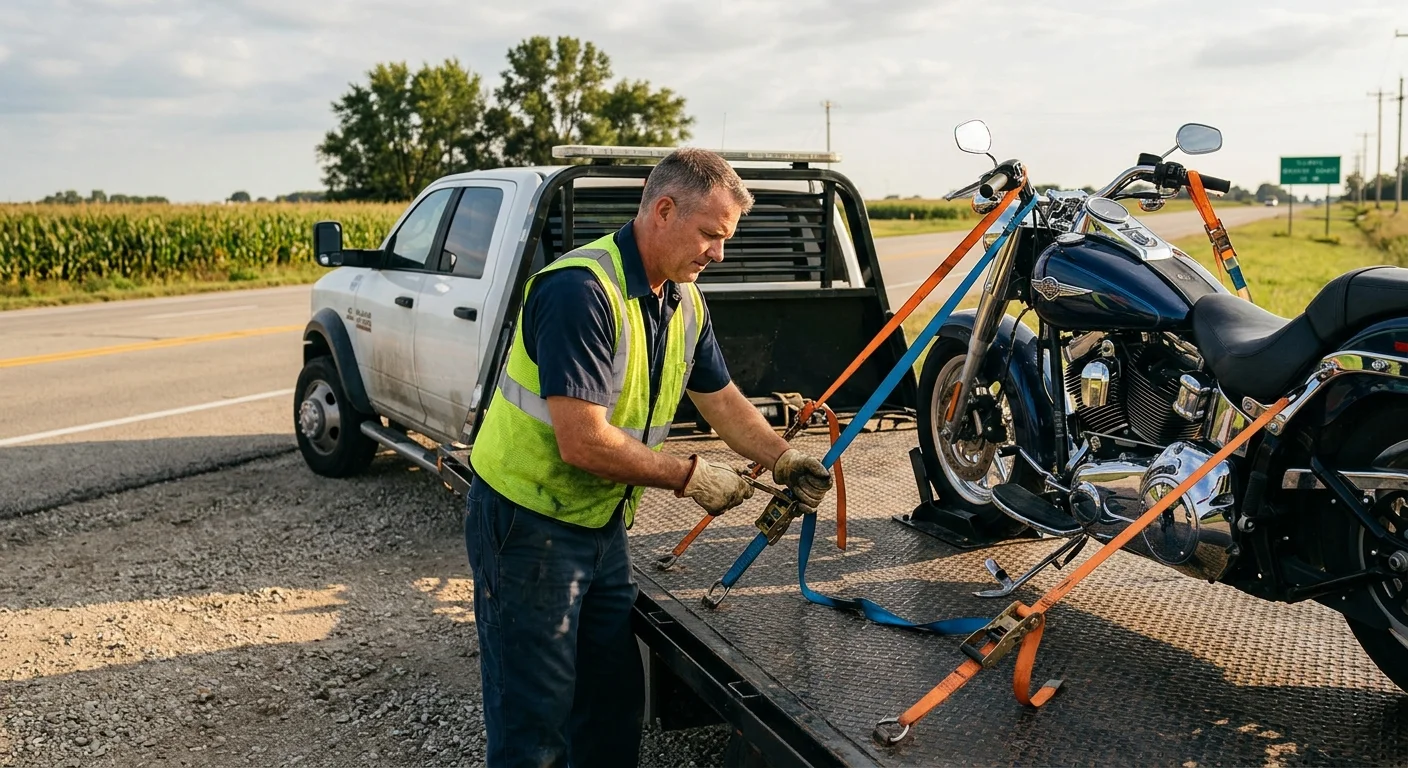
Why the bike name alone isn’t enough for a quote
The motorcycle’s make and model give an operator a starting point. They don’t describe the whole towing job.
Two identical bikes can need very different pickup plans. One might be upright in a level parking space. The other might be leaning against a guardrail with a locked steering column. One may roll normally. Another may have a damaged wheel, loose bodywork, or parts touching the pavement.
That condition matters more than the name printed on the tank. The operator needs to understand how the motorcycle can be approached, positioned, loaded, and unloaded. A model name alone doesn’t answer those questions.
The bike may also carry changes that aren’t obvious from factory specifications. Saddlebags, a windshield, a trike conversion, or other additions can change its shape. Tell the operator about anything that changes the motorcycle’s size or movement. Photos can make those details easier to understand.
This is why a general rate found online isn’t a Springfield quote. It may describe another company, another market, or a simpler pickup. No verified local average for customer-requested motorcycle towing could be confirmed for this page.
Our motorcycle towing referral service starts by gathering the actual job details. The independent operator reviews them and sets the price. You get that number before anyone is dispatched, so you can decide whether to proceed.
Bike condition, access, and destination shape the job
Start with the motorcycle’s current condition. Tell the operator whether it’s upright, on its side, or partly off the pavement. Explain whether both wheels appear to turn and whether the handlebars move. Report visible leaks, collision damage, or loose pieces without forcing damaged parts.
Next, describe access to the motorcycle. A bike beside an open driveway presents a different setup than one inside a parking garage. Gates, tight turns, low clearance, steep grades, soft ground, and blocked approaches can change the loading plan. Mention them before dispatch.
The destination matters too. Give the complete destination, not just a shop name. Springfield has businesses with similar names, and some have more than one location. Confirm the street and city before requesting the operator.
A move across central Springfield differs from transport to Nixa, Ozark, Republic, or farther down the Branson corridor. The route and unloading location become part of the job the operator evaluates. A locked repair shop, narrow residential drive, or gravel drop-off may require a different unloading plan than an open commercial lot.
Some callers ask for flatbed towing options because they already expect that loading method. That request is useful, but the operator still needs the bike’s condition and access details. Don’t treat the equipment name as a substitute for describing the scene.
If your destination changes, share that before dispatch when possible. The operator’s number is based on the job described. A different city, entrance, or drop-off condition changes that description.
Springfield streets and Ozarks gravel pickups differ
A paved pickup near downtown Springfield isn’t the same as a gravel-road pickup outside town. The distance may differ, but access can matter just as much.
Central Springfield brings traffic, curb space, parking lots, and tight commercial entrances. A motorcycle near the Missouri State University campus may sit among parked cars and pedestrian traffic. A pickup near Kearney and Glenstone has a different street layout. The Kansas Expressway and I-44 interchange adds another kind of approach.
I-44 is Springfield’s main freight corridor. A disabled bike on its shoulder needs a clear location description. Give the direction of travel, the nearest exit, and whether the motorcycle is before or after the interchange. You can check current incidents and road conditions through the MoDOT Traveler Information Map.
US-65 also connects Springfield with Ozark and the Branson corridor. “South of Springfield” covers too much ground for a useful quote request. Name the nearest exit, crossroads, business, or recognizable landmark.
Outside the paved core, describe the road surface. Tell the operator about loose gravel, mud, a steep driveway, a narrow lane, or a low-water crossing on the route. Don’t assume a map pin shows those conditions.
MoDOT’s Motorist Assist and Emergency Response Program is a scheduled freeway courtesy patrol based in Springfield. It isn’t a call-out towing service and doesn’t transport motorcycles to a shop. A motorcycle transport request still needs an independent towing operator and a confirmed destination.
What details help the operator quote the job
A useful motorcycle transport quote begins with a precise description. The goal is to remove unknowns before anyone heads toward the pickup.
Have these details ready:
- The motorcycle’s make, model, and approximate size
- Whether the bike is upright or down
- Whether each wheel appears able to roll
- Whether the handlebars and steering appear movable
- Any visible collision damage, leaking fluid, or loose parts
- Added saddlebags, windshields, conversions, or cargo
- The exact pickup location and direction of travel
- Nearby gates, garages, slopes, gravel, mud, or tight access
- The complete destination address
- Any access issue expected at the destination
Photos can help when the condition is difficult to explain. Take a wide photo showing the bike and its surroundings. Add closer views of visible wheel or body damage. Don’t step into moving traffic or an exposed lane to take them.
For highway pickups, a dropped map pin can help. Pair it with words. A pin may not show which side of I-44 you’re on, whether you’ve passed the exit, or which entrance reaches the motorcycle.
Ask what the operator’s number covers before dispatch. Confirm that the bike, pickup conditions, and destination match what you described. Quick Tow doesn’t set that number because the independent operator performs the transport.
Equipment terms can also cause confusion. A caller may know the words “flatbed” or “wheel lift” without knowing what fits the motorcycle’s condition. Our guide to flatbed and wheel-lift towing explains the basic distinction. Let the operator review the actual bike and access needs.
Price isn’t the only selection point. Our guide to choosing a Springfield towing company covers practical questions to ask before agreeing to service.
When roadside help becomes motorcycle transport
A motorcycle that won’t start doesn’t automatically need transport. The problem, location, and bike condition determine what kind of request makes sense.
Begin with what happened. A bike that stopped running in a parking lot presents one situation. A motorcycle with wheel damage, collision damage, or an uncertain mechanical condition presents another. If you’re unsure whether riding is sensible, don’t treat a running engine as proof that the whole motorcycle is ready for the road.
Roadside help generally addresses a problem at the bike’s current location. Transport moves the motorcycle somewhere else. That destination might be a repair shop, a dealership, a home, or another place chosen by the owner.
Tell us your goal when you call. “The bike won’t start” gives less direction than “the bike won’t start, and I need it moved from downtown Springfield to a shop in Nixa.” The second version identifies both the condition and the requested outcome.
An operator may also need to know whether you have the key, whether the steering is locked, and whether someone can receive the motorcycle at the destination. If the shop is closed, confirm where the bike may be left. Quick Tow can’t authorize an unattended drop on another business’s property.
Keep the towing request separate from mechanical diagnosis. We match callers with independent local tow operators. We don’t diagnose motorcycles, perform repairs, own towing equipment, or set the operator’s price.
When to call us
A motorcycle that can’t be moved normally, sits in exposed traffic, or needs transport beyond the roadside has passed the sensible do-it-yourself point. Our line takes calls 24 hours a day and records them after a notice, so leave the bike’s condition, exact location, access details, and destination. Call us at (417) 221-8911.