A long-distance tow gets more complicated when the car can’t roll. The operator needs the mechanical condition, pickup details, and destination before choosing a transport method or setting the price.
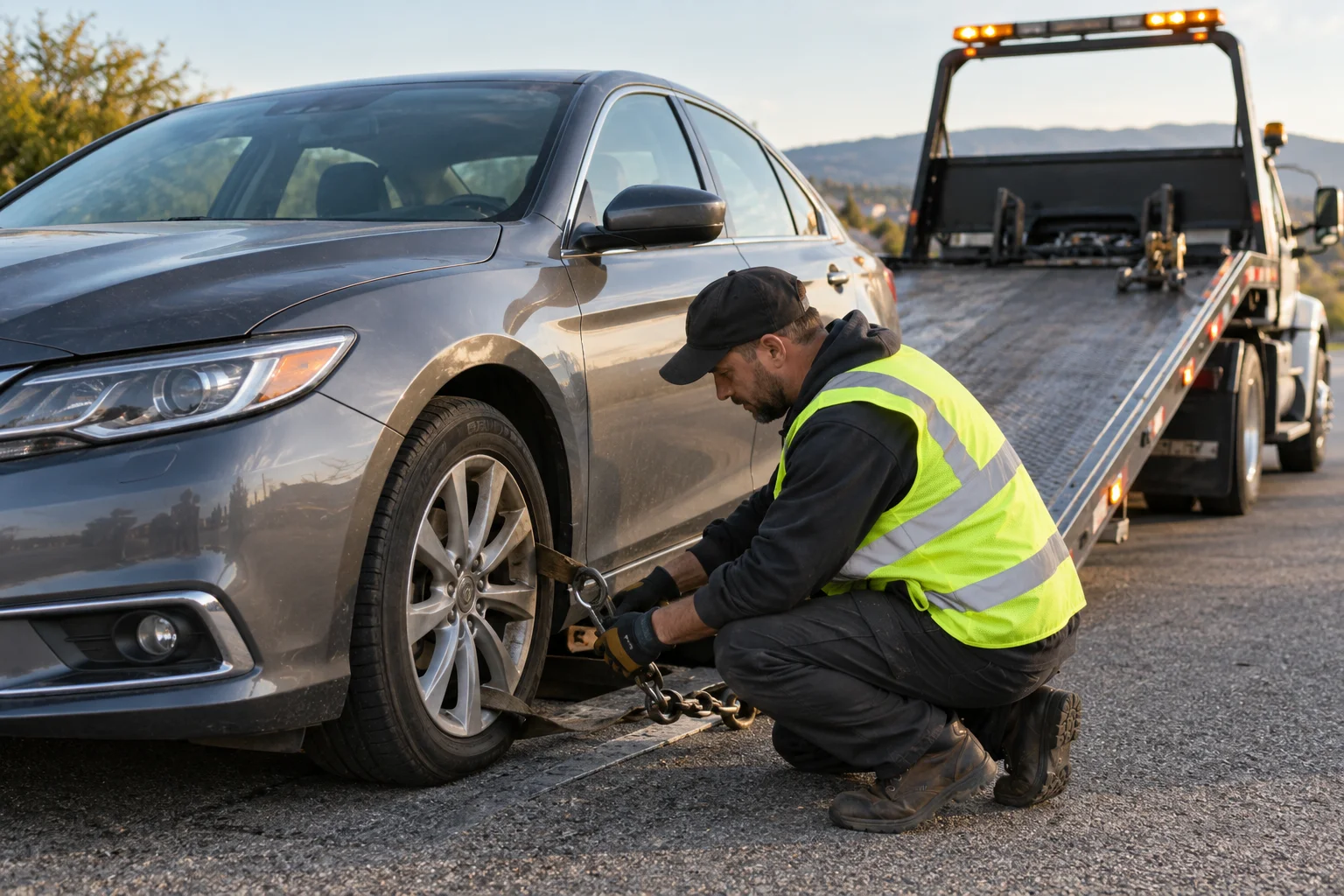
A non-rolling car changes loading before distance matters
A car that won’t start may still roll and steer. A car with locked, damaged, or missing rolling parts presents a different request. That distinction matters before anyone considers the route from Springfield.
Tell the referral service exactly what “won’t roll” means. One wheel may be locked. Several tires may be flat. A suspension part may rest near the ground. The car may have collision damage, or it may have been parked for years. These aren’t interchangeable conditions.
Don’t try to diagnose damage you can’t see. Describe what happened and what you observe. If the car stopped after an impact, say that. If it rolls backward but not forward, include that detail. If nobody has tested whether it moves, say its rolling condition hasn’t been confirmed.
The independent operator decides how the vehicle can be moved and transported. That decision comes after reviewing the car and both locations. A request for long-distance towing should therefore begin with condition, not mileage alone.
This is especially important around Springfield. A disabled car beside I-44 presents a different pickup than one inside a repair lot. A car on a gravel road outside the city may have limited approach space. A vehicle in a Nixa garage may have low overhead clearance. The destination could also create another access problem.
Don’t push, drag, or reposition a damaged vehicle just to simplify the request. Instead, document its current position. Good information lets the operator evaluate the job without relying on a vague description such as “it just needs a tow.”
Locked steering and damaged wheels are separate details
Locked steering and locked wheels aren’t the same condition. Mention each one separately when requesting a tow.
Start with the steering. Tell the service whether the key is present. State whether the steering wheel turns, remains fixed, or hasn’t been tested. If the ignition, steering column, or front end has visible damage, photograph it without trying to force anything.
Then describe every wheel and tire. Identify the corner of the car whenever possible. “Driver-side front wheel” gives the operator more useful information than “one tire is bad.” Mention a missing wheel, a wheel pointing at an unusual angle, or a tire no longer seated normally. Don’t assume that a flat tire is the only problem after a collision.
Also explain whether the transmission can shift. If it won’t move into neutral, report that fact. Don’t experiment with unfamiliar release points or loading procedures. The operator needs the condition, not an attempted repair.
A customer may ask for a long-distance flatbed for a damaged car. Flatbed towing may be part of the discussion, but the customer shouldn’t promise a particular setup on the operator’s behalf. Vehicle condition and site access still control the final method.
Make and model matter too. Include any modifications that change ground clearance or wheel size. If the vehicle carries loose parts, tell the operator before dispatch. A complete description helps distinguish a normal disabled-car request from a recovery or specialized transport problem.
Pickup and destination access shape the request
Long-distance transport involves two access checks. The operator must reach the vehicle at pickup and place it at the destination.
At pickup, describe the surface and position. The car could be on pavement, gravel, grass, mud, or a sloped driveway. It may sit inside a garage, behind a gate, against a curb, or between other vehicles. Note narrow turns, low branches, parking barriers, and overhead clearance. Don’t claim a measurement unless you’ve actually taken it.
Springfield-area geography makes those details meaningful. A downtown parking structure isn’t comparable to an open lot near US-65. A residential driveway in Republic differs from a roadside pickup near Marshfield. Southbound transport toward Ozark or Branson also uses a different corridor than a trip west along I-44.
Road conditions can affect access planning as well. Before meeting the operator, check the MoDOT Traveler Information Map for current traffic and incident information. That map helps with route awareness, but it doesn’t replace the operator’s review of the actual pickup site.
The destination needs the same attention. Confirm whether it’s a repair shop, residence, storage property, auction site, or another approved location. Ask the recipient where a non-rolling car can be placed. A closed gate or crowded lot can stop an otherwise planned delivery.
If you haven’t chosen a destination, read our guide on where a tow truck should take a car after a breakdown. Make that decision before dispatch whenever possible. Changing destinations later can change the operator’s route and price.
The operator needs both locations before quoting
The pickup address alone isn’t enough for a long-distance request. The operator needs the full destination and the car’s condition before giving you the number.
Provide exact street addresses when they exist. Rural properties may need a gate description, driveway marker, or nearby public landmark. Don’t use a broad label such as “outside Branson” when a precise location is available. The US-65 corridor includes very different settings, from open commercial lots to steep or narrow private drives.
Name the responsible contact at each end. The person requesting transport may not be present at pickup. A shop may control the keys, while a property owner controls the gate. Tell the referral service who can grant access and who will receive the vehicle.
Quick Tow Springfield doesn’t set the price. We match drivers with independent local operators. The operator reviews the route, vehicle condition, and access details, then provides the number before anyone is dispatched.
Don’t rely on a general per-mile figure for a car that can’t roll. Loading conditions and site access are part of the request. Our article about long-distance towing costs from Springfield explains the broader cost question, but it doesn’t replace a job-specific review.
Clarify any uncertainty before accepting dispatch. If you don’t know whether the wheels turn, say so. If destination access hasn’t been confirmed, contact the property first. An honest unknown is more useful than a confident guess. It gives the operator a chance to ask the right follow-up questions.
What photos prevent an equipment mismatch
Photos can’t select equipment by themselves. They can, however, show conditions that a phone description misses. Send current, clear images from a safe position.
Begin with a wide view of the entire vehicle. Include the ground around it and the likely approach area. A close-up of damage without the surrounding space doesn’t show whether the operator can reach the car.
Next, photograph all four wheel areas. Give extra attention to locked, damaged, or missing components. Capture the steering position through the windshield if it’s visible. Include low body panels, hanging parts, collision damage, and anything touching the ground.
Take separate photos of site restrictions. Show the garage opening, gate, curb, slope, tight turn, parking barrier, or nearby vehicles. Repeat this process for the destination when access there may be limited. The receiving space matters as much as the pickup space.
Useful photos for a transport non-rolling car request include:
- The full car and its surroundings
- Each wheel and tire
- Visible steering or suspension damage
- The surface beneath the vehicle
- Clearance around the front and rear
- Gates, garages, slopes, and narrow approaches
- The intended placement area at the destination
Don’t crawl beneath the car or enter moving traffic for a better picture. If an angle isn’t safely available, state that it couldn’t be photographed.
Send the photos before dispatch when the referral process allows it. Keep the car in the same position afterward. If its condition or location changes, report the change. The operator makes the final equipment and loading decision after reviewing the available details.
When to call us
Call when the car has locked, damaged, or missing rolling parts and must travel beyond a local repair stop. We’ll take the request and line up an independent local operator to review both locations, determine the method, and set the price before dispatch. The line takes calls 24 hours a day, and calls are recorded after a notice. Call us at (417) 221-8911.