A disabled trailer can leave you checking two things at once: towing help and insurance coverage. In Missouri, towing coverage is optional, so your policy terms control the answer. Coverage can depend on the insured vehicle, the trailer, and why the tow is needed.
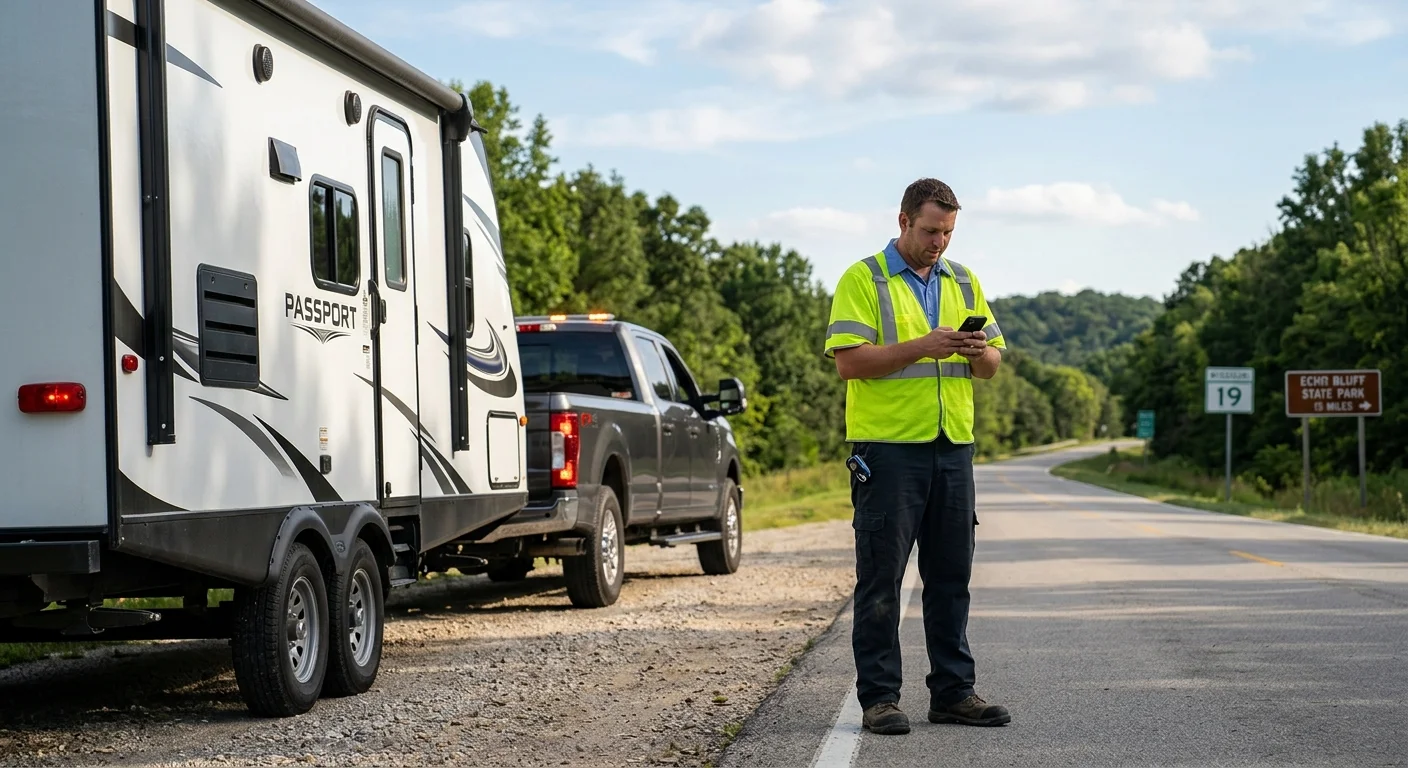
Start with the policy, not the tow type
Missouri requires liability coverage, but it doesn’t require towing or roadside-assistance coverage. Those benefits are optional and set by each insurer’s policy terms. State law doesn’t provide a separate towing benefit just because a trailer is attached.
Start with the declarations page and policy documents. Look for roadside assistance, towing and labor, trailer coverage, or similar wording. Don’t treat the presence of comprehensive coverage as proof that a trailer tow is included. The relevant comprehensive terms, roadside rider, or towing-and-labor endorsement still need to address your situation.
Then call the insurer or claims contact listed on your policy. Describe the complete setup, not just the disabled part. Tell them whether you’re driving a car, pickup, motorhome, travel trailer, or fifth wheel. Explain which unit can’t move and why you need a tow.
Ask for a direct answer to these points:
- Is the tow vehicle covered for this event?
- Is the attached trailer covered separately?
- Does the reason for the tow fit the policy terms?
- Must the insurer approve the tow before dispatch?
- Does the policy name any destination or distance conditions?
- What records should you keep for a possible claim?
We couldn’t confirm one Missouri rule that makes every trailer tow covered. No such towing requirement appears in the approved Missouri research. Your insurer’s written terms decide the result. Our broader guide to car insurance and towing in Missouri explains the general coverage question.
Roadside and trailer coverage are separate questions
Roadside help for the tow vehicle doesn’t automatically answer what happens to an attached trailer. Treat them as separate coverage questions until the insurer confirms otherwise.
Suppose a pickup stops near the I-44 and Kansas Expressway interchange. The pickup may need transport, while the travel trailer also needs a safe destination. Ask whether the policy addresses both units. Don’t assume one approval covers the entire combination.
The reverse can happen near Nixa, Ozark, or a campground south of Springfield. The tow vehicle may still run, but the trailer may have a problem that prevents normal travel. Ask whether the roadside benefit applies when only the trailer is disabled. Use the precise wording from your documents when speaking with the insurer.
The reason for the tow also matters. Tell the insurer whether you’re dealing with a mechanical breakdown, collision, tire problem, hitch issue, or another event. We can’t determine coverage from the roadside. Quick Tow Springfield also can’t approve a claim or promise reimbursement.
While checking coverage, gather the details needed for RV and trailer towing. Have the trailer type, approximate size, location, condition, and intended destination ready. Mention whether it’s connected, off the roadway, inside a campground, or on a gravel access road.
Location matters around Springfield. A trailer stopped inside the city presents a different transport plan from one along US-65 toward Branson. For current traffic and reported incidents, check the MoDOT Traveler Information Map. That map doesn’t decide insurance coverage, but it can help you describe your location and surrounding conditions.
Motorhomes and travel trailers need different checks
A motorhome and a travel trailer shouldn’t be described the same way during an insurance call. Tell the insurer exactly what you own and how it appears on the policy. Broad terms like “RV” may not provide enough detail for a firm coverage answer.
For a travel trailer, identify both the towing vehicle and trailer. Ask whether each appears in the relevant policy documents. If only one appears, ask how that affects towing for the full combination. Don’t rely on the registration of one unit to answer an insurance question about the other.
For a fifth wheel, explain that it connects in the pickup bed. Give the insurer the same facts you give dispatch. That includes which unit is disabled, whether the combination remains connected, and where it can be accessed.
For a motorhome, don’t describe the situation as a car towing a trailer. Ask how the policy classifies that specific motorhome. If it also pulls a car or small trailer, ask about that second unit separately.
These details also help match the job with an operator. Length, weight, clearance, wheel condition, steering condition, and roadside position can affect the equipment needed. They don’t establish insurance coverage, but they help prevent confusion during dispatch.
The US-65 corridor creates another practical issue. A breakdown near Springfield, Ozark, or Branson can leave very different destination choices. Branson draws roughly 9 to 10 million visitors yearly, so visitors may be far from their usual repair contacts. Our guide to an RV breakdown on US-65 near Branson covers the roadside decisions for that corridor.
What to ask before authorizing a tow
Call the insurer before authorizing transport when circumstances allow. Ask focused questions and write down the responses. A vague statement that you “have roadside” isn’t enough to show how the policy handles your trailer.
Use this checklist:
- Which vehicle or trailer does the coverage apply to?
- Does the stated reason for the tow qualify?
- Does the insurer require prior authorization?
- Can you choose the towing operator?
- Does the insurer specify an approved destination?
- Are there distance, service, or payment conditions in the policy?
- Which documents should you submit afterward?
- Is there a claim or reference number for this conversation?
Don’t invent an answer when the representative can’t confirm something. Ask where the controlling language appears in the policy. If the representative gives instructions, repeat them back and record them in your notes.
You should also get the towing price before an operator is dispatched. Quick Tow Springfield is a referral service. We match drivers with independent local operators, but we don’t own trucks or set prices. The operator doing the work provides the number.
Give dispatch a precise location. On I-44, provide the direction of travel and the nearest exit or landmark. Along US-65, say whether you’re north or south of Springfield, near Ozark, or farther toward Branson. At a campground or rural property, mention gates, narrow drives, gravel surfaces, and overhead clearance.
Confirm the destination before the trailer moves. A nearby repair location and a longer transport require different planning. If the chosen destination is outside the immediate area, review our long-distance towing guide before dispatch.
If you’re stopped in an exposed lane or facing an immediate danger, contact 911. Insurance questions can wait until everyone is away from the immediate hazard.
Keep the receipt and dispatch details
Keep every document connected to the tow. Your insurer can tell you which records it needs, but saving the full set gives you a clear account of what happened.
Start with the operator’s receipt. Keep any dispatch confirmation, destination details, and written description of the service. Save photographs of the tow vehicle, trailer, hitch area, and roadside position when you can do so without entering traffic.
Write down the reason the vehicle couldn’t continue. Use plain, accurate language. Don’t diagnose a mechanical problem unless a qualified repair provider has confirmed it. “The trailer wheel wouldn’t turn” is more useful than guessing which internal part failed.
Keep your insurance call notes with those records. Include the date, the contact method, the representative’s name if provided, and any claim or reference number. Note the policy section the representative cited. If the insurer gives follow-up instructions, save those too.
A receipt isn’t a promise of reimbursement. Quick Tow Springfield doesn’t make coverage decisions, and the towing operator doesn’t control your policy. Only the insurer can apply the written terms to the event.
Organized records still help. They preserve the vehicle details, service provided, origin, destination, and payment information. That makes it easier to answer follow-up questions without reconstructing a stressful roadside call later.
Before submitting anything, compare the documents with your policy instructions. If something is missing, ask the insurer what it will accept. Don’t add facts or change the reason for the tow to fit a coverage label.
When to call us
Call when your trailer, fifth wheel, or motorhome can’t be moved safely with ordinary roadside help. Our line takes calls 24 hours a day, and we can line up an independent local operator for the job. Call us at (417) 221-8911.