Your tires are spinning, but that doesn’t settle the recovery question. A car stuck on ice may need a winch-out, a tow, or both. The choice depends on damage, slope, vehicle position, and safe recovery access.
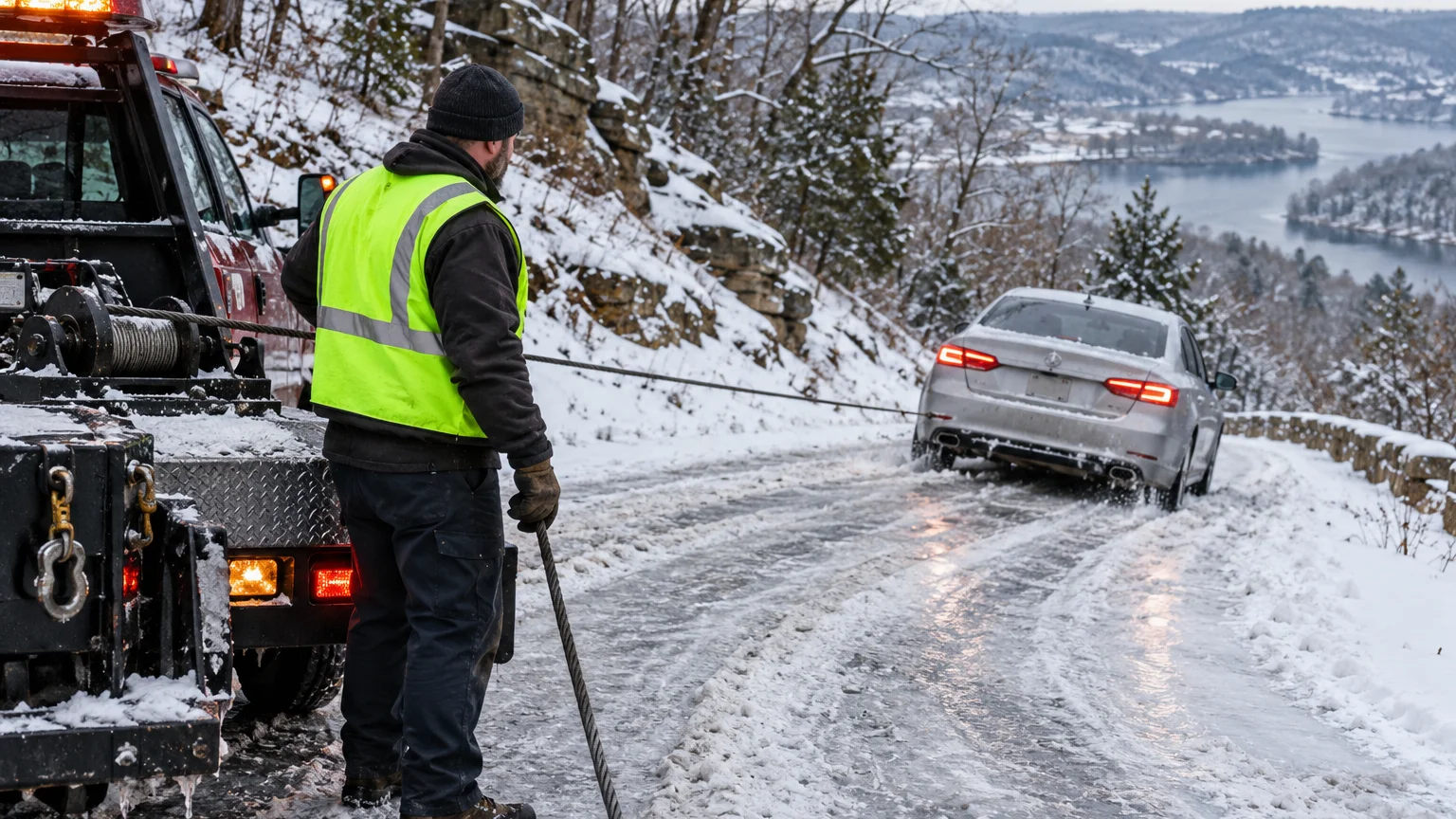
Traction loss and vehicle damage are different problems
A winch-out addresses a vehicle that can’t gain enough traction to move. A tow addresses a vehicle that shouldn’t continue under its own power. Those problems can happen together, but they aren’t the same.
Suppose your car stops on an icy driveway or a glazed side road. It remains upright, nothing struck the ground, and no warning lights appeared. That sounds like a traction problem. An operator can assess whether a controlled winch-out could move it onto usable pavement.
The situation changes after contact with a curb, guardrail, ditch edge, or buried object. A bent wheel, leaking fluid, dragging panel, unusual steering position, or new warning light gives the operator another problem to consider. Getting the car off the ice doesn’t show that it’s ready to drive.
All-wheel drive doesn’t settle the question either. AWD can distribute power across more wheels, but every tire still depends on surface grip. An AWD car can remain stuck when the road beneath it is glazed.
Don’t keep spinning the tires while hoping the surface improves. That doesn’t tell you whether hidden contact or damage occurred. Stop and report what happened before the car became stuck.
For help with the recovery itself, see our accident recovery and winch-out service. If the vehicle appears damaged or can’t continue safely, an emergency towing operator may need to transport it after recovery.
An icy slope changes the recovery access
A flat parking area and an icy Ozarks hill present different jobs. The car’s location matters, but so does the operator’s approach route.
Springfield streets may provide several access directions. That becomes less likely outside the city grid. Roads near Nixa, Ozark, Republic, Rogersville, and the surrounding countryside can include hills, curves, narrow shoulders, and gravel approaches. A driveway may also leave little room for recovery equipment.
The operator needs a position that supports a controlled recovery. If the only approach crosses the same glazed slope, access may shape the whole plan. The vehicle’s nose direction, wheel angle, nearby drop-off, and available level ground all matter.
That distinction separates an ice recovery from a typical stuck-car call. A vehicle may sit only a short distance from clear pavement, yet the path between them can be the hardest part of the job.
The January 2007 ice storm left 1.5 inches of ice at the National Weather Service office in Springfield. That historical event isn’t a forecast for your current road. It does show why ice deserves its own recovery plan in the Ozarks.
Check the MoDOT Traveler Information Map for current Missouri traffic, camera, and incident information. Conditions on I-44 or US-65 may differ from a neighborhood street or rural approach. Give the operator your exact location and describe the final road leading to the car.
A winch-out and a tow may be separate jobs
A winch-out moves a stuck vehicle from its trapped position. A tow transports that vehicle after it’s accessible. One service doesn’t automatically include the other.
If the car simply lost traction, the job may end once it reaches a stable surface. The operator still needs to inspect the situation on arrival. Photos and a phone description help, but they can’t replace an on-scene assessment.
A second stage becomes more likely when the car left the roadway or struck something. Ice can hide the point where a tire, bumper, suspension part, or underbody contacted the ground. The car may first need recovery to a place where its condition can be checked.
Tell the operator where you want the vehicle taken if towing may follow. That could be a repair shop, home, or another permitted destination. Having the destination ready helps the operator understand the full request before dispatch.
Price also depends on the independent operator and the actual job. Quick Tow Springfield doesn’t set the total. You’ll get the operator’s number before anyone is dispatched, but the initial description must match the scene. Mention both the ice recovery and possible transport.
Mud creates a different surface problem. Our guide to a car stuck in Ozarks mud explains that distinction. A vehicle below the road edge raises different access concerns, covered in our ditch recovery or tow guide.
What to photograph from a safe location
Good photos help the operator understand the car’s position before dispatch. Take them only from a stable place where you aren’t entering traffic or crossing the icy slope.
Start with one wide photo. Include the whole vehicle, surrounding road, slope, and nearest firm approach. A close photo of one spinning tire doesn’t show where recovery equipment could stand.
Next, photograph the front and rear wheel positions. Show whether the wheels are straight, turned, against a curb, or near the road edge. If the car crossed a shoulder, include the transition between pavement and the area beneath it.
Photograph visible damage without crawling underneath the vehicle. Useful details include a tilted wheel, loose bumper, fluid on the ground, broken glass, or a panel touching a tire. Don’t touch a leaking substance to identify it.
Include the road behind and ahead of the car. The operator needs to see curves, hills, shoulder width, parked vehicles, gates, and blocked approaches. At night, use available light from a safe position. A dark photo taken near traffic provides little useful information.
Send a clear landmark with the images. In Springfield, that might be a nearby cross street. On I-44 or US-65, report your direction of travel and the nearest visible exit or marker. In the countryside, share the road name and the entrance the operator should use.
If you can’t take a photo safely, don’t take one. A direct description is better than leaving stable ground for a better angle.
What the operator needs before dispatch
Begin with the exact location. Include the city or town, road name, direction of travel, and a nearby cross street or marker. If you’re on private property, explain how the operator should enter.
Then describe the surface. Say whether the car is on sheet ice, packed snow, an icy gravel road, or a frozen driveway. Report whether the approach is level, uphill, downhill, curved, narrow, or blocked.
Give the vehicle’s year, make, model, and drive type if known. Tell the operator whether it’s front-wheel drive, rear-wheel drive, AWD, or four-wheel drive. Don’t guess. Say you don’t know if you aren’t certain.
Explain the vehicle’s position in plain language:
- All wheels remain on the road.
- One side crossed the shoulder.
- The car is against a curb or guardrail.
- The vehicle is partly in a ditch.
- The nose points uphill or downhill.
- The car can roll, steer, or shift normally.
- A wheel looks bent or won’t turn.
- Fluid, smoke, or visible damage is present.
Also report whether the engine runs and whether you have the keys. Mention passengers, pets, cargo, low clearance, or modifications that could affect loading.
Finally, state what outcome you need. You may want recovery to level pavement, transport to a repair shop, or an operator who can assess both. Clear information helps match the call with an independent local operator prepared for the reported situation.
When to call us
Call when spinning tires aren’t solving the problem, the car sits on a slope, or damage may make driving unwise. The line takes calls 24 hours a day, and we match drivers with independent local operators. Call us at (417) 221-8911.