For work van towing after breakdown, the badge alone doesn’t settle the equipment choice. The operator needs the van’s configuration, load, condition, and location before classifying the job.
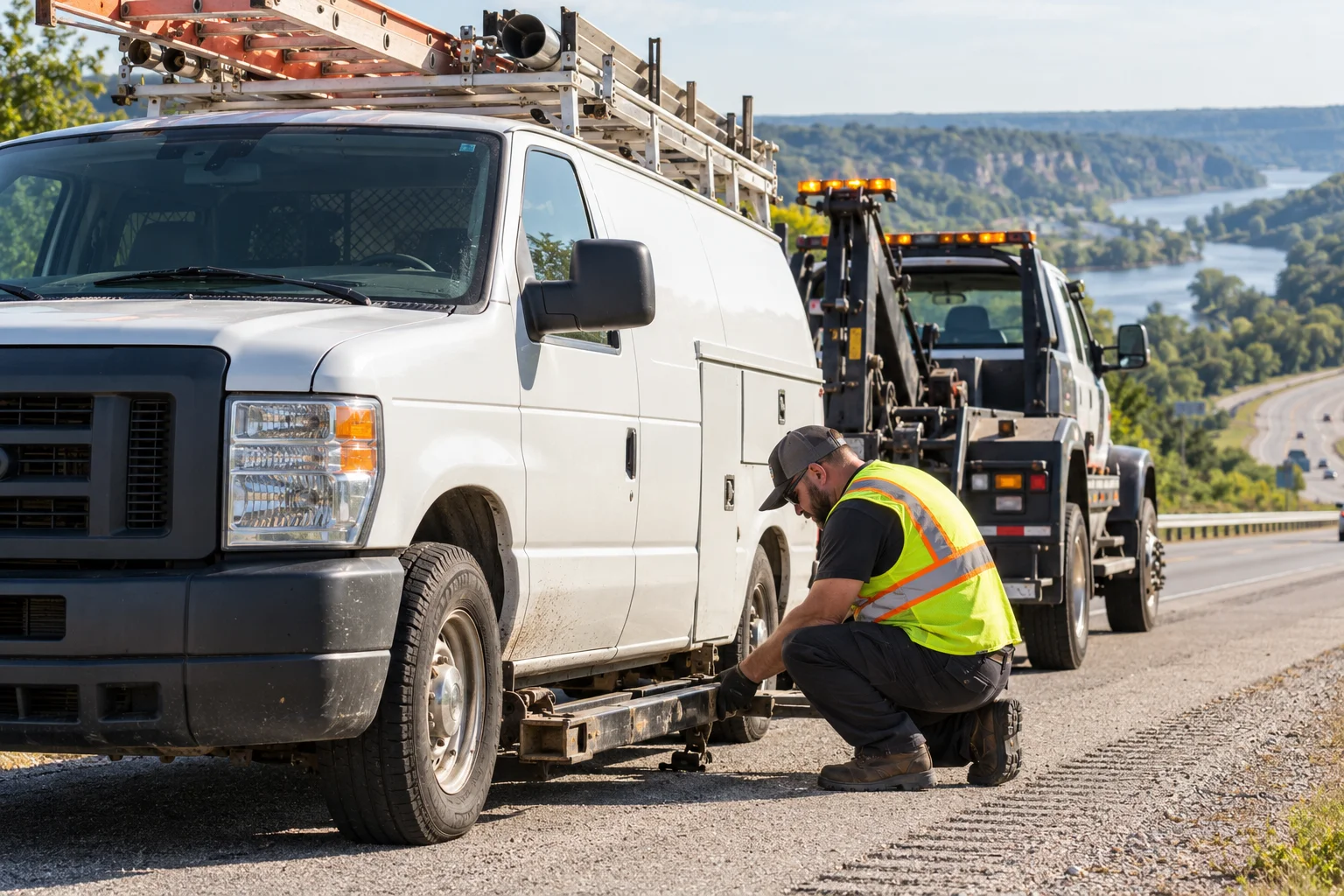
The van badge doesn’t settle the equipment choice
Two vans wearing the same badge can present different towing jobs. One might be an empty passenger model. Another may carry shelving, tools, parts, and permanent equipment.
Start with the year, make, model, and body style. Say whether it’s a standard or extended body. Mention a high roof, dual rear wheels, passenger conversion, or cutaway body. A clear photo of the entire van helps the operator see its shape and stance.
The vehicle identification number can also help identify the configuration. A photo of the manufacturer label gives the operator information without relying on memory. Don’t guess at the van’s weight or towing class. Share the label and let the operator assess it.
A larger badge doesn’t automatically mean the job requires heavy-duty towing. A familiar cargo van also isn’t automatically a light-duty job. The loaded condition and added equipment matter.
This distinction keeps work vans separate from true box trucks. A tall cargo van may look substantial, but its body and loading points differ from those discussed in our US-60 box-truck towing guide. A dually pickup presents another setup, especially around its rear axle and body width. That situation has its own I-44 dually breakdown guide.
Tell dispatch what the vehicle is, not what tow class you think it needs. The independent operator can then decide which equipment fits the actual job.
Cargo and added equipment change the request
A work van is often more than its factory body. Shelving, ladder racks, partitions, lift equipment, toolboxes, generators, tanks, or refrigeration equipment can change how the operator approaches it.
Describe every permanent addition. Include anything mounted underneath, on the roof, or behind the rear axle. Roof equipment matters when the van must enter a shop, parking structure, or covered loading area. Low-mounted additions may affect available clearance during loading.
Cargo matters too. Tell dispatch whether the van is empty, partly loaded, or carrying a normal workday load. Describe the cargo in plain terms. Plumbing tools, electrical stock, parcels, landscaping equipment, and construction materials create different loading concerns. Mention anything loose, unusually long, liquid-filled, fragile, or likely to shift.
Don’t estimate a total weight if you don’t have a verified figure. Send invoices, load records, or vehicle documents when they contain useful weight information. The operator can ask for more details before accepting the job.
Secure loose items only when you can do so without entering traffic or creating another hazard. Tell the operator if rear or side doors won’t latch. Also report cargo blocking access to the cab, controls, or interior release points.
There isn’t one verified price for every commercial van breakdown tow. The independent operator sets the price based on the disclosed job. Get the number before anyone is dispatched, and correct the details if the cargo or vehicle condition changes.
Complete cargo information helps avoid a poor equipment match. It also lets the operator plan for the destination, unloading area, and any access limits there.
Wheel condition decides whether the van can roll
The operator needs to know whether every wheel can turn and track normally. “It won’t move” isn’t enough detail.
Check each wheel from a safe position. Report flat tires, missing wheels, broken suspension parts, visible axle damage, or a wheel pushed into the body. Say whether the van sits level or leans toward one corner. Photos taken from both sides can reveal problems that aren’t visible from the front.
Tell dispatch whether the transmission shifts into neutral. Mention whether the steering unlocks and whether the keys are available. If the parking brake won’t release, say so. Don’t force a shifter, steering wheel, brake mechanism, or damaged wheel to make the van movable.
A mechanical breakdown and a collision can disable the same van differently. An engine problem may leave all four wheels able to roll. A curb strike can leave the engine running while a wheel no longer tracks. That wheel condition may change the loading method.
Fluid underneath the van also deserves mention. Describe the color and approximate location without touching it. Tell dispatch if the van struck debris, a guardrail, a curb, or another vehicle. These facts help the operator understand whether the request involves transport alone or recovery from a difficult position.
Share close photos of damaged wheels, then add a wider view. The wide view shows how the van sits relative to traffic, pavement edges, and nearby obstacles. That context can be as important as the close-up.
Roadside access matters before anyone is matched
A disabled van beside I-44 presents a different access problem from one behind a Springfield shop. The same applies along US-65, on a downtown loading lane, or on a gravel road outside the metro.
Send an exact map pin. Add the road name, travel direction, nearest cross street, and a visible landmark. On a divided road, confirm which side you’re on. A pin placed across the median can send an operator toward the wrong approach.
Describe the van’s position. It may be fully inside a parking space, against a curb, partly in a travel lane, down a slope, or close to a guardrail. Mention narrow shoulders, soft ground, low branches, locked gates, loading docks, and overhead clearance.
Springfield access can change within a short drive. The I-44 and Kansas Expressway area has freeway traffic and complex ramps. Commercial areas along Glenstone can involve busy entrances. Nixa and Ozark bring US-65 access, while Republic and the surrounding countryside may involve narrower roads or gravel approaches.
Use the MoDOT Traveler Information Map to check current traffic, cameras, and reported incidents. If the van creates an immediate traffic danger, contact 911 and follow official directions. Don’t stand between the van and moving traffic.
For an urgent breakdown request, our emergency towing service can help line up an independent operator. Dispatch still needs accurate access details before making that match.
The destination needs the same attention. Provide its name, address, entrance, and after-hours instructions. Confirm that the destination can receive the van in its current condition.
What the fleet manager should send
A short, complete message works better than several vague updates. Start with the driver’s name and the best contact number. Then send the exact location and intended destination.
Include these vehicle details:
- Year, make, model, and body configuration
- Standard or extended body
- Roof height and rear-wheel arrangement
- Manufacturer-label photo
- Permanent shelving, racks, tanks, or mounted equipment
- Cargo type and whether the van is loaded
- Keys, steering, transmission, and parking-brake status
- Tire, wheel, suspension, and collision damage
- Any fluid visible beneath the van
- Road, shoulder, gate, height, or loading-dock restrictions
Send four useful photos when conditions allow. Take the front, rear, driver’s side, and passenger side. Add close photos of damage, but don’t omit the wider scene. The operator needs to see both the van and the available working space.
Fleet managers should also name the decision-maker. If someone must approve the operator’s price, destination, or cargo handling, keep that person reachable. The brand doesn’t set the price. The independent operator provides it before dispatch based on the information supplied.
Tell dispatch if the load changes after the first message. Removing cargo, adding tools, or discovering hidden wheel damage can change the request. The same applies when police, property staff, or a shop changes where the van can be collected or delivered.
Keep sensitive customer information out of cargo photos. Photograph the load arrangement without exposing shipping labels, account details, or private documents. Clear facts matter more than paperwork that doesn’t affect towing.
When to call us
Call once the van can’t move safely, a wheel won’t roll, or the load and access make the equipment choice uncertain. The line takes calls 24 hours a day, and we use your details to match the request with an independent local operator. Call us at (417) 221-8911.