A disabled box truck on US-60 can’t be assigned by appearance alone. Medium-duty towing depends on its rated size, actual load, brake condition, and roadside position. Those details determine whether the truck can move intact or needs other work first.
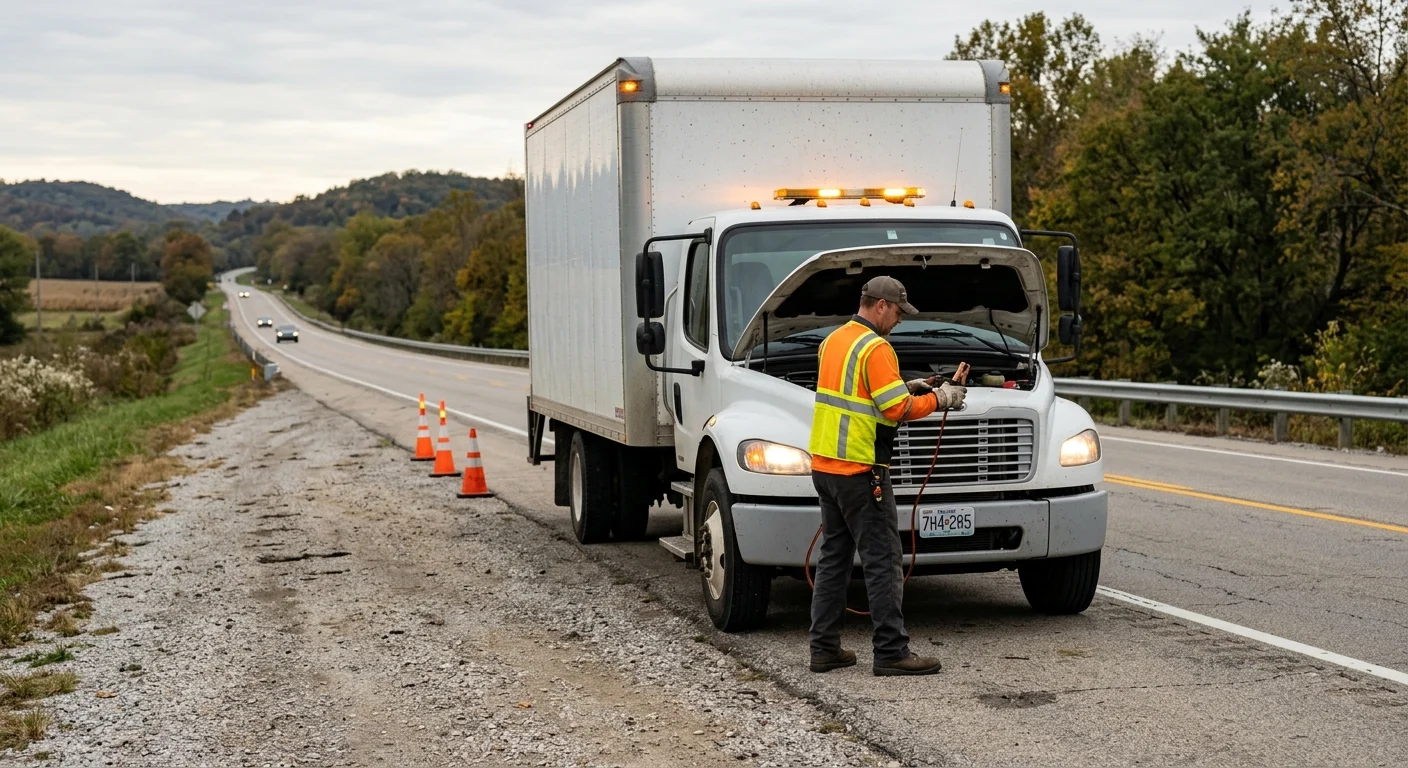
Light, medium, heavy: where a box truck lands
“Box truck” describes the body, not the towing class. A compact delivery truck and a large straight truck can share the same basic shape. They don’t require the same towing equipment.
Start with the gross vehicle weight rating, or GVWR. The manufacturer’s certification label shows the truck’s rating. That rating covers the truck, body, fuel, occupants, and allowable load. It isn’t the same as the truck’s current scale weight.
Actual weight still matters. An empty box truck may fit one towing setup. The same chassis carrying a full commercial load may require different equipment. The truck’s class hasn’t changed, but the recovery plan can.
Wheelbase, rear overhang, and liftgates matter too. So do low bumpers, damaged axles, and driveline type. The operator must decide where the truck can be lifted and whether it should travel from the front or rear.
Don’t choose a tow solely by box length. Give dispatch the GVWR from the label and say whether the box is empty, partly loaded, or full. If you have a recent scale ticket, keep it available.
Some calls fall cleanly into medium-duty towing. Others need heavy-duty towing equipment after the operator reviews the truck and load. A tractor-trailer presents another set of choices, covered in our guide to a disabled semi-truck on I-44.
The right category isn’t about using the largest truck available. It’s about matching the disabled vehicle, its load, and the recovery angle.
The load is its own problem
A box truck carries two recovery problems. There’s the disabled chassis, then there’s everything inside the box.
Tell dispatch whether the load is secured, loose, stacked, or shifted. Mention pallets, rolling carts, liquids, hanging cargo, or machinery. Also disclose temperature-sensitive goods, animals, and any regulated or flammable material. The operator needs that information before selecting equipment.
A loaded box truck may need cargo transferred before it moves. That can happen when the combined weight exceeds the planned towing setup. It may also be needed when a shifted load makes the truck unstable or blocks safe lifting points.
Cargo transfer doesn’t mean opening the box beside traffic immediately. The shoulder may be narrow, sloped, soft, or exposed to passing vehicles. The responding operator and any on-scene authorities must assess where that work can happen.
After a collision, the rear door may be twisted or jammed. Shelving may have broken loose. Pallets can also move toward one side. That turns a normal tow into an accident recovery job, even when the truck still looks upright.
Don’t tell dispatch only that the truck is “loaded.” Describe what loaded means. A full truck of light cartons creates different handling concerns than dense machinery. If the weight isn’t known, say that plainly. Don’t guess.
The cargo owner may also need to arrange another truck, handling equipment, or secure storage. Quick Tow Springfield doesn’t own warehouses or transfer vehicles. We line up an independent towing operator for the disabled truck. Cargo arrangements depend on the operator and the shipment.
Air brakes and why the truck may not roll
A stalled truck isn’t always free to roll. Many larger box trucks use air brakes. Their parking brakes can apply when air pressure drops below the working range.
That design changes the tow. A truck that rolled when the engine stopped may have locked wheels later, after pressure bled away. Pulling against those brakes isn’t the same as towing a freely rolling truck.
Tell dispatch whether the truck has air brakes. Report the dashboard air-pressure reading if you can see it from the cab. Mention warning lights, warning sounds, and whether the parking brake control responds. Also say whether the engine starts or can build pressure.
Don’t crawl under the truck or attempt to release spring brakes yourself. Brake release work can involve stored mechanical force. It may also require access beneath a truck stopped near moving traffic.
The responding operator may need an external air source. The truck’s driveline or axle configuration may require additional handling before movement. Wheel position, suspension condition, and collision damage can change that plan again.
A truck that builds air pressure still may not be ready to drive. The original failure could involve the compressor, an air line, a brake component, or another system. Restored pressure doesn’t confirm that the truck is roadworthy.
If locked wheels leave the truck partly in a ditch or soft shoulder, the job may also require a winch-out assessment. Tell dispatch which wheels are on pavement and which aren’t. That detail helps separate a straight tow from a recovery.
Getting off a rural highway safely
US-60 changes character across the Springfield region. It runs from Monett and Aurora through Billings and Republic, then becomes part of the James River Freeway through Springfield. East of the US-65 interchange, it continues toward Rogersville, Fordland, and Seymour.
A truck beside the James River Freeway presents different access than one between rural towns. Ramps, medians, grades, ditches, work zones, and shoulder width all affect where equipment can stand. The nearest town alone doesn’t describe the scene.
Start with your direction of travel. Then give the nearest exit, crossroad, mile marker, or visible business. If you passed a junction before stopping, say how far behind you it appears. A map pin can help, but include written landmarks too.
Describe the truck’s exact position. Is every wheel on pavement? Is the passenger side near a guardrail? Is the rear overhang above a ditch? Can towing equipment approach from behind without entering soft ground? Dispatch needs the scene, not just the highway name.
Use the MoDOT Traveler Information Map to check current incidents, cameras, and traffic conditions. That can help a fleet manager understand what surrounds the truck before speaking with the operator.
MoDOT’s Motorist Assist and Emergency Response Program is a scheduled freeway courtesy patrol based in Springfield. It isn’t a call-out towing service, and it doesn’t tow disabled vehicles to a shop. Don’t wait for it as a substitute for arranging a tow.
If anyone is injured, traffic is striking the truck, or the vehicle creates an immediate hazard, call 911. Follow directions from law enforcement at the scene. Tell dispatch if a lane is blocked or officers have already arrived.
Box truck towing around Springfield, MO, can extend far beyond city streets. A US-60 location outside Republic or Fordland may have fewer safe staging options nearby. We won’t publish an arrival estimate because the operator, distance, traffic, and recovery conditions determine the response.
What dispatch needs from you
A clear first message prevents the wrong equipment from being assigned. You don’t need mechanical expertise. You do need specific observations.
Have these details ready:
- Your direction of travel and exact US-60 location
- The truck’s make, model, unit number, and GVWR
- Whether the truck is empty, partly loaded, or full
- A known loaded weight or recent scale ticket, if available
- The cargo type and whether anything shifted
- Whether the truck has air brakes and can build pressure
- Which wheels roll, steer, or appear damaged
- Whether the engine starts and the transmission shifts
- Any collision damage, leaking fluid, smoke, or unusual smell
- The position of each wheel relative to pavement, gravel, or ditch
- Rear equipment such as a liftgate, step bumper, or trailer hitch
- Any height, gate, or access restriction near the truck
Don’t guess at a weight, mechanical failure, or cargo condition. Say “unknown” when it isn’t confirmed. The operator can plan around an honest gap more easily than a precise but incorrect answer.
A search for a “medium duty tow truck near me” doesn’t show whether that operator can handle your specific load. Ask whether the assigned equipment matches the truck’s rating, current load, brake system, and roadside position.
Have photos ready if the operator asks how to provide them. Useful views include the manufacturer’s label, the full truck from each side, wheel positions, visible damage, and the road behind it. Don’t step into a travel lane to take them.
Quick Tow Springfield is a referral service. Our line is answered 24/7 and we match drivers with independent local operators. We don’t own towing equipment, employ drivers, or set the operator’s price.
The operator sets the price based on the actual job. Get the number before anyone is dispatched. Ask what it covers and whether cargo transfer, winching, driveline work, or another service would be separate.
When to call us
This stops being a do-it-yourself problem when the truck won’t roll, can’t build air, has shifted cargo, or sits partly off the pavement. The line takes calls 24 hours a day, and calls are recorded after a notice so we can line up an independent local operator. Call us at (417) 221-8911.