After a deer strike, move yourself and your passengers away from traffic when it’s safe. Stop driving if the car steers, brakes, rolls, or sounds different. Document the scene, then arrange recovery instead of testing the damage on the road.
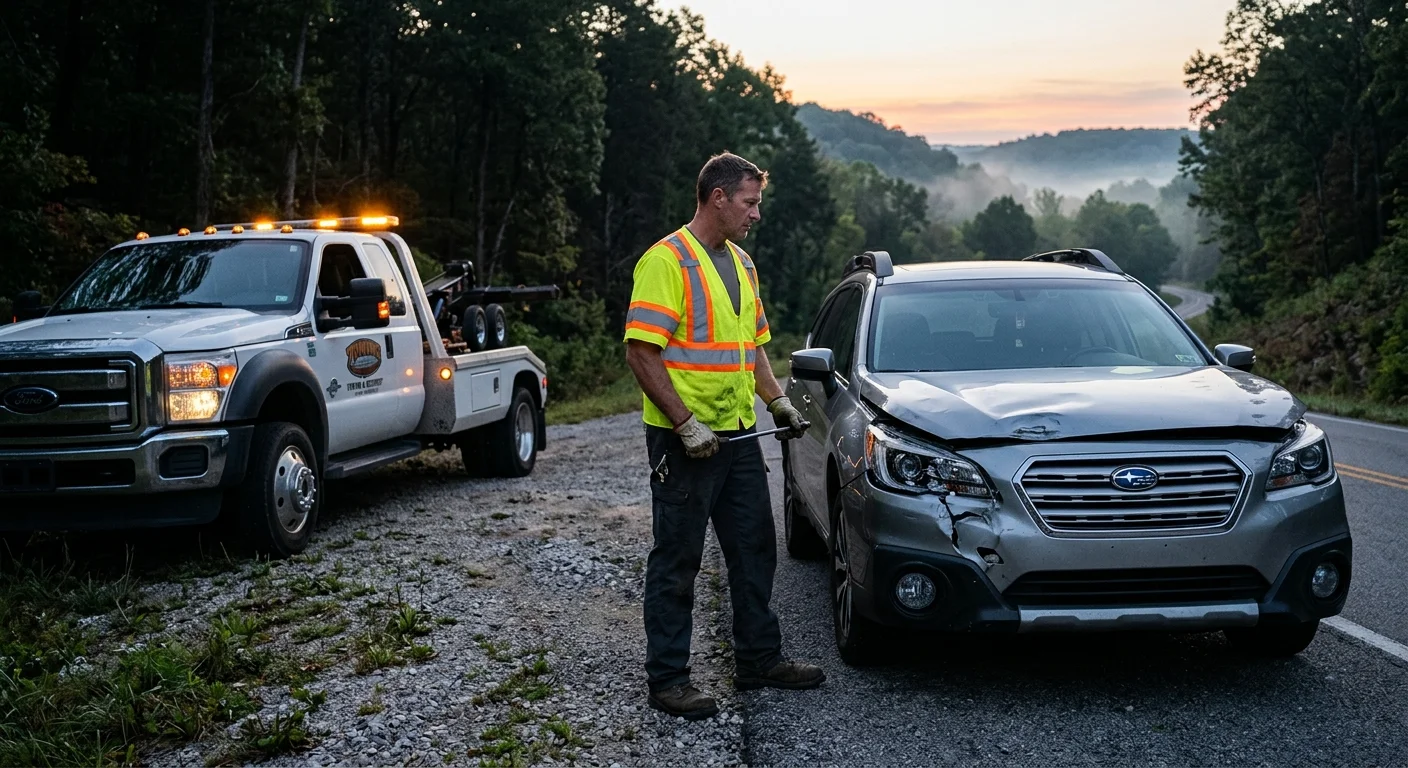
Move away from traffic when it is safe
Start with the immediate danger around you. A damaged car beside moving traffic can create another collision risk. If someone is hurt or the vehicle is blocking a live lane, call 911.
If the car still moves normally, you may be able to reach a nearby shoulder, parking lot, or other protected spot. Don’t force it if steering, braking, or wheel movement feels wrong. Moving several feet out of a traffic lane is different from continuing toward the next exit.
Turn on the hazard lights if they still work. Stay aware of approaching traffic before opening a door. Don’t cross active lanes to inspect the deer or scattered vehicle parts. Avoid standing between your car and traffic.
Location changes the decision around Springfield. On I-44, traffic can approach quickly from several lanes. A collision on US-65 may leave little room between the car and passing vehicles. West of Springfield, US-60 carries drivers through Republic and toward smaller Ozarks communities. Rural roads near Nixa, Ozark, and Webster County can leave you farther from a well-lit parking area.
Use the MoDOT Traveler Information Map to check traffic and reported incidents around your location. MoDOT’s Motorist Assist and Emergency Response program is a scheduled freeway courtesy patrol, not a call-out towing service. It may provide roadside visibility when staff encounter an incident, but it doesn’t tow vehicles to a shop.
Do not guess whether the car can keep moving
A car may start after a deer impact and still need recovery. Starting the engine only confirms that it starts. It doesn’t tell you whether the wheels, cooling system, lights, steering, or body panels are safe for another mile.
Look from a standing position where traffic can’t reach you. Don’t crawl beneath the car. Check whether a tire appears cut, flat, pushed backward, or trapped by damaged bodywork. Look for a bumper, fender liner, or splash shield touching a wheel.
Notice any fresh liquid beneath the vehicle, but don’t touch it. Watch the dashboard for warning lights. Listen for scraping, grinding, hissing, or repeated clicking. Check whether the hood closes, the windshield blocks your view, or the headlights still provide enough visibility.
Stop the road test before it starts if anything seems wrong. Driving toward an exit can turn limited collision damage into a disabled car in a worse location. This matters on I-44 and US-65, where the next safe stopping point may not be close.
Not every deer impact requires towing. A light strike can leave a car able to move normally. The deciding question is whether you can confirm normal steering, braking, wheel clearance, visibility, and fluid retention without gambling on the answer.
When you can’t confirm those points, ask for accident recovery in Springfield. The independent operator can inspect the loading situation and decide whether a flatbed or another recovery method fits the damage. Quick Tow Springfield refers drivers to local operators. It doesn’t own trucks or perform the recovery itself.
What to document before recovery starts
Take photos once you’re away from moving traffic. Start with wide images showing the car’s position, roadway, shoulder, and nearby signs. Then photograph each damaged area from several angles.
Capture the wheels, tires, windshield, lights, hood, bumper, and any visible fluid beneath the car. Photograph the dashboard while the warning lights are visible. If vehicle parts or debris are in the roadway, document them only from a protected position.
Save your exact location. A map pin is helpful, but include the road name and travel direction. On I-44, note the nearest exit or mile marker. On US-65, say whether you’re northbound or southbound. On local roads, provide the nearest intersection, business, bridge, or recognizable address.
Write down the approximate time and what happened while it’s fresh. Note where the deer entered the roadway and which part of the car made contact. Don’t make a mechanical diagnosis. Describe what you can see and hear.
Ask your insurer what documentation it wants before repairs begin. Missouri doesn’t require towing or roadside-assistance coverage. Whether a tow is covered depends on your own policy and any optional coverage you purchased. Our Missouri towing coverage guide explains that distinction.
Keep copies of towing and repair paperwork. Don’t assume coverage, reimbursement, or a specific claim result. Your insurer decides under the terms of your policy.
Why Ozarks deer season changes the roadside risk
Missouri recorded 2,952 deer collisions during 2024. Those crashes caused four deaths and 420 injuries statewide. The 2023 statewide total was 3,591 crashes.
Those are Missouri figures, not Greene County numbers. No verified county deer-collision count was available for this page, so we won’t turn the statewide total into a local estimate.
The verified statewide pattern peaks during October and November. The busiest times are 6 to 7 a.m. and 6 to 9 p.m. That places more deer encounters during morning commutes, evening trips, and drives made in limited light.
Around Springfield, the road itself changes quickly. Drivers can move from city traffic near Glenstone or Kansas Expressway to darker approaches outside Republic, Nixa, or Ozark. US-65 also funnels traffic south toward Branson, which receives roughly 9 to 10 million visitors each year. A disabled car there may be sharing the roadside with local drivers, visitors, and commercial traffic.
Treat fall damage as a collision problem, not a routine breakdown. A dead battery or empty fuel tank usually leaves the wheels and body intact. A deer strike may affect multiple parts at once, even when the engine remains running.
If the collision happens on I-44, follow the same location and traffic precautions covered in our I-44 breakdown guide. The cause is different, but the need to stay clear of traffic remains the same.
Don’t let the seasonal pattern make you assume every dark shape is a deer. Focus on the damage you can document and the road conditions around you.
What to tell the dispatcher
Give the dispatcher facts that help an operator prepare for the recovery. Start with your exact road, direction of travel, and nearest marker. Say whether the car is fully on a shoulder, partly in a lane, down an embankment, or stopped on soft ground.
Describe the vehicle’s year, make, model, and color. Mention whether it’s all-wheel drive, four-wheel drive, electric, or carrying a trailer. Those details can affect how an operator plans the loading process.
Explain what changed after the impact. Report visible wheel damage, leaking fluid, broken glass, damaged lights, steering problems, or bodywork touching a tire. Say whether the vehicle rolls and whether the parking brake releases. Don’t say it’s drivable unless you’ve confirmed normal operation.
Tell the dispatcher about passengers, pets, mobility needs, and any roadside danger. Mention narrow shoulders, blind curves, heavy traffic, mud, gravel, or a ditch. If emergency services are present, say where they’ve positioned you and whether they’ve given instructions about the vehicle.
Ask for the operator’s price before anyone is dispatched. Quick Tow Springfield doesn’t set that price. The independent operator doing the work provides it.
For a collision that leaves the car exposed or unable to move safely, request emergency towing. Don’t request a specific truck based only on appearance. Share the damage and location, then let the operator choose the suitable equipment.
When to call us
When the car no longer steers, brakes, rolls, or stays clear of traffic, the situation has moved beyond a roadside check. Our line takes calls 24 hours a day, plays a recording notice, and takes your message so we can line up an independent local operator. Call us at (417) 221-8911.