Yes, you can be towed for expired tags in Springfield, once those tags are at least 30 days out of date. That authority comes from a city ordinance adopted in 2025. It isn’t a general Missouri rule that follows your car statewide.
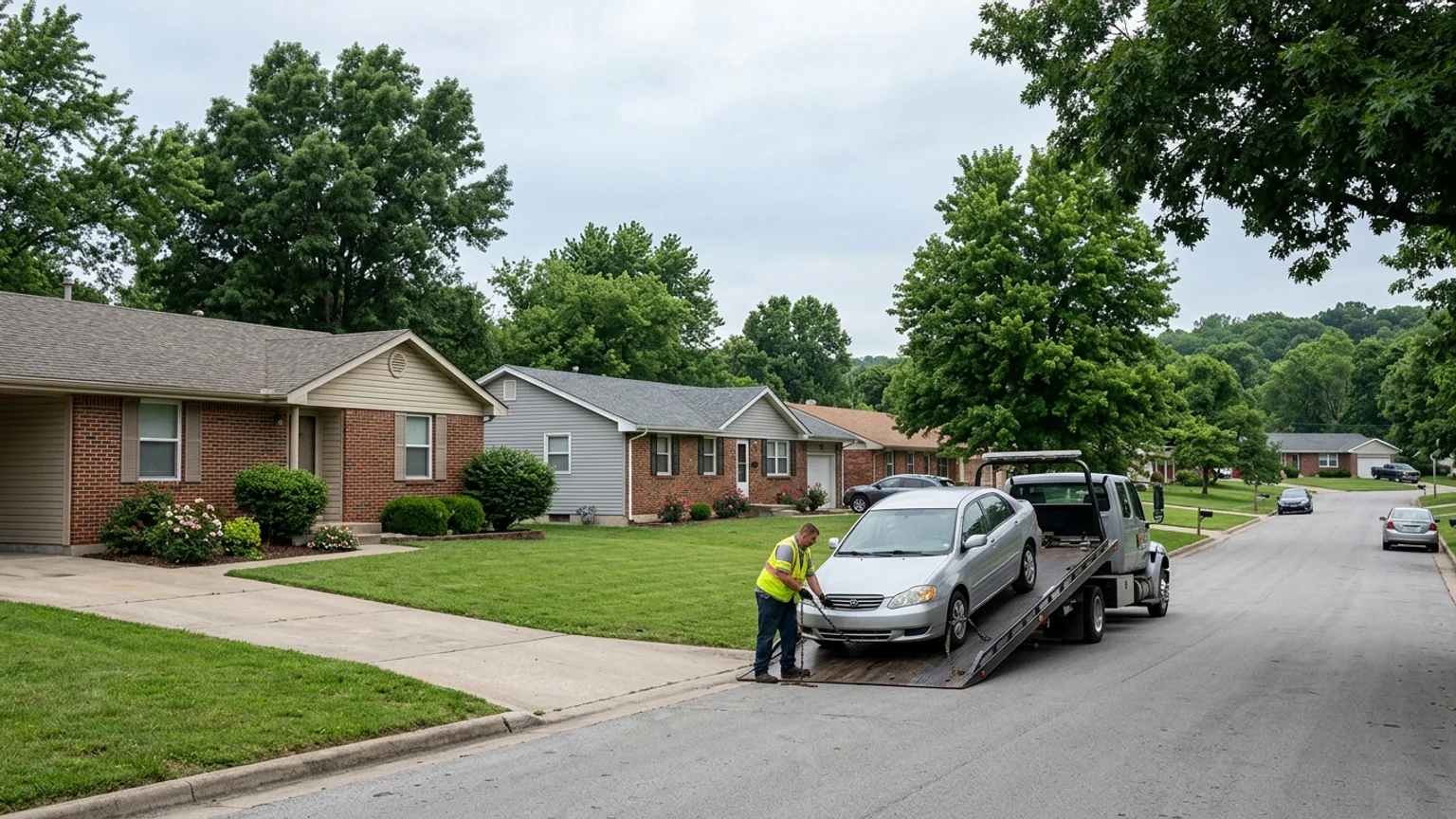
Towed for expired tags in Springfield: what changed in 2025
Springfield adopted Ordinance 6913 on February 24, 2025. The city then provided a 30-day education period. Enforcement began on March 26, 2025.
The ordinance amended Springfield Municipal Code Section 106-101. It allows police to tow vehicles with missing, invalid, or expired plates or tabs. For expired registration, the threshold is 30 days or more.
That change matters because expired tags weren’t previously a stand-alone city tow trigger. A driver might have expected a citation or renewal penalty instead. Inside Springfield, the possible consequence now includes losing custody of the vehicle.
The location is just as important as the expired tab. Ordinance 6913 is a City of Springfield rule. It applies within Springfield city limits, including busy corridors such as Glenstone Avenue, Kansas Expressway, Battlefield Road, and Chestnut Expressway.
It doesn’t automatically apply after crossing into Nixa, Ozark, Republic, Willard, or Strafford. Those places have separate local governments. No equivalent expired-tag tow authority was confirmed for those jurisdictions during this research.
That doesn’t mean expired registration becomes valid outside Springfield. Missouri still requires valid plates to be displayed. It means the specific authority to tow solely for expired tags hasn’t been confirmed outside Springfield.
Other reasons for removal can still exist. A vehicle may be hazardous, abandoned, involved in an investigation, or subject to a lawful private-property tow. Those situations rely on different facts and rules. Our guide to towing rights in Springfield explains several of those distinctions.
Thirty days expired is the line
Springfield’s ordinance uses a clear threshold: 30 or more days expired. A tab that expired recently hasn’t reached that city tow line yet. Once it reaches 30 days, police may order the vehicle removed.
Don’t treat the threshold as an extra permission period. It tells officers when the towing authority begins. It doesn’t make an expired registration valid during those 30 days.
The rule also covers missing and invalid plates or tabs. Those conditions don’t necessarily depend on the same 30-day calculation. If a plate is missing or appears invalid, the situation may be different from a plainly displayed tab that recently expired.
Check both the printed expiration and your renewal records. If you renewed but haven’t received the correct tab, keep the records supplied by the Missouri Department of Revenue. They may help explain the situation, but this page can’t promise that paperwork will prevent a tow.
You can review registration and renewal information through the Missouri Department of Revenue Motor Vehicle section. That agency controls state registration records. It’s the right place to confirm whether a renewal was processed or what documents are needed.
Parking somewhere familiar doesn’t erase Springfield’s rule. A car left along a neighborhood street remains within the city. The same applies near Missouri State University, downtown Springfield, or the Route 66 area around Kearney and Glenstone.
If you’re unsure whether an address falls inside Springfield, check the city boundary before relying on a nearby town’s rules. A Springfield mailing address alone may not answer that question.
State law by itself does not do this
Missouri law requires valid registration plates under RSMo 301.130. That section contains no authority to tow or impound a vehicle solely because registration expired. At the state level, expired registration is a citation issue, not an independent impound power.
Springfield’s authority comes from its municipal ordinance. The city tied its towing provision to Missouri’s abandoned-property statutes, including RSMo 304.155 and 304.157. Those state statutes address removal procedures, public property, and private-property towing. You can read the public-property framework in RSMo 304.155.
The distinction prevents a common misunderstanding. A Missouri state trooper or county sheriff can’t use Springfield Ordinance 6913 as authority outside Springfield. City ordinances don’t travel with a vehicle.
No statewide authority was found allowing law enforcement to impound a vehicle anywhere in Missouri solely for expired tags. No equivalent local authority was confirmed for Nixa, Ozark, Republic, Willard, or Strafford. Drivers in those communities should ask the local police department or city clerk about current local rules.
“Solely” is doing important work here. A car with expired tags might also be abandoned, blocking traffic, creating a hazard, or involved in another police matter. Any tow in that situation may rest on separate authority. Expired tags might be visible without being the legal reason for removal.
Private parking lots also follow a different process. Missouri’s private-property towing rules cover owner authorization, required signage, and waiting periods when signs are absent. A landlord’s request isn’t the same as a Springfield police tow under the expired-tag ordinance.
If the reason shown on paperwork seems unclear, save every document. Ask which agency ordered the tow and what authority it used. Those details matter when reviewing whether the removal followed the correct process.
The grace month, and the five dollars that follow it
Missouri provides a one-month grace period after vehicle registration expires. During that grace month, the state doesn’t assess its delinquent-renewal penalty. A violation under RSMo 301.020 can’t be issued until the second month following expiration.
After the grace period, Missouri applies a $5.00 late-renewal penalty. That amount is a state registration penalty. It isn’t a towing fee, storage charge, or city fine.
The grace month and Springfield’s 30-day towing threshold come from different authorities. The state grace period concerns registration enforcement and the late-renewal penalty. Springfield’s threshold concerns when city police may have the car removed.
Those timelines sit close together, but they aren’t interchangeable. Don’t assume that avoiding a state violation automatically prevents a Springfield tow. Don’t assume that paying the state’s late penalty releases a vehicle already in custody.
Renewal also doesn’t erase charges that arose from a completed tow. The tow facility handles those charges, while the Department of Revenue handles registration. Ask each party for its current requirements before paying or traveling to a lobby.
Missouri doesn’t set one statewide dollar cap for towing fees. Local governments may set maximum charges. Springfield has used its police-towing contract for that purpose, but the published contract term required re-verification after January 31, 2026. A current city-contract rate couldn’t be confirmed for this August 2026 article.
That means you should confirm current towing and storage charges directly through the city’s published recovery process. Don’t rely on an older rate sheet or a figure repeated on an unrelated website.
Getting the car back once it is gone
Start by confirming that Springfield police ordered the tow. There’s no online lookup tool for city impounds. The city instructs owners to contact SPD Headquarters and check whether the vehicle has an investigative hold.
Use the city’s Obtain My Impounded Vehicle page for the current department contact, lobby hours, required documents, and payment instructions. That page is the safest source if procedures change.
If there’s no blocking hold, you’ll need a release form in person. The approved city process lists two locations:
- SPD Headquarters on East Chestnut Expressway, with lobby hours Monday through Friday from 7 a.m. to 5 p.m.
- The South District Station on West Battlefield Road, with lobby hours Monday through Friday from 7 a.m. to 3 p.m.
Bring government-issued photo identification and proof of ownership. Accepted ownership records can include a title, bill of sale, Missouri title application, notarized power of attorney, lien documentation, repossession paperwork, or certificate of origin.
The city’s published process then directs motorists to pay Henry’s Towing at its Brookline lot. Confirm the current amount and accepted release documents before making the drive west of Springfield. Storage can continue while the car remains at the facility.
Our walkthrough on finding a towed car in Springfield can help you identify the right first call. For the paperwork sequence, read how to get a car out of impound.
A police release doesn’t renew the registration. Handle the Department of Revenue issue separately before returning the car to normal road use. If the vehicle needs transportation after release, arrange that before arriving at the lot.
When to call us
Call when the vehicle has been released but needs transport to private property, a repair shop, or another permitted location. We can line up an independent local operator through our emergency towing service, and the line takes calls 24 hours a day.
Calls are recorded and transcribed after a notice. The operator sets the price, and you’ll get that number before anyone is dispatched. Call us at (417) 221-8911.