A “cheap towing Springfield MO” search can uncover a fair deal or an incomplete price. The cheapest tow can be worth it when the operator, rate sheet, destination, and full job scope are clear before dispatch.
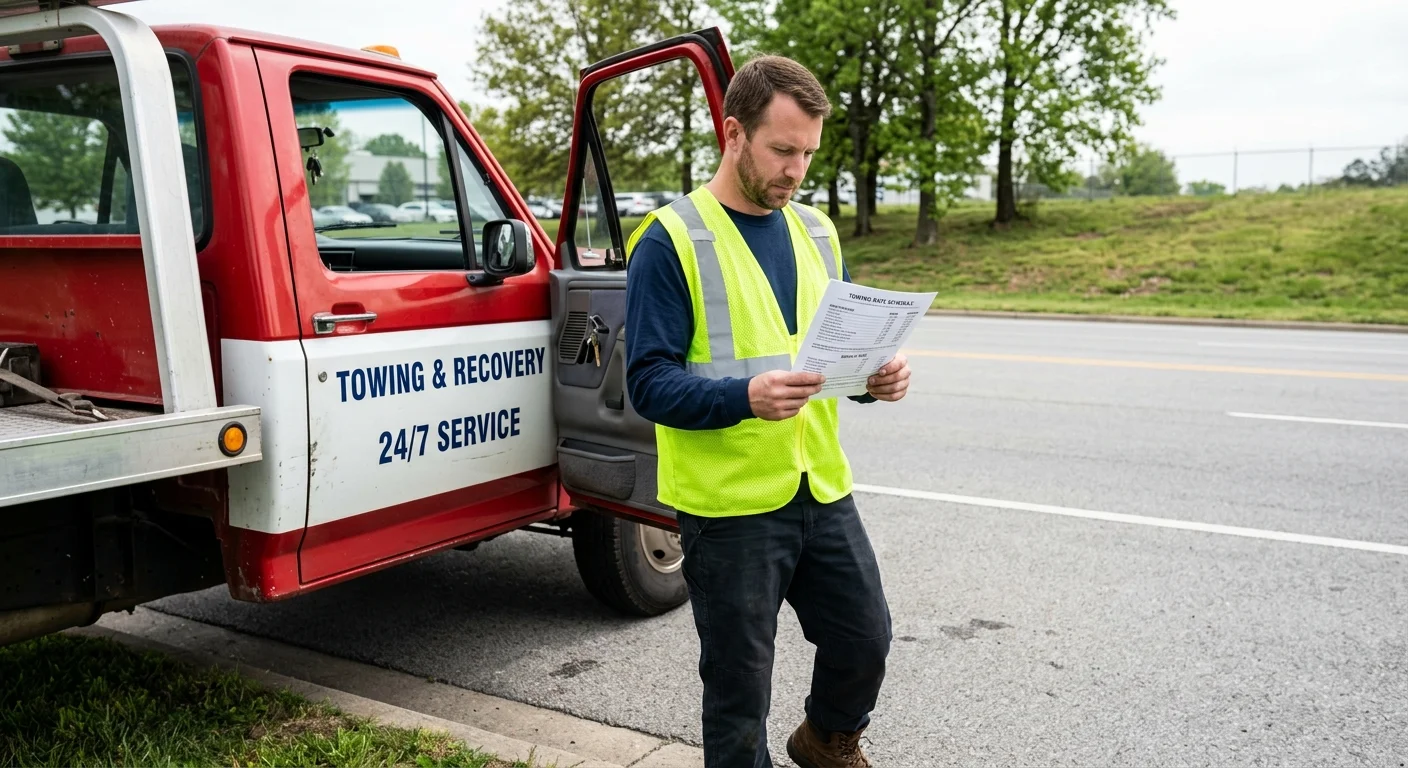
Cheap is fine. Unverifiable is not.
A low starting price isn’t automatically suspicious. The problem begins when nobody will identify the towing company, show its rate sheet, or explain where your car will go.
Those details matter across the Springfield metro. A short city trip near Missouri State University isn’t the same request as a recovery outside Nixa or Ozark. Republic, Webster County, and the Branson corridor introduce different routes and mileage questions. On gravel roads and low shoulders outside town, the operator may also need a clearer description of the vehicle’s position.
Compare the same job when reviewing prices. Give each company the same pickup point, destination, vehicle, and condition. Mention whether the wheels roll, the keys are available, or the car left the pavement. A low number covering only the hookup can’t be compared fairly with a number covering the described trip.
Quick Tow Springfield is a referral service. Our line is answered 24/7 and we match drivers with independent local operators. We don’t own trucks, employ drivers, operate a storage lot, or set the operator’s total price.
Our published light-duty hookup fee starts at $75 plus disclosed mileage. That’s our starting hookup figure, not a statewide average or a complete tow price. The independent operator sets the price. You get that number before anyone is dispatched.
If you’re choosing between companies, our guide to picking a towing company in Springfield offers a broader checklist. Price belongs in that decision, but it shouldn’t stand alone.
What Missouri already requires of a legitimate company
Missouri law gives drivers several concrete facts to check. Under RSMo 304.154, towing companies must maintain a visible business address and secure, lighted storage. They must also publish rate sheets and carry at least $500,000 in liability coverage.
Availability matters after the tow. A towing company must be open or available to customers for at least 10 hours each weekday, excluding federal holidays. It must also maintain a telephone service that operates around the clock.
The law addresses communication about the vehicle, too. After the owner makes contact, the company must provide the vehicle’s location within 24 hours. It must give 24 hours’ notice before transferring the vehicle between storage lots.
Insurance adjusters also receive access protections. A storage facility must let them inspect a vehicle without an added inspection fee during normal business hours. That can matter after a crash, especially when an insurer needs photographs or a damage assessment.
These requirements don’t tell you which company has the lowest price. They create a checkable baseline. A company should be able to identify its business address, explain its storage location, produce its rate sheet, and answer coverage questions clearly.
You can review the towing provisions in Missouri Revised Statutes, Chapter 304. For a plain-language look at the pricing framework, read our guide to towing fee regulation in Missouri. Missouri has no statewide dollar cap on towing fees. Local governments may set maximum charges in specific settings, so don’t treat an old online price as a current private-tow rate.
The five questions that separate them
A useful price check takes more than asking, “How much?” Give the operator the complete situation, then ask five direct questions.
1. What company will handle the tow?
Get the operator’s business name and visible business address. If you’re using a referral service, confirm which independent company is being matched with your request. A vague answer leaves you unable to check the rate sheet or storage location.
2. Can I review the published rate sheet?
Missouri requires towing companies to publish their rates. Ask which parts apply to your job. That may include the hookup, mileage, storage, winching, or equipment discussed for your vehicle. Don’t supply your own guessed total. Let the operator explain the applicable items.
3. What does the number cover?
Use the same pickup point and destination throughout the comparison. Ask whether the number covers the job exactly as described. If the car is in a ditch, has locked wheels, or can’t shift into neutral, say that before dispatch.
4. Where will the vehicle go?
For a consensual tow, provide the requested destination and confirm it with the operator. If storage may be involved, ask for the lot location, access schedule, and applicable rate sheet. Missouri requires notification before a vehicle is transferred between lots.
5. Can the company confirm its required coverage?
Missouri requires towing companies to carry at least $500,000 in liability coverage. Ask the company to confirm its current coverage rather than relying on an advertisement or an unverified directory entry.
Clear answers don’t promise a problem-free job. They do give you facts that can be checked before your car leaves.
Where the quoted price quietly grows
The starting number and the complete job aren’t always the same thing. That gap is where a cheap tow can become difficult to compare.
Begin with the route. Ask how mileage will be calculated and confirm the destination. This is especially important around Springfield, where “nearby” can describe very different trips. A pickup near Kearney and Glenstone stays within a different road pattern than a trip down US-65 toward Branson. The Kansas Expressway interchange with I-44 can also place a driver on Springfield’s freight corridor instead of a neighborhood street.
Next, describe the vehicle’s exact condition. Say whether it rolls, steers, and shifts into neutral. Mention a damaged wheel, blocked access, mud, a ditch, or a parking-garage height limit. Then ask whether that information changes the equipment or price being discussed.
Storage deserves its own questions. Ask whether the car is going directly to your chosen destination or to a storage facility. If it may enter storage, request the published rates and access schedule. Missouri doesn’t impose a statewide dollar cap on towing or storage charges. A current local rule or contract may govern a police-ordered tow, while a consensual private tow follows the operator’s disclosed pricing.
Don’t use Springfield’s police-tow schedule as a private-tow quote. The city contract term documented in our source material ended January 31, 2026, and its renewal status couldn’t be confirmed here. Check the city’s current information before relying on any older contract figure.
For urgent breakdowns, our emergency towing referral service can connect you with an independent local operator. The operator provides the price before dispatch.
Accident scenes, and the rule most people don’t know
A crash scene changes the decision because law enforcement may be directing traffic and vehicle removal. Missouri’s RSMo 304.153 says an owner’s choice of towing company must be honored unless an exception applies.
That means the first available truck isn’t automatically your only option. If you’re able to communicate with the responding officer, state your towing preference clearly. Ask whether an exception applies before arranging a separate dispatch.
The same statute sets criminal penalties for unauthorized accident-scene towing. However, RSMo 304.153 doesn’t apply to third-class or fourth-class counties. County classification and the exact location can affect how the rule works, so ask the responding agency how it applies where the crash occurred. Don’t assume a rule inside Springfield follows you unchanged into every surrounding county.
Record the towing company’s name and the vehicle’s destination. Ask for the applicable rate sheet when circumstances allow. If the vehicle becomes a police-ordered impound, follow the agency’s release process instead of treating it like a normal consensual tow.
Springfield publishes its steps for obtaining a police-impounded vehicle. That page explains the required ownership documents, Police Department release form, lobby hours, and direct payment process. It should be checked for current instructions.
Vehicle damage can also change the equipment needed. A car that can’t roll or has left the road may require recovery work before transport. Our accident recovery and winch-out service explains how we match these calls with independent operators.
When to call us
When your car won’t move, sits after a crash, or needs recovery equipment, we can line up an independent local operator. Our line takes calls 24 hours a day, and calls are recorded and transcribed after a notice. Call us at (417) 221-8911.