When your car won’t start, request a jump only if an operator says it fits what you observe. Ask for a tow when a jump isn’t appropriate or doesn’t leave the vehicle ready to move. Quick Tow Springfield matches callers with independent local operators, so you don’t have to diagnose the car yourself.
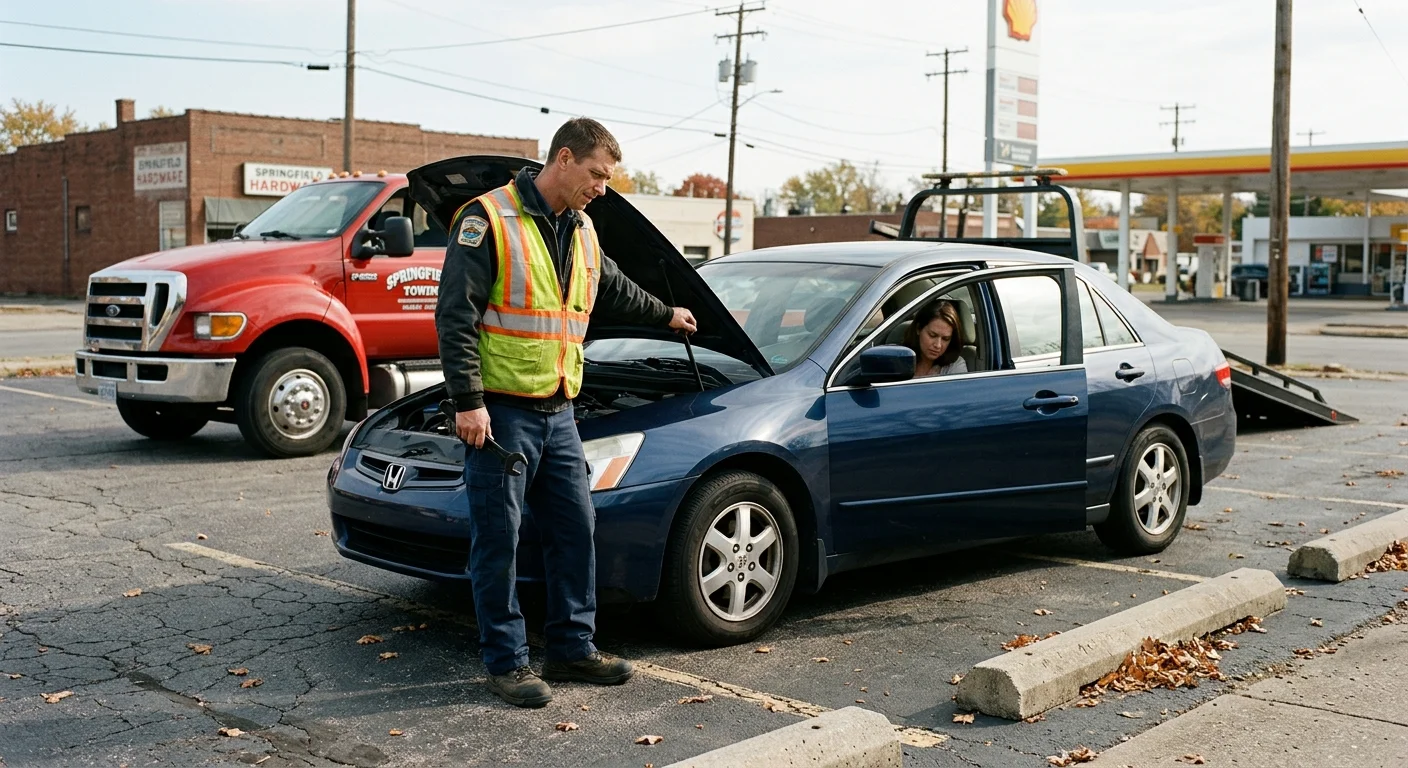
A dead battery and a no-start need different calls
“Dead battery” describes a suspected cause. “Car won’t start” describes what you actually know. That distinction helps you avoid requesting a specific service before anyone understands the situation.
A jump start car service brings an operator for a possible battery-related request. A tow moves the vehicle when roadside help isn’t suitable or doesn’t get it moving. If you aren’t sure which one you need, describe the no-start instead of guessing. Our roadside assistance service can be the starting point for that conversation.
Tell us what happened immediately before the problem. The car may have been parked overnight, sitting during a work shift, or stopped briefly outside a store. You may also have noticed a dashboard message, unusual sound, or complete silence. Those details help the independent operator understand the request. They don’t require you to name the failed part.
Location matters too. A car at home in Republic presents a different access problem than one inside a downtown Springfield garage. A vehicle near Ozark may also be farther from your preferred repair destination. Share the exact setting before help is matched.
The operator can then decide whether a jump attempt makes sense or whether towing should be arranged. If your owner’s manual gives instructions for a no-start or jump procedure, follow that vehicle-specific guidance. Keep the manual available when you call.
Dashboard lights and engine sounds help describe the problem
Start with what you can see and hear from the driver’s seat. Don’t turn one observation into a diagnosis. A dashboard light, clicking sound, or warning message may help an operator plan, but the observation alone doesn’t confirm the cause.
Useful details include:
- Whether the dashboard lights appear when you try to start
- Whether you hear silence, clicking, or the engine turning
- The exact wording of any dashboard message
- Whether the interior lights or accessories operate
- Whether the vehicle started normally earlier that day
- Whether anyone has already attempted a jump
- Whether the keys are available with the vehicle
Take a clear photo of any warning message before the display changes. Read the wording exactly during the call. Avoid translating a symbol into a repair diagnosis unless the owner’s manual identifies it.
The make, model, model year, and fuel type also matter. Tell the operator if the vehicle is electric, hybrid, diesel, or gasoline-powered. Check the current owner’s manual for its starting and roadside instructions. Vehicle-specific directions should control the next step.
Springfield drivers often encounter no-starts after a shift near the MSU campus, during errands along Glenstone Avenue, or outside businesses near Battlefield Road. Access can differ between a surface lot, curbside space, and parking structure. Our guide to weekend jump start service in Springfield explains how timing and location details shape that request without promising that a jump will solve it.
A jump isn’t the answer for every no-start
A jump request doesn’t guarantee a jump attempt will be appropriate. The operator still needs the vehicle details, symptoms, access conditions, and any instructions in the owner’s manual. If the procedure isn’t suitable for that vehicle or situation, towing may be the next request.
The decision can also change after help arrives. An operator may come prepared for roadside assistance, review the situation, and determine that transport is needed. A jump attempt may also fail to leave the vehicle ready to move. Neither outcome tells you which component failed. It only changes the service needed at that moment.
Don’t hide an earlier event because it seems unrelated. Tell the operator if the no-start followed a collision, contact with a curb, water exposure, smoke, a warning message, or another roadside problem. Give the facts without trying to connect them. If there’s an immediate threat to people, call 911 before arranging roadside service.
Your preferred destination is part of the tow decision. It might be your home, a repair facility, or another location that can receive the vehicle. Confirm that destination yourself before dispatch. Quick Tow Springfield doesn’t own a yard, repair shop, or towing fleet. We connect drivers with independent local operators.
When roadside help isn’t the right fit, our emergency towing service covers Springfield and surrounding communities. The operator doing the work sets the price and provides it before dispatch.
Parking lots and highway shoulders change the plan
A no-start in a Springfield parking lot begins with access details. Share the business name, street address, entrance, row, and nearby landmark. If the car is inside a garage, give the level and posted clearance. Mention gates, ticket systems, locked entrances, or narrow turns.
The setting changes quickly outside central Springfield. Republic has busy commercial areas west of the city. Nixa and Ozark sit along the US-65 corridor. Webster County includes smaller towns and rural roads where an address may not identify the correct entrance. A dropped map pin, crossroads, driveway description, or mile marker can help distinguish your location.
An I-44 or US-65 shoulder requires a different description. Give the highway, direction of travel, nearest exit, and which side of the road holds the vehicle. Mention whether it is on the shoulder, a ramp, a median, or away from the pavement. Don’t describe the location as simply “near Springfield.”
Check the MoDOT Traveler Information Map for current traffic, cameras, and reported incidents. MoDOT also operates a scheduled freeway Motorist Assist and Emergency Response program from Springfield. That courtesy patrol isn’t an on-demand towing service and doesn’t tow vehicles to repair shops.
Night changes what you can see and communicate. Our guide for a car that broke down at night in Springfield covers the location details worth gathering. Whether you’re near the Kansas Expressway interchange, south toward Ozark, or on a rural approach to Marshfield, precise location information helps the operator understand the job before dispatch.
What to share before help is matched
Begin with your location and callback number. Then describe the vehicle and what happens when you try to start it. Plain observations are more helpful than a confident guess about the failed part.
Share these details during the call:
- Your exact address, map pin, highway marker, or nearby crossroads
- The vehicle’s make, model, model year, and fuel type
- What the dashboard shows
- What you hear when you try to start
- Any warning message shown on the display
- Whether someone already attempted a jump
- Whether the vehicle can roll, steer, or be accessed normally
- Whether the keys are present
- The parking surface and any height or gate restrictions
- Your preferred towing destination, if transport is needed
Also mention passengers, pets, a trailer, modified equipment, or anything else that affects access. If the vehicle is blocking traffic or sitting in another exposed position, say that at the beginning. Don’t wait until the operator is already being matched.
You don’t need to settle the dead battery or tow truck question alone. The goal is to give an independent operator enough information to understand the immediate request. The operator may recommend roadside assistance, towing, or another next step based on what you report and what the owner’s manual requires.
Quick Tow Springfield serves Springfield, Nixa, Ozark, Republic, surrounding Greene, Christian, and Webster County communities, plus the Branson corridor. We answer the line as a referral service and match drivers with independent operators. We don’t perform repairs or operate tow trucks. The operator doing the work sets the price, and you receive that price before anyone is dispatched.
When to call us
When the no-start can’t be resolved with the instructions and judgment available to you, stop experimenting and request help. Our line takes calls 24 hours a day, and we can match you with an independent local operator for roadside assistance or towing. Call us at (417) 221-8911.