For towing from Hollister MO to Springfield, choose Springfield only after confirming the destination. Branson is the nearer option, but the shorter trip isn’t always the right trip. Your car’s location, condition, and final repair plan should decide.
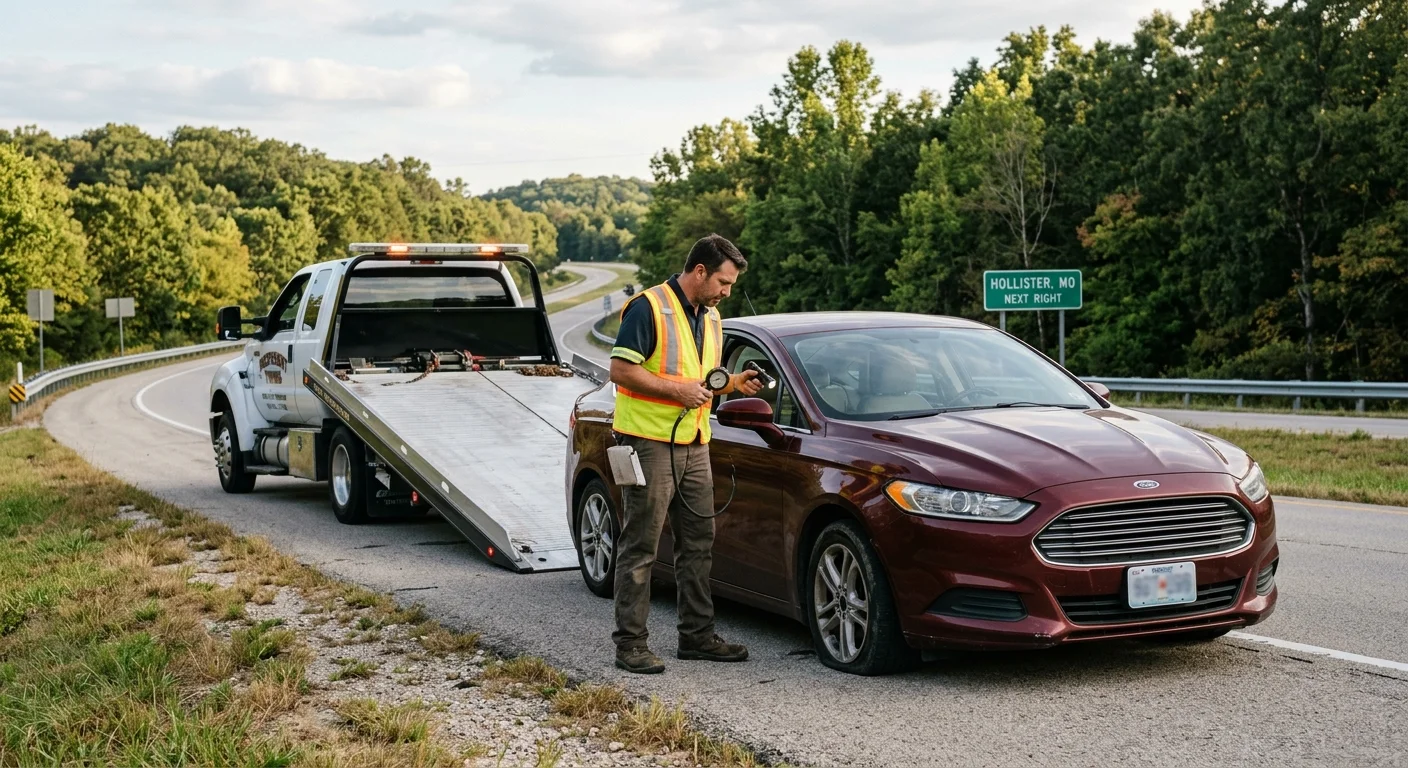
Start with the car’s exact Hollister location
“Hollister” isn’t enough information for a clean pickup plan. The operator needs your exact location and the car’s position there. A parking lot pickup differs from a vehicle stopped near a US-65 ramp.
Start by sharing a dropped map pin or complete street address. Add the nearest visible business, sign, entrance, or intersection. If you’re near US-65, include your direction of travel. Don’t cross traffic or walk along the roadway looking for a better landmark.
Explain where the car sits:
- In a marked parking space
- Along a road shoulder
- On or near an entrance ramp
- In a driveway or private lot
- Against a curb, barrier, ditch, or slope
Mention anything that could restrict access. A locked gate, parking garage, narrow entrance, or blocked wheel changes the loading plan. Photos can help the operator understand the available space and ground conditions.
Make sure your location is actually in Hollister. Branson may appear in search results or mailing information even when your vehicle is elsewhere. A precise pin prevents the operator from planning around the wrong side of the area.
If the car is creating an immediate traffic hazard, call 911 first. For a disabled vehicle that needs removal, our emergency towing referral service can collect the details and line up an independent operator.
Keep yourself away from moving traffic while you wait. Stay with the vehicle only when doing so doesn’t expose you to roadway danger. The operator can discuss the pickup position after receiving your location and vehicle details.
Choose the destination before dispatch
Decide between Branson and Springfield before an operator is sent. The destination affects the route, equipment plan, and price set by the operator.
A Branson destination can make sense when a specific shop has agreed to receive the car. It may also work when you have a safe private address where the vehicle can be left. Confirm the exact entrance and drop location before arranging the tow.
Springfield makes more sense when you already have a mechanic, dealer, home, or other confirmed destination there. A longer tow can avoid moving the same vehicle twice. That matters when a nearby drop would only be temporary.
Don’t assume a repair business can accept an unattended vehicle. Shop hours and repair availability vary, and no universal Hollister or Branson rule could be confirmed. Call the destination directly and ask:
- Can the property receive the vehicle today?
- Where should the operator leave it?
- Is an after-hours drop permitted?
- Does the business need your keys?
- Is there a gate, code, or designated parking area?
- Who should the operator contact at arrival?
If you haven’t confirmed a Springfield destination, don’t dispatch there based on a search result alone. A closed gate or full lot can force another decision while the car is already loaded.
For a planned trip into the metro, review our long-distance towing service. The operator sets the price, and you should receive that number before anyone is dispatched. Our guide to long-distance towing costs from Springfield explains the trip details worth discussing without treating one route as a universal rate.
Vehicle condition decides whether the trip can start
The destination is only half the decision. The operator also needs to know whether the car can be loaded and transported in its current condition.
Describe what happened without diagnosing the failure. “The engine stopped and won’t restart” is more useful than guessing that the fuel pump failed. Mention warning lights, smoke, leaking fluid, collision damage, or unusual wheel positions.
The operator will also need answers to practical questions:
- Does the car roll?
- Can it steer?
- Do the brakes respond?
- Are the keys present?
- Can the transmission shift?
- Is any tire flat or missing?
- Is a wheel turned, locked, or damaged?
- Is the vehicle lowered or unusually close to the ground?
- Is it electric, hybrid, all-wheel drive, or four-wheel drive?
Those details help the operator choose a loading approach. They also reveal whether the vehicle needs recovery work before the longer trip can begin. Don’t try to force a damaged car into neutral or move it into traffic just to simplify pickup.
Send clear photos when possible. Capture the full vehicle, each damaged corner, the wheel position, and the space around it. Include the ground between the car and the operator’s likely access point.
Tell the operator about loose body panels or items attached outside the vehicle. Remove personal belongings you need before transport when access is safe. Secure anything loose inside the passenger area.
A running engine doesn’t automatically mean the car should be driven to Branson or Springfield. If steering, braking, wheels, or visibility are affected, stop experimenting with it. Give the symptoms to the operator and let the repair destination handle the diagnosis.
US-65 access changes the pickup plan
US-65 connects this decision, but it also makes location details more important. A Hollister parking lot offers a different pickup setting than a shoulder, ramp, or roadside approach along the corridor.
When you’re near US-65, send your direction of travel and the nearest confirmed marker. Explain whether the car is fully outside the travel lane. Mention barriers, narrow shoulders, traffic exposure, and nearby entrances without leaving a safe location to inspect them.
Check the MoDOT Traveler Information Map before choosing the destination. It provides current Missouri traffic, camera, and incident information. Conditions can change between Hollister, Branson, and Springfield, so don’t build the decision around an assumed travel time.
Branson receives roughly 9 to 10 million visitors each year. That visitor movement feeds the US-65 corridor and can change how a pickup or longer trip is planned. The operator should base the route on current access and traffic conditions, not an unsupported arrival estimate.
Vehicle size matters here too. A passenger car, pickup, motorcycle, travel trailer, and motorhome don’t create the same access needs. If your breakdown involves a recreational vehicle, our US-65 RV breakdown guide near Branson covers the details to gather before calling.
Don’t ask another driver to tow the vehicle with a rope or strap along the corridor. Once the car needs professional loading, give the operator room to assess its position. Follow instructions about keys and vehicle access.
Your chosen destination should still be ready to receive the car. Current traffic doesn’t solve a locked gate in Springfield or an unconfirmed drop in Branson.
What an operator needs for a longer tow
A longer tow starts with complete information. Gathering it first helps the independent operator evaluate the full job before dispatch.
Provide both ends of the trip:
- The exact Hollister pickup location
- The complete Branson or Springfield destination
- A contact name at the destination
- The approved entrance and drop point
- Any gate instructions or access limits
Then provide the vehicle’s year, make, model, and body style. Mention modifications, low clearance, damaged wheels, missing keys, or anything being pulled behind it. Tell the operator whether passengers or pets are with you, but don’t assume they can ride in the towing vehicle. Confirm transportation arrangements directly.
Be clear about the car’s current position. “Front wheels against a curb in a sloped lot” gives the operator more than “car won’t start.” Share photos when they can show access, clearance, and visible damage.
The operator doing the work sets the price. Before dispatch, ask for the number and confirm which trip details it covers. Discuss mileage, loading conditions, destination access, and any possible waiting at the drop point. If the situation changes, ask how that affects the price before authorizing more work.
Quick Tow Springfield is a referral service. We collect the pickup, vehicle, and destination details, then match the call with an independent local operator. We don’t own trucks, employ drivers, run a storage yard, or set the operator’s price.
Keep your phone available after leaving a message. Have the keys and destination instructions ready. If someone else will meet the vehicle in Springfield, make sure that person knows the operator may need access to the property.
A complete plan has three confirmed pieces: the car’s location, its loading condition, and a destination ready to accept it.
When to call us
Once the car needs loading or transport beyond the nearby area, this has stopped being a do-it-yourself job. Our line takes calls 24 hours a day, and we use your details to line up an independent local operator who sets the price. Call us at (417) 221-8911.