Your wallet, work gear, or medication may still be inside a towed car. So can a tow yard keep your belongings in Missouri? Missouri generally provides access to retrieve belongings without an added access fee. However, a narrower public-property impound law can let the yard hold most property until charges are paid or arranged.
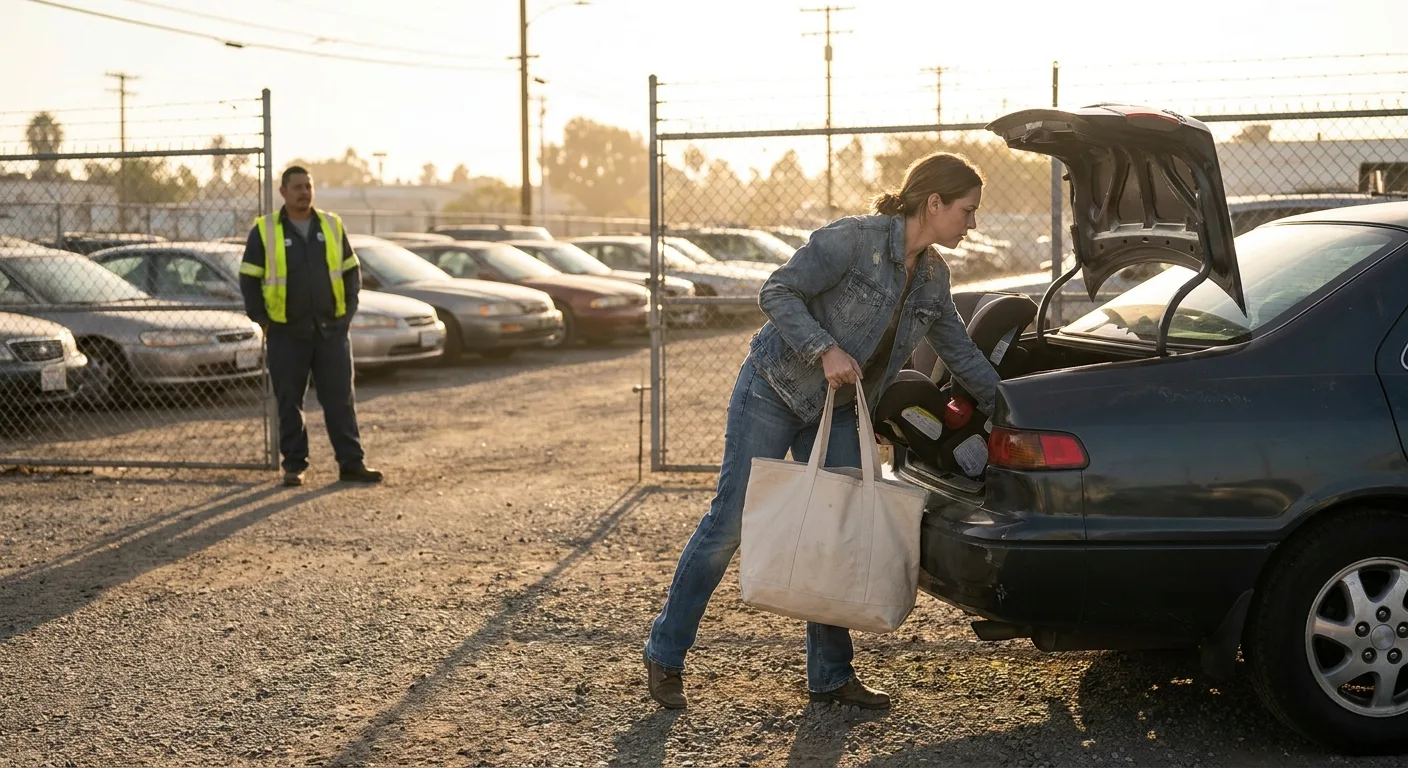
Can a tow yard keep your belongings in Missouri? Two statutes
Missouri doesn’t give one simple answer for every tow. Two parts of Chapter 304 address personal property from different angles.
The general rule appears in RSMo 304.154. It requires every Missouri towing company to be open or available to customers for at least 10 hours each weekday. That requirement applies throughout the year, except on federal holidays.
During those access hours, a customer or authorized agent can view or retrieve items from the vehicle. The company can’t add a fee merely for that access. Retrieving the car itself remains separate and happens at the posted rate.
A narrower rule appears in RSMo 304.155. It covers abandoned vehicles removed from public property. Under that section, personal property may remain with the vehicle until reasonable or agreed charges are paid. The company can also release it after satisfactory payment arrangements are made.
That means Missouri doesn’t guarantee free, unconditional retrieval of every belonging in every impound. The answer depends partly on why the vehicle was removed and where it was parked.
Start by asking the yard one direct question: under which statute and tow type is the vehicle being held? A tow from a downtown Springfield street may follow a different track than one from a private lot near the Missouri State University campus.
The access right most people never use
RSMo 304.154 gives customers more than a chance to look through a window. It provides time to view or retrieve items without an added access charge. An authorized agent may also act for the customer.
Call before visiting and clearly describe what you need. Say that you’re requesting access to personal property, not trying to release the vehicle. Those are different requests, with different charges and procedures.
Ask what identification the facility wants to see. If someone else is going for you, ask how the yard wants that authorization documented. Missouri recognizes access by an authorized agent, but the statute doesn’t spell out one universal authorization form.
Request a time during the facility’s required weekday availability. Write down who you spoke with and the time offered. Keep any tow paperwork, property inventory, or written response together.
The same law says storage charges can’t be imposed for days when the facility was closed to retrieval. Missouri doesn’t set a statewide dollar cap on daily storage under this section. That makes the yard’s published rate sheet and actual access dates important.
Insurance adjusters have a related right. RSMo 304.154 allows them to inspect stored vehicles without an access fee during normal business hours. That inspection right doesn’t release the vehicle or settle its charges.
Wait for staff before approaching the car. Tow yards contain moving vehicles and recovery equipment. Make a short list of what you need so the visit stays focused. Check the passenger area, trunk, and any secured compartments you can lawfully access with staff present.
Where that right stops
The general access rule isn’t the end of the analysis. RSMo 304.155.9 applies to abandoned vehicles removed from public property. It says personal property need not be released until towing and storage charges are paid or satisfactory payment arrangements are made.
That exception matters around Springfield. A vehicle removed from a public street or highway can enter a different legal process than a car taken from private property. Don’t rely on the word “impound” alone. Ask who ordered the tow, where the car was located, and how it was classified.
The statute uses “abandoned property” as a legal category. A vehicle can meet that definition whether or not it still runs. Everyday ideas about what looks abandoned don’t control the statutory process.
If the yard relies on RSMo 304.155, ask it to explain what payment arrangement it will accept. The statute allows release after satisfactory arrangements are made, but it doesn’t give one standard arrangement that every facility must accept.
Keep the belongings request separate from any dispute over the tow. State exactly what you’re seeking. Include the vehicle description, your connection to it, and the property needed. A written record helps everyone identify the request.
Longer storage creates another issue. Missouri has separate notice, lien, and title procedures for unclaimed vehicles. The 30-day number in that process isn’t a punitive police hold. It concerns when a tow company may seek title after required notices and no redemption or challenge. Our Springfield impound lien guide explains that separate clock.
For a private-property tow, first confirm who authorized the removal. RSMo 304.157 contains different rules for private lots, including written authorization and signage requirements. A public-property exception shouldn’t be treated as the answer for every apartment, store, or workplace lot.
The one thing they must hand over either way
Prescribed medication receives specific protection. Under RSMo 304.155.9, medication prescribed by a physician must be released to the owner upon request. The yard must release it whether or not towing and storage charges have been paid.
This is the clearest minimum protection in Missouri’s towing statutes. It applies even where other personal property may remain with the vehicle pending payment or an acceptable arrangement.
Tell the facility immediately that you’re requesting prescribed medication. Identify the medication and where it is inside the car. Bringing identification and prescription information may help avoid confusion, although the statute doesn’t establish one statewide document checklist for this request.
Don’t combine urgent medication with a general request for every item inside. Missouri’s statute names prescribed medication as the express unconditional exception. It doesn’t give wallets, tools, electronics, clothing, or other belongings that same express treatment in every impound scenario.
If the facility refuses, ask for a supervisor and repeat that the request concerns physician-prescribed medication under RSMo 304.155.9. Record the date, time, and response. For an immediate medical concern, seek appropriate medical help instead of waiting for a property dispute to be resolved.
Once the medication is secure, you can address the remaining property and vehicle separately. Ask whether the general access right applies or whether the facility is relying on the public-property exception.
A Springfield police tow adds its own wrinkle
Springfield’s police-ordered tow process has local steps. The city’s published instructions say personal property inside the vehicle stays with it. The vehicle release runs through the Springfield Police Department before payment at Henry’s Towing.
First, check whether SPD has an investigative hold. The department’s impounded vehicle instructions provide its current contact details and lobby hours. The city doesn’t provide an online impound lookup tool.
The registered owner must obtain the release form in person. Springfield lists SPD Headquarters on Chestnut Expressway and the South District Station on Battlefield Road as release locations. Bring government-issued photo identification and proof of ownership. The city lists accepted ownership documents on its page.
After SPD issues the release, the city’s published process directs the owner to pay Henry’s Towing at its Brookline lot. That is the process for releasing the car. A request for belongings alone may require a separate conversation about the two state statutes.
If you don’t know where the car went, begin with our guide to finding a towed car in Springfield. For the full release sequence, use the Springfield impound release guide.
Don’t assume Springfield’s city process applies throughout the metro. A tow from Nixa, Ozark, Republic, or another US-65 community may involve a different ordering agency. Use the agency named on the notice, then ask the storage facility how it classified the tow.
When to call us
Once the car is released but can’t be driven, the problem stops being paperwork alone. We can line up an independent local operator through our emergency towing service, and the operator provides the price before dispatch.
Our line takes calls 24 hours a day, and calls are recorded after a notice. Call us at (417) 221-8911.