Roadside trouble in Branson can leave you beside Highway 76 or stranded in a crowded attraction lot. If you’re locked out of a car in Branson, MO, start by sharing your exact location and vehicle details. Quick Tow Springfield matches drivers with independent local operators for roadside help or towing.
What breaks down here, and when
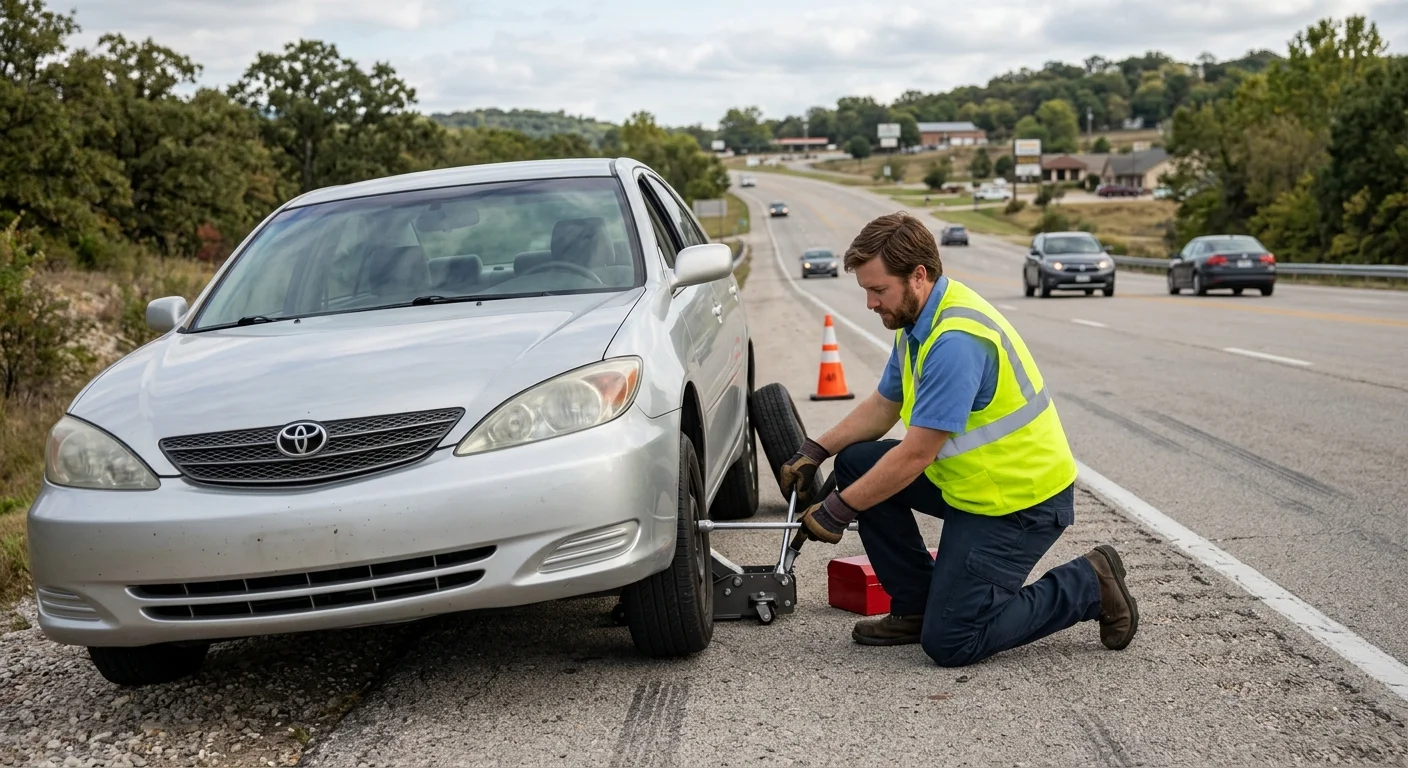
Roadside assistance in Branson, MO covers problems that may not require a tow. That includes a dead battery, a flat tire, an empty tank, or keys locked inside. The right response depends on the vehicle, its condition, and where it stopped.
Branson receives roughly 9 to 10 million visitors a year. Silver Dollar City alone receives 2.2 million. That travel volume puts local drivers, vacationers, rental cars, and family vehicles on the same roads. Many visitors also don’t know the name of the lot or side road where they stopped.
Start by deciding whether the car can remain where it is. A vehicle sitting inside a marked parking space creates a different problem than one partly exposed to traffic. If anyone faces an immediate danger, call 911 before arranging roadside service.
A lockout usually calls for an operator equipped for vehicle entry. Don’t force the window or pry the door yourself. That can turn a simple lockout into a repair. Our car lockout service page explains what to share when requesting help. You can also read our guide for drivers locked out of a car in Springfield. The basic preparation applies in Branson, but your location description needs more detail.
A search for a tow truck in Branson, MO, doesn’t always mean towing is necessary. Tell us what happened before requesting a specific type of truck. We can then line up an independent operator suited to the situation. If roadside work can’t make the vehicle movable, the operator can discuss the towing options with you.
Highway 76, the strip, and the parking problem
Highway 76 can place drivers near hotels, theaters, restaurants, and attraction parking. Saying you’re “on the strip” doesn’t identify one useful pickup point. Share the business name, entrance, parking section, and nearest visible sign. A map pin helps when several lots connect behind the buildings.
Parking position matters during a lockout or tire problem. Tell us whether the vehicle is in a marked space, beside a curb, or inside a parking structure. Include the level and row when those markers are posted. If another vehicle blocks access, mention that before an operator is dispatched.
US-65 is the main Branson funnel and was Southwest Missouri’s first six-lane freeway. A problem beside that road needs a different description than one in a parking lot. Give your direction of travel and the last exit or landmark you passed. Don’t cross traffic just to read a sign on the opposite side.
Turn on the hazard lights if they still work. Move away from moving traffic when you can do so safely. Don’t stand between your vehicle and approaching traffic. If the vehicle is in a live lane or another dangerous position, call 911.
The MoDOT Traveler Information Map shows current Missouri traffic, cameras, and reported incidents. Check it before choosing a route around a disabled vehicle. MoDOT’s Motorist Assist program is a scheduled freeway patrol, not a call-out towing service, and it doesn’t tow vehicles.
Access also affects the service decision. A roadside operator needs to know whether the car is close to a wall, boxed between vehicles, or sitting where normal equipment can’t approach. Those details help avoid sending an operator without the right setup.
Table Rock and the boat-ramp calls
Table Rock Lake receives more than 10 million area visitors. A roadside call there may involve the tow vehicle, a boat trailer, or both. Be clear about which part has the problem before service is arranged.
A dead battery or locked door on the tow vehicle may fit ordinary roadside assistance. A damaged boat trailer, trailer tire, wheel, axle, or coupling belongs under RV and trailer towing. Trailer calls require different equipment and access planning than a passenger-car lockout.
Tell us whether the trailer is loaded. Share its approximate length and the number of axles. If you know the boat and trailer weight, provide it without guessing. Photos can help an operator understand the trailer’s position and visible damage.
Boat-ramp access adds another concern. Say whether the vehicle is in the launch lane, staging area, parking lot, or approach road. If ramp staff are present, let them know the vehicle can’t move. They may need to manage traffic while you arrange service.
Don’t crawl beneath a trailer that isn’t stable. Avoid disconnecting it on a slope unless you have the proper equipment and know it is secure. A damaged wheel or axle can shift when weight changes.
The same preparation applies to campers and travel trailers heading through Branson. Our guide to an RV breakdown on US-65 near Branson explains what information matters along that corridor. For any trailer call, describe the complete vehicle combination rather than only the truck pulling it.
If the tow vehicle still runs, don’t assume it should pull a damaged trailer farther. Explain what you can see and let the operator assess the next step. Moving it could worsen a wheel, tire, or suspension problem.
Out past Hollister and Rockaway Beach
Quick Tow Springfield serves the Branson corridor, including Hollister, Rockaway Beach, and Branson West. Our line is answered 24/7 and we connect callers with independent local operators. We don’t own trucks or operate a tow yard.
Roadside help in Hollister, MO, may begin with a business lot, residential address, or highway shoulder. The town name alone isn’t enough. Send a map pin, street name, or nearby business. Include your direction of travel when you’re beside a route.
The same rule applies in Rockaway Beach and Branson West. An exact pin matters more once you’re outside Branson’s concentrated Highway 76 area. If your map app shows a road name, county road, or numbered route, read it exactly as displayed.
Some addresses and mailing names don’t clearly describe roadside access. Tell us whether the vehicle is reached from a paved road, gravel drive, gated property, campground lane, or parking area. Don’t assume the operator can approach from either direction. Mention a narrow entrance, locked gate, low branch, or turn restriction you can see.
If you’re using someone else’s phone, provide the number that will stay with the vehicle. Keep that phone charged when possible. Stay near a safe, visible meeting point, but don’t wait beside moving traffic.
Don’t give a location based only on how long you’ve been driving. Travel time isn’t a reliable marker. Use coordinates, a dropped pin, a mile marker, or the last confirmed intersection. That information helps us send the request to an operator who can evaluate the actual location.
What to have ready when you call
A clear first message prevents repeated calls and mismatched equipment. Gather the details you can without stepping into traffic or leaving a safe position.
Have these items ready:
- Your exact location. Share a map pin, address, lot name, or nearest marked intersection.
- Your direction of travel. This matters on US-65 and other divided roads.
- The vehicle’s year, make, model, and color. Mention whether it’s all-wheel drive, electric, oversized, or modified.
- The problem you can observe. Say whether the car won’t start, the tire is flat, the keys are inside, or the vehicle can’t move.
- The vehicle’s position. Describe a shoulder, traffic lane, parking level, ramp area, gravel drive, or tight parking space.
- The number of passengers and any immediate safety concern. Call 911 first when someone faces immediate danger.
- Trailer details. Include whether it’s loaded, its approximate length, and the number of axles.
- Your access limits. Mention gates, clearance, soft ground, steep approaches, or blocked entrances.
- A possible destination if towing is needed. The operator can discuss what destinations are practical.
For a lockout, have identification and any available ownership or permission information nearby. If those documents are locked inside the car, say so. The operator can explain what information is needed before vehicle entry.
Don’t diagnose beyond what you can see. A clicking sound, warning light, leaking fluid, or unusual wheel position is useful. Guessing at the failed part isn’t. Photos may help when a trailer, wheel, or vehicle position is difficult to describe.
Quick Tow Springfield doesn’t set operator prices. The independent operator sets the price, and you get that price before anyone is dispatched. Explain the whole situation before agreeing, including whether a trailer or difficult access is involved.
When to call us
A roadside problem stops being a do-it-yourself job when the vehicle is exposed to traffic, the wheel or trailer isn’t stable, or the issue requires towing equipment. Our line takes calls 24 hours a day, and calls are recorded after a notice so we can line up an independent local operator. Call us at (417) 221-8911.