When your bike quits, motorcycle towing after a breakdown starts with clear details. Tell the dispatcher where you are, what motorcycle you have, whether its wheels roll, and whether the steering moves normally.
Quick Tow Springfield matches stranded riders with independent local operators. The operator needs the bike’s condition before choosing a loading approach.
Why a motorcycle needs purpose-built loading
A motorcycle can’t be handled like a small car. It rests on two wheels, depends on balance, and has model-specific bodywork. The operator needs a plan for loading, stabilization, transport, and unloading.
Purpose-built loading starts before the operator leaves. The dispatcher should know that the disabled vehicle is a motorcycle. The operator can then consider the bike’s condition, its manufacturer guidance, and the available loading space.
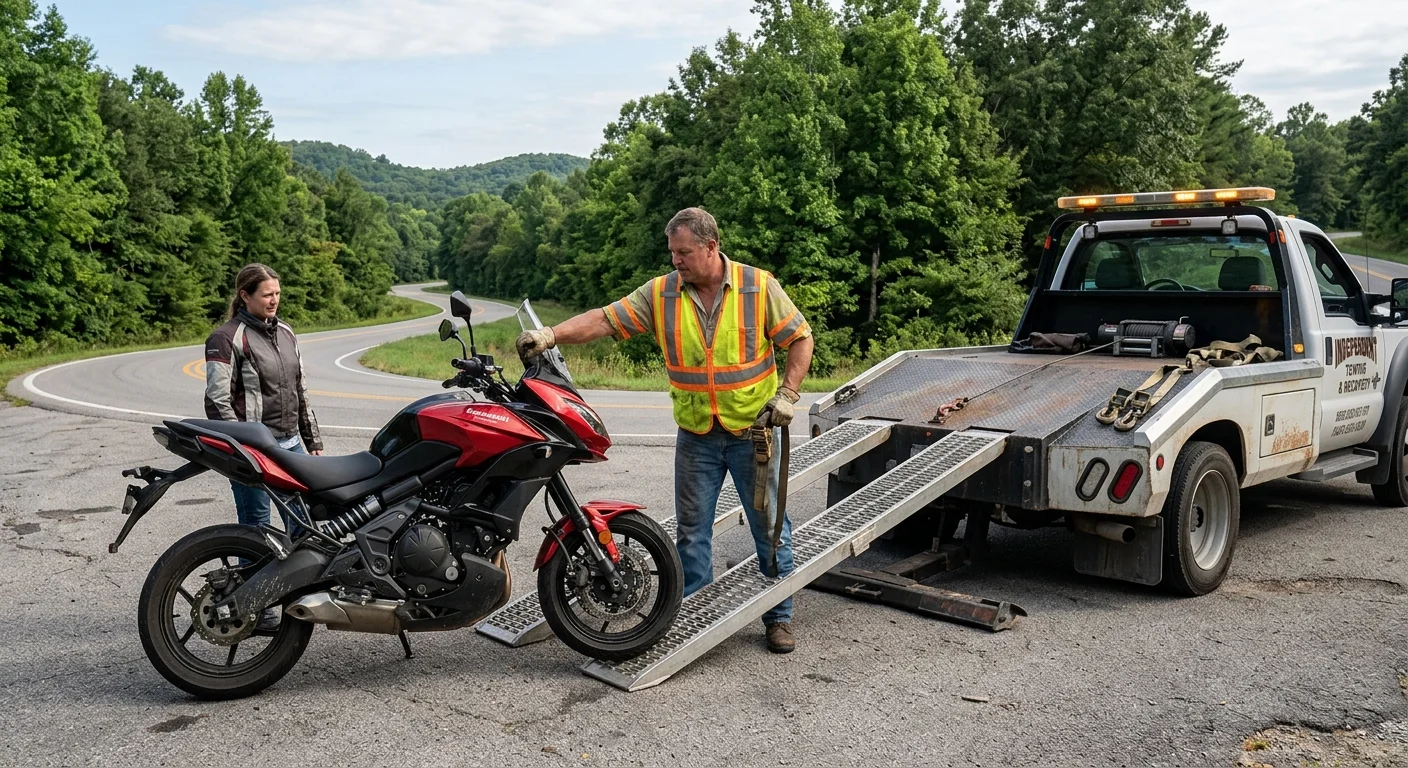
A motorcycle tow service may use a flatbed setup, but the right approach depends on the bike. A touring motorcycle with hard luggage presents different contact areas than a lightweight dirt bike. A scooter, trike, or motorcycle with a sidecar needs another conversation.
Our flatbed towing service explains when that platform may fit a transport job. Still, no towing method should be treated as universal across every motorcycle.
Keep the owner’s manual available if possible. Some manufacturers identify transport points or model-specific precautions. Share that information with the operator instead of relying on instructions written for another bike.
Ask what loading setup the operator plans to use. Describe any crash damage, custom bodywork, or loose parts. If the company can’t explain how the bike’s condition affects pickup, our guide to choosing a towing company in Springfield offers more questions to ask.
Location matters too. A level parking lot near central Springfield gives an operator different working room than an I-44 shoulder or narrow rural lane. Mention that setting during the first call.
Share the bike’s condition before dispatch
Start with the exact location. Include the road, direction of travel, nearest exit, visible business, or mile marker. For private property, explain where the motorcycle sits and whether the operator can reach it without crossing a gate or narrow drive.
Then give a short condition report:
- Motorcycle make, model, and model year
- Whether the bike remains upright or lies on its side
- Whether each wheel appears able to roll
- Whether the handlebars and front wheel move together
- Whether the key is present
- Visible crash damage, loose parts, or leaking fluid
- Attached luggage, a windshield, or aftermarket accessories
- Whether the bike sits on pavement, gravel, grass, or mud
You don’t need to diagnose the failure. Describe what happened and what you can see. “The engine stopped while riding” is more useful than guessing at a fuel or electrical problem. Mention unusual sounds, warning lights, smoke, or a sudden loss of power without assigning a cause.
Tell the dispatcher if someone has already tried moving the bike. That can reveal a locked wheel, dragging part, or steering problem before loading begins. If the motorcycle was involved in a collision, describe where the visible damage appears.
The independent operator sets the price. Get that number before anyone is dispatched, after sharing the motorcycle’s condition and access details. An incomplete description can leave the operator without information needed to assess the job.
This handoff also helps separate a towing need from a simpler roadside issue. A dead battery and an immobilized motorcycle aren’t automatically the same job. Report the symptoms and let the operator consider the next step.
Locked wheels and loose steering change the load
A motorcycle that rolls and steers normally presents a different loading problem than one with a locked wheel. The same applies when the handlebars feel loose or the front wheel doesn’t follow their movement.
Tell the dispatcher which wheel seems affected. Explain whether it stopped turning after the breakdown, after a collision, or after the bike was parked. If you don’t know why it’s locked, say that plainly. The cause can’t be confirmed from a phone description.
The key and steering lock matter as practical details. Tell the operator whether the key is available and whether you can release the steering normally. Don’t force a control when you don’t know the model’s procedure. The owner’s manual is the better reference for operating the lock.
Loose steering also needs a clear description. Say what moves and what doesn’t. For example, the handlebars may turn while the front wheel appears delayed or stays angled. That observation is more useful than naming a damaged component without an inspection.
Photos can help when the motorcycle is accessible. Capture the whole bike, each wheel, the handlebars, and visible damage. Include the surrounding surface and available loading area. These images help the operator understand what you described.
The operator can then decide how to approach the motorcycle and what equipment the condition calls for. This article can’t provide one loading procedure for every locked wheel, damaged front end, or steering design. Those choices depend on the actual bike and its manufacturer guidance.
Tie-down points depend on the motorcycle
If you’re searching for how to tow a broken motorcycle, start with the bike’s own manual. Exact transport points vary by model, bodywork, accessories, and current condition.
A convenient-looking part isn’t automatically a confirmed attachment point. Painted panels, luggage mounts, handlebars, guards, and exposed frame areas differ across motorcycles. Crash damage or corrosion may also change what the operator finds on scene.
Share modifications before dispatch. Common examples include hard cases, a tall windshield, custom handlebars, engine guards, lowered suspension, and aftermarket body panels. Mention anything that blocks access to the motorcycle’s usual structure.
If you have the manual, locate its transport or trailering guidance. Give the operator the page or section. When the paper manual isn’t available, look for an official version from the motorcycle manufacturer. Match the exact model and model year.
This page doesn’t prescribe a strap count, strap angle, or attachment layout. Copying those details from another motorcycle could ignore important design differences. The operator should inspect the bike and follow the applicable guidance.
Before loading starts, ask which areas will contact the transport equipment. Point out existing scratches, cracked panels, loose mirrors, or damaged luggage. Taking clear photos creates a record of the bike’s visible condition and helps everyone discuss the same areas.
Older and unusual vehicles deserve the same condition-first approach. Our article about classic car towing in Springfield explains why advance details matter when a vehicle has uncommon bodywork or transport needs.
Stay available while the operator evaluates the motorcycle. A detail that seemed minor on the phone may affect the loading plan once the bike is visible.
Where Ozarks gravel complicates pickup
Motorcycle towing in Springfield, MO, covers more than city pavement. A breakdown near downtown Springfield differs from one beyond Nixa, Ozark, Republic, or a Webster County gravel road.
South of Springfield, US-65 carries riders toward Nixa, Ozark, and the Branson corridor. West toward Republic, US-60 connects with smaller roads and rural properties. The final approach may include loose gravel, narrow shoulders, steep drives, or limited turning space.
Describe the last stretch carefully. Tell the dispatcher where pavement ends and whether the motorcycle sits on packed gravel, loose rock, grass, or mud. Mention a slope, soft road edge, closed gate, low-water crossing, or driveway without turnaround space.
A street address may not show those conditions. Rural mapping can also place a pin near the property instead of beside the motorcycle. Share a dropped pin when possible, then add a plain description. A gate color, mailbox location, or nearby intersection can help without replacing the actual address.
On I-44 or US-65, give your direction of travel and nearest exit. The MoDOT Traveler Information Map shows current Missouri traffic, cameras, and reported incidents. It can help you describe closures or congestion affecting the area.
Don’t promise that an ordinary driveway or gravel lane has enough room for a particular transport vehicle. Report the width, surface, overhead clearance, and available turning area. Let the operator assess access from those details.
We don’t publish an arrival window. Distance and road access vary across Springfield, the surrounding counties, and the Branson corridor. A precise location and honest surface report give the operator better information for planning the pickup.
When to call us
When the motorcycle won’t run, can’t roll normally, has loose steering, or sits where moving it requires guesswork, it’s no longer a do-it-yourself recovery. Our line takes calls 24 hours a day, calls are recorded after a notice, and we use your details to line up an independent local operator. Call us at (417) 221-8911.