The engine sputters, the gauge reads empty, and traffic keeps moving around you. In Springfield, the first decision is simple: bring fuel to the car or move the car by tow. The answer depends on the engine, whether it restarts, and where you’re stopped.
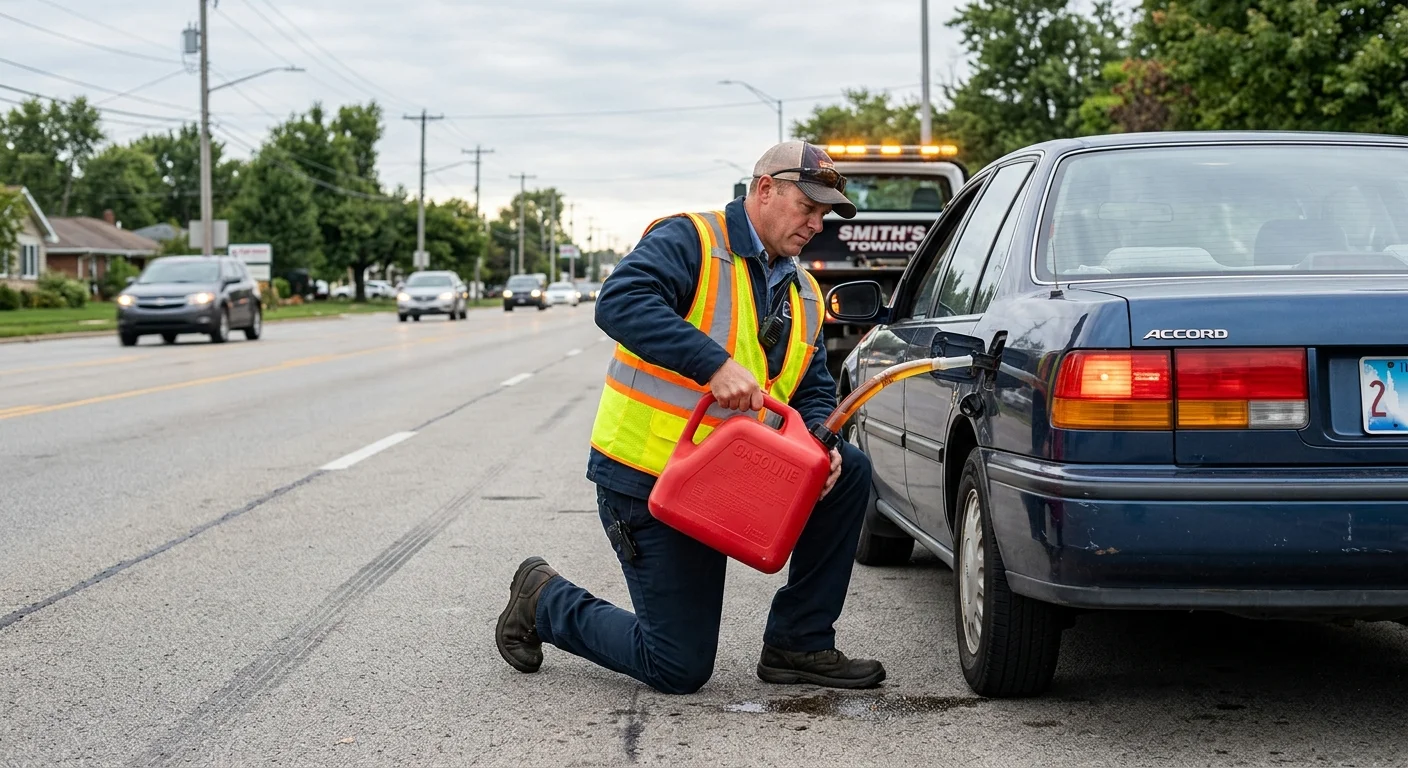
Fuel delivery is usually the whole fix
For most gasoline cars, fuel delivery is the first service to request. An operator brings fuel to your location and lets you try the engine. If it starts and keeps running normally, you can usually drive to a nearby station.
That makes fuel delivery in Springfield different from a tow. The car stays where it is while the operator brings what it needs. You don’t have to arrange a destination unless the engine still won’t run.
Before calling, check the fuel gauge and dashboard. A low reading supports the obvious answer, but dashboard warnings may point elsewhere. Tell us if the engine lost power gradually, shut off at once, or made an unusual sound. Those details help distinguish an empty tank from another breakdown.
Avoid repeated start attempts while you wait. Cranking the engine again and again can drain the battery. That can leave you with both an empty tank and a weak battery.
Fuel delivery is meant to get the car moving again. It isn’t the same as filling the tank at a station. Plan to stop for more fuel once the engine runs normally.
The operator sets the service price. You get that number before anyone is dispatched. The amount can depend on your location, vehicle, fuel request, and roadside conditions. We don’t publish a fuel-delivery price because those details change the job.
If you’re unsure whether fuel is really the problem, request roadside assistance. Share the symptoms instead of guessing. The operator can prepare for the situation you describe.
When running dry becomes a tow
Adding gasoline doesn’t solve every empty-tank breakdown. Sometimes the car still cranks without starting. It may start, run poorly, and shut off again. Either result points toward a problem that roadside fuel alone can’t settle.
Running a tank completely empty can pull sediment or debris toward the fuel pickup. That makes a blocked filter or fuel-system problem possible. It doesn’t prove that damage occurred. A repair shop needs to diagnose the actual cause.
The no-start may also have another source. A weak battery, charging problem, or unrelated mechanical fault can look like an empty tank from the driver’s seat. The fuel gauge may be low while something else stops the engine.
Try a normal restart after fuel arrives. Tell the operator exactly what happens. Does the starter turn? Do the dashboard lights fade? Does the engine catch and then stall? Clear details help determine whether another roadside step makes sense.
A tow becomes the practical answer when the vehicle won’t start or stay running. It’s also the better path when the operator identifies a condition that needs shop equipment. In that case, choose a repair destination before the vehicle moves.
Our emergency towing service connects you with an independent local operator. Quick Tow Springfield doesn’t own trucks or perform repairs. Our line is answered 24/7 and we arrange the appropriate local help based on the information you provide.
Don’t force a struggling car through Springfield traffic. A brief restart isn’t enough if the engine immediately loses power again. Moving it by tow avoids turning a roadside problem into another breakdown a few blocks later.
Diesel is a different job
A diesel vehicle can react differently after the tank runs dry. Air may enter the fuel system. Adding diesel to the tank may not be enough for the engine to restart.
Some modern diesel systems need priming before fuel reaches the engine correctly. That procedure varies by vehicle. It may require tools, equipment, or vehicle-specific steps that aren’t available beside the road.
Tell us that the vehicle is diesel at the start of the call. Include the year, make, model, and vehicle type. A diesel pickup, passenger vehicle, RV, and commercial truck may need different equipment.
Don’t describe the request as ordinary gas delivery. The operator needs the correct fuel information before accepting the dispatch. If you aren’t sure what the vehicle takes, check the fuel-door label or owner’s manual and say that you need confirmation.
A driver searching for “off-road diesel delivery near me” should also explain the situation clearly. Fuel delivery to equipment, a work site, or private land isn’t automatically the same service as helping a disabled road vehicle. We can’t confirm that every operator carries each requested fuel. Availability must be checked before dispatch.
If diesel arrives but the engine won’t restart, don’t assume another container will solve it. The system may need priming or diagnosis. That changes the job from a simple delivery into transportation to a qualified shop.
Choose a shop that works on your vehicle’s diesel system. For a commercial vehicle, confirm that the destination can accept its size. Those decisions are easier before the operator begins moving the vehicle.
Where you’re stopped changes the answer
A car in a Springfield parking lot creates a different problem than one beside I-44. The engine symptoms may match, but the surrounding traffic changes what happens next.
A parking space near downtown, Missouri State University, or a shopping center usually gives you room to describe the problem and consider fuel delivery. A vehicle stopped in a travel lane needs immediate attention. If traffic can’t safely pass or there’s an immediate collision risk, call 911.
I-44 carries heavy local and freight traffic through Springfield. US-65 also funnels vehicles between Springfield, Ozark, and the Branson corridor. On either highway, safety comes before choosing the cheapest type of service.
If you’re stranded there, read our guide to breaking down on I-44 in Springfield. You can also check the MoDOT Traveler Information Map for current traffic, cameras, and reported incidents.
MoDOT’s Motorist Assist and Emergency Response Program is a scheduled freeway courtesy patrol based in Springfield. It isn’t a call-out towing service, and it doesn’t tow vehicles to repair shops. Don’t wait for it as a substitute for arranging roadside help.
Location also matters beyond Springfield. Nixa and Ozark calls often involve the US-65 corridor. Republic sits west of the city grid. A stop on a rural Greene, Christian, or Webster County road may lack a street address, visible business, or easy landmark.
Share a map pin when possible. Name the highway, travel direction, nearest exit, crossroad, or mile marker. Mention whether you’re on pavement, a narrow shoulder, gravel, or private property. Exact location helps the dispatched operator find the correct approach without relying on a broad town name.
What to have ready when you call
A short, accurate description makes the dispatch easier. Start with your location. Give the street, crossroad, business name, highway direction, or map pin. “Springfield” alone doesn’t narrow down a stop near I-44, US-65, Kansas Expressway, or the edge of Christian County.
Next, describe the vehicle. Include its make, model, approximate year, color, and fuel type. Say whether it’s a gasoline car, diesel pickup, motorcycle, RV, or commercial vehicle.
Then explain what happened in order. Tell us whether the engine sputtered, lost power, or stopped suddenly. Mention the fuel-gauge reading and any dashboard warnings. Say whether you’ve already added fuel or tried a jump start.
Describe where the vehicle is sitting. A marked parking space, highway shoulder, travel lane, ditch, soft ground, and parking garage each present a different dispatch. Mention low clearance, a trailer, locked steering, damaged wheels, or anything else that may affect access.
Have a repair destination ready in case fuel doesn’t restore normal operation. You can change the plan from delivery to towing if the vehicle won’t restart. Confirm that the destination is open and can work on your vehicle before it gets moved.
The operator who accepts the job sets the price. Ask for the number before dispatch and confirm what service it covers. If the situation changes after arrival, ask the operator to explain any change before additional work begins.
Finally, keep your phone available after leaving the message. The line plays a greeting and recording notice, then records and transcribes the call. Clear vehicle and location details give us what we need to line up an independent local operator.
When to call us
Call when fuel isn’t available nearby, the vehicle won’t restart, or your location makes self-help impractical. The line takes calls 24 hours a day, and we can dispatch an independent local operator for fuel delivery or towing. Call us at (417) 221-8911.